Quiet Moments and the Hidden Cost of Cat Treats
Relying on smaller treats to reinforce quiet cat behavior works best when the routine limits mess, noise, and demand cycles.
Where Tiny Treats Begin to Reshape the Room
In the early days of living with an indoor cat, handing out treats feels like a straightforward moment of kindness—a small reward, a pause in the day. But very quickly, the habit starts to show its real impact. You notice crumbs collecting around the bowl, the cat waiting expectantly, and a quiet shift in your daily routines. What began as a calm ritual slowly nudges your feeding area and shared spaces out of balance, without much fanfare.
The Small Shifts in Routine
It began simply enough: a shallow dish of treats on the kitchen counter, easy to reach, handed out when the cat sat patiently near her mat. But those small moments built up. Treats given just for calm, or no particular reason, crept into a more frequent cycle. That meant more wipe-downs after crumb trails, chasing stray pieces across the floor, and managing a cat’s expectant gaze more times than before. The room didn’t change physically, but my attention scattered—cleanup slowed, crumbs lingered, and the space felt busier in its quiet way.
Containment, Not Decoration
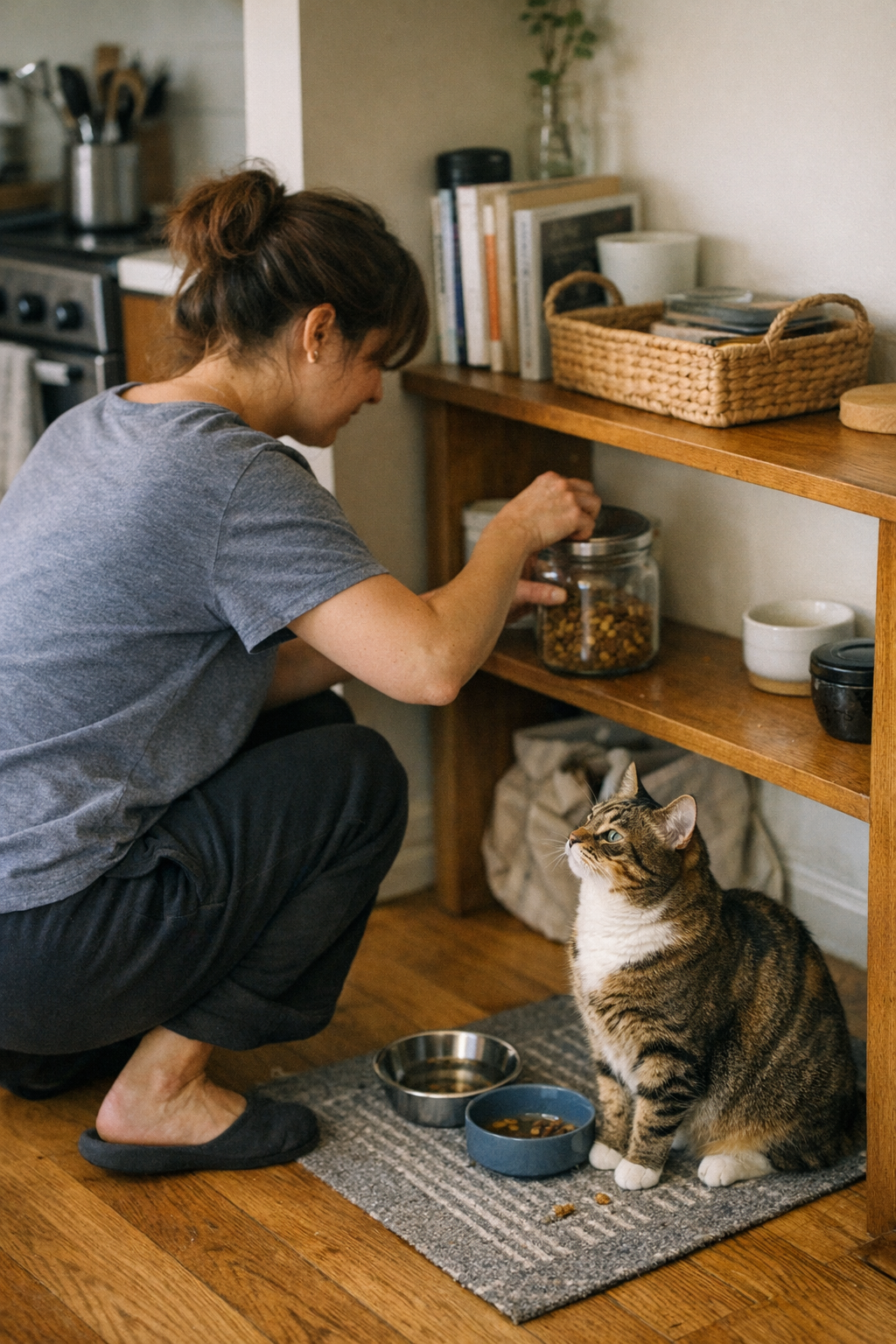
One afternoon the difference clicked. The mat near the kitchen entrance used to need daily cleaning. Once the treats were stored in a lidded jar on a higher shelf, used only at predictable intervals, the extra wipe-downs lessened. Switching to smaller treats helped too—more of a token than a handful—reducing crumbs and noise. Instead of repeated resets, the feeding corner needed only an occasional clean. The setup demanded less time and attention, smoothing the overall flow of the room’s daily use.
The Calm Between
Now, the cat still finds her spot, but she no longer clusters by the shelf in hopes of more treats. Resetting the corner feels lighter, surfaces stay cleaner longer, and the treat routine holds its place as a simple reward, not a constant task. Keeping feeding—and associated cleanup—contained means fewer small disruptions. Smaller treats, sealed storage, and limited reach all help keep the rest of the shared space open and peaceful.
Sometimes these quiet tweaks matter more than they seem. They support easier refills, faster wipe-downs, reduced scatter from lingering crumbs, and less strain on cleanup routines tied to feeding areas. For real indoor-cat life, those small improvements keep the space working for both cat and human day after day.