Quiet Moments at the Bowl That Bring Peace Home
Repeated feeding hesitations often signal routine friction from inconsistent bowl placement; adjusting setup slightly improves calm and mealtime flow.
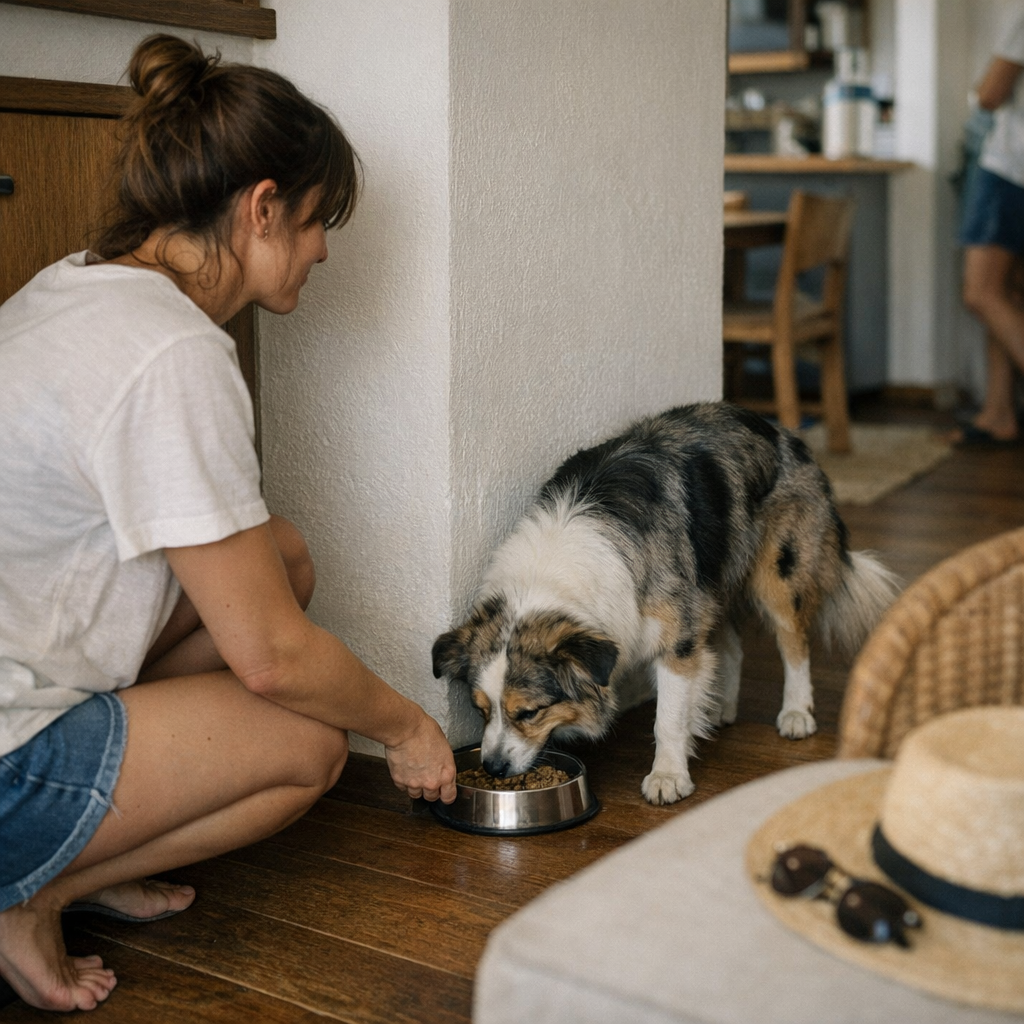
You start to notice it after a few meals: your dog hovers just a few seconds too long at the edge of the bowl, shifts weight, glances up. At first, it seems like a simple pause—maybe a quirk or just your own impatience because you have other things to do. But then it repeats the next day, and the next. Our feeding spot always looked tidy enough, right near the kitchen entrance. What I kept missing was how much foot traffic crossed that patch of tile, especially when everyone came rushing in before dinner.
It seemed straightforward. Just put the bowl where there was space and move on with the evening. But after a week of these pauses, it became clear something in the setup was holding everything back. Every time my dog stopped mid-meal to peer behind her or shuffle a few inches, it wasn’t because she suddenly didn’t want the food. It was because the steady flow—family members passing, doors opening, shoes squeaking—kept pulling her out of the calm moment meant for eating.
Patterns Quietly Building Up
You only recognize the pattern after enough evenings stack up. The bowl works fine at first; your dog begins eating, then hesitates, half-turns her body, tracks a sound, and only really settles once the kitchen clears. Some days she circles, almost like she’s searching for a better angle. Meanwhile, everyone else’s dinner gets pushed back because cleanup waits on her finishing.
It isn’t a crisis, but it’s a consistent friction point. I kept thinking she’d settle into the spot, but it never quite happened. That lingering feeling—that the neat setup didn’t match what actually worked—kept coming back. It’s easy to ignore small repeated hesitations if you convince yourself it’s just a phase, but most patterns like this don’t disappear on their own.
Rearrangement That Didn’t Look Like Much
I moved the bowl once, closer to her bed. It made sense—fewer people’s feet in that corner during busy times. But it was too close to her water dish, and she kept bumping her muzzle against the edge, disrupting her eating rhythm in a different way. I tried again, this time tucking the bowl against a wall but out of any main walkway.
The bowl didn’t look much different from before, but the difference showed up in small ways: no more hovering or looking over her shoulder. She just ate, then padded directly to her resting corner. Cleanup happened before the noise reached its peak, and the evening felt less stretched out. The routine realigned itself quietly, without fanfare.
You pay more attention after a change like that. I started noticing how she relaxed right after eating, with no more circling or stalling. It was a level of calm I wouldn’t have seen if nothing had shifted.
Seeing the Routine for What It Really Is
Over time, you realize these daily dog routines rely less on one big fix and more on many small, unnoticed adjustments. The bowl placement alone was never the full problem—it was how the space and routine collided, and where I overlooked friction points.
Now I return to that spot not just out of habit but because it’s easier. There’s no mid-meal tension spilling into the rest of the evening. If anything, the whole feeding and cleanup rhythm picks back up—not because we became more efficient, but because that tiny snag finally let go.
Little patterns like this don’t announce themselves. They build, one quiet repeat at a time, until the fix is so subtle you almost don’t notice it—except that life, for a few minutes each day, becomes gently easier.
Sometimes it just takes a small change in everyday setup to see those little returns add up.



