Quiet Moments Before Sleep with a Restless Dog
A restless last hour often starts with overlooked setup details; fixing these subtle signals shortens bedtime delays and eases nightly routines.
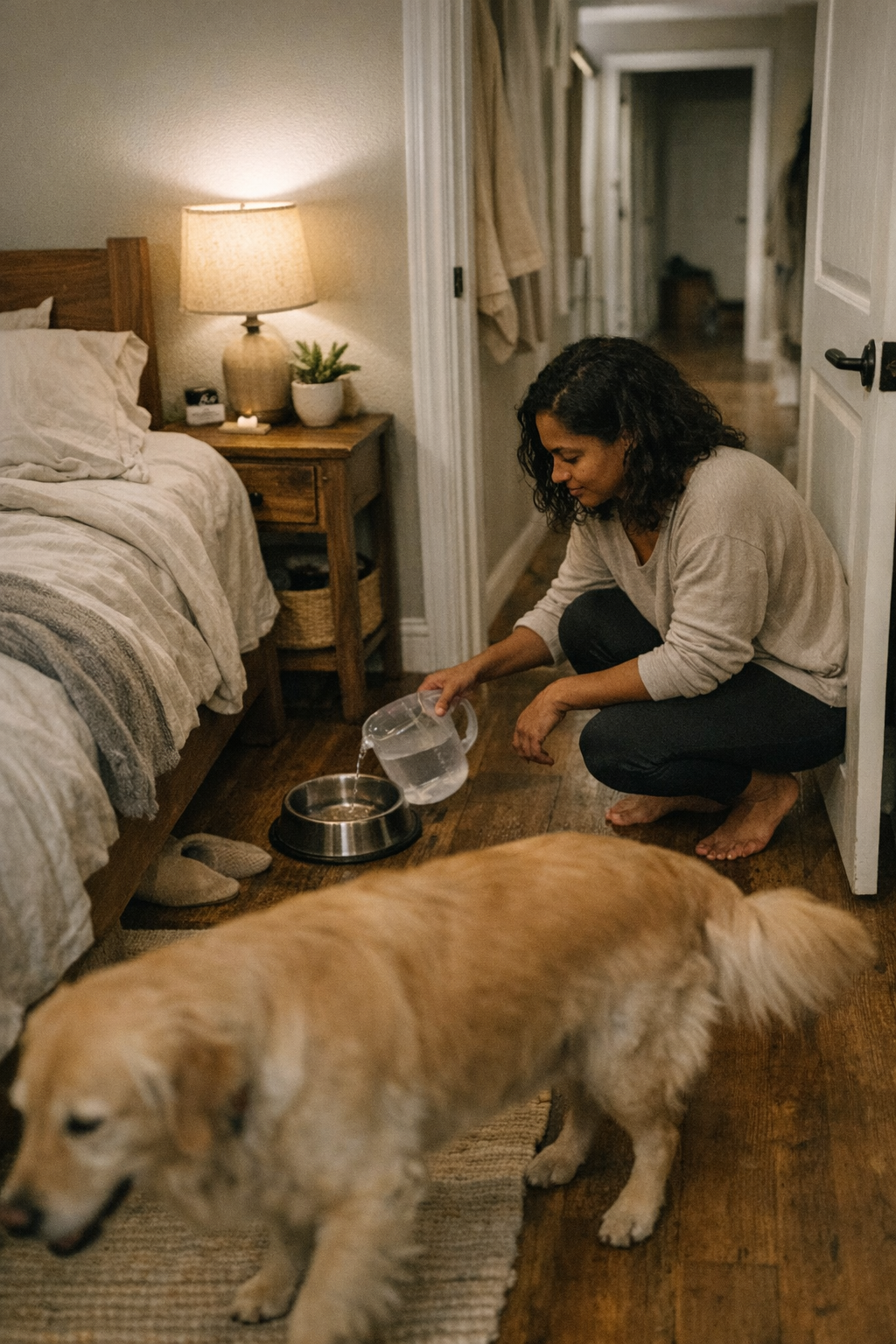
Most days, I didn’t notice how much the small things dragged out the last hour before bedtime. There’s a kind of rhythm to the end of the day with a dog: one last walk, water checked, a careful lowering of the lights. It seemed fine at first. But there was always a moment—a circle at the foot of the bed, a restless trip back to the living room, a repeated pause at the doorway. These weren’t outbursts or dramatic interruptions; just little hesitations that kept the night from winding down smoothly.
You notice it after a few evenings. The routine that’s meant to be simple—bed, bowl, door—keeps looping through small, quiet snags. My dog would seem ready for sleep, then pause, hover near the water bowl, then want to go back out just one more time. What looked like harmless fidgeting began to feel like a missed signal, a misplaced piece somewhere in the wind-down routine. The difference showed up not in noise or chaos but in the way the end of the day never quite clicked shut.
A Nightly Pattern, Hiding in Plain Sight
On most nights, the rhythm settled in without much thought: walk, bowl, lights, bed. But as the days passed, a pattern became clearer. My dog circled near the door, stopped to stare at the empty spot where the water bowl sometimes waited, and drifted between the hallway and the bedroom before finally settling down in his corner.
That part kept repeating. Just when I thought he was done for the night, he’d run through the same routine—checking the door, scanning for water—stretching the last stretch longer than necessary. These weren’t cries for attention or mischief; it was more like unfinished business. The physical setup looked tidy enough, but very quietly, something about it slowed us both down.
A bowl that was sometimes in the kitchen, sometimes by the bedroom. A crate that occasionally blocked part of the hallway. Toys piling up near the door. None of these were big on their own, but repeated daily, they crowded the routine. Bedtime started to feel less like winding down and more like managing small interruptions.
What Stays Comfortable, What Makes It Easier
The difference between an easy bedtime and a halting one wasn’t obvious at first. It wasn’t about keeping everything perfectly neat or clearing every trace of clutter. It was whether the needed things were reliably where they needed to be every night, without improvisation. That was the quiet detail that made the bigger difference—the shape of routine comfort.
I moved the water bowl once, then again, searching for a better spot. Sometimes the towel for muddy paws hung near the door; other nights, it was forgotten in the laundry. When the bowl stayed at the far end of the kitchen, the circling returned. When the towel was within easy reach, cleanup was less of a scramble.
Comfort looked less like aesthetic order and more like a low-resistance path for both of us. For my dog, it was the memory of where water could be expected, the feel of a consistently dry spot to land, the peace of predictable steps. For me, it was not having to retrace the same route, not being sent back to refill or rearrange, and not bringing extra tension to the fading day.
Small Shifts and Fewer Missteps
It took a while to realize that a more restful night for both of us relied on small, steady access points. When water was always there—filled, waiting, and close to the bedroom—his last slow pacing faded. When the crate’s side was shifted just far enough from the wall, stubbed toes and blocked shortcuts disappeared.
We stopped stepping around the same pile of toys because I finally started tossing them into the bin before the nightly walk. Not all at once, but as part of the cycle. The routines didn’t become perfect, but they slowly lost their friction. This practical change wasn’t about repeated actions but repeated setup. It never seemed dramatic, but the last hour started to shrink. Bedtime became less a test of patience and more a gentle close to the day.
Most of the adjustment came quietly—space reclaimed, access cleared, bowls and towels in the right place on the first try. These small changes pay back in invisible ways. Not every night is smooth, but the restless little loops don’t win as often as they used to.
Some nights still take an extra minute; that’s fine. The signal is easier to read now, the cues are clearer, and we both find sleep a little faster. If you find yourself stepping over the same toys or retracing for a missing bowl, there’s no need for an overhaul—just a nudge to routine, a gentle shift in space that pulls the evening quietly back into place.
When small things settle, there’s a little more room to end the day together.