Quiet Moments Behind a Well-Lit Home
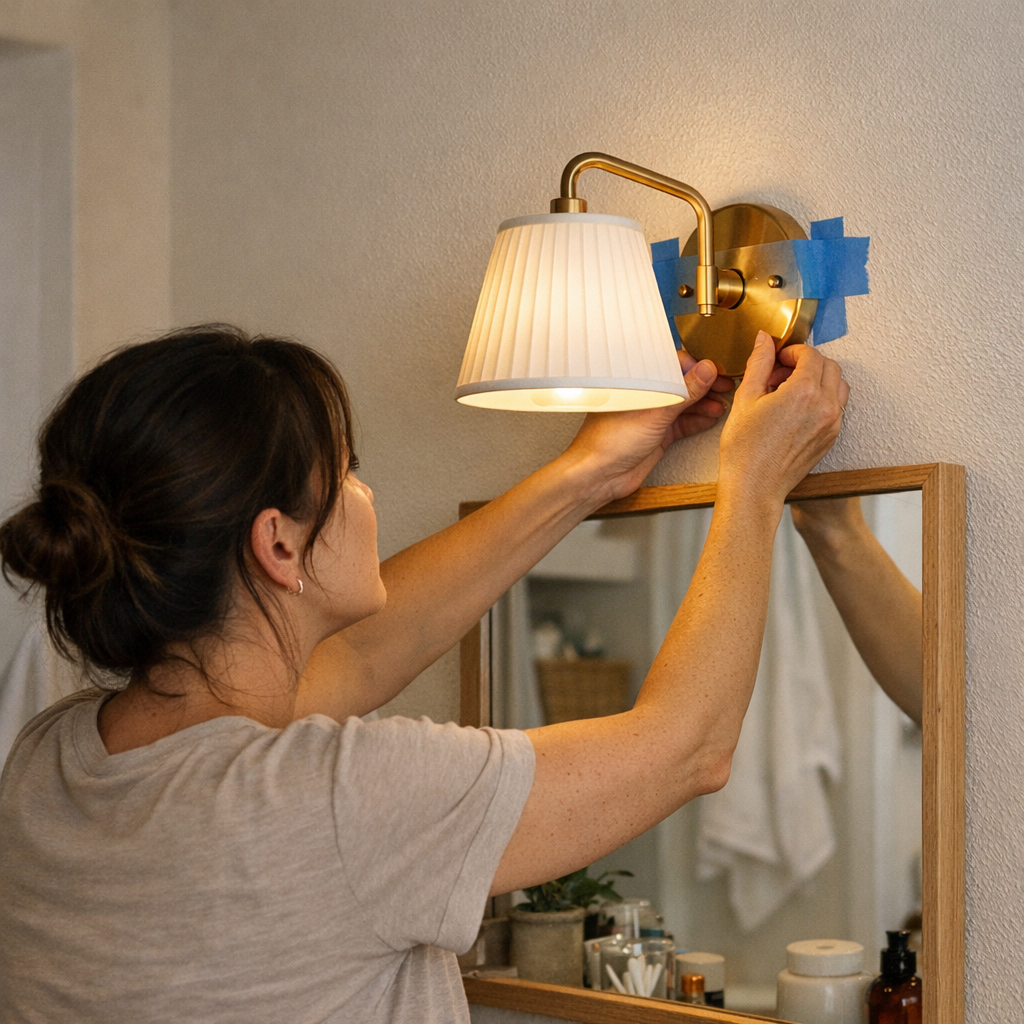
Using painter’s tape during lighting installation gives solo installers a steady hold, preventing tilt, shadows, and gaps over time.
There’s a particular pause in the moment after turning on a new indoor light fixture. It’s not quite anticipation; it’s a small hope that everything settles into place properly: no wobbles, no extra shadows creeping along walls, nothing askew. I used to rush through that feeling, eager to finish the job and move on. But living with the results—through late-night hallway crossings, quiet mornings in the laundry room, and slow climbs up the stairs—taught me what I’d been missing. The difference between lighting that just functions and lighting that truly works doesn’t start with the design or even the bulb. It begins in the way a fixture first comes to rest against the ceiling or wall—whether it’s steady, or not quite.
That Moment When Everything Shifts
After several solo installations, I noticed a common moment where the fixture seemed to have a mind of its own. Ceiling plates, vanity lights, semi-flush mounts, wall sconces—each demands at least three hands and a deep breath.
You don’t see it immediately. The misalignment creeps in while balancing screws and wires. Maybe the fixture’s weight pulls it a fraction off center, or your grip slips as you nudge a wire nut. The drop is subtle—a matter of millimeters—but over days it makes a difference: a wall sconce near the mirror casting uneven shadows, or a flush mount above the entryway that always seems to have a tilted halo.
It turns out that painter’s tape makes the difference—not so much as support, but as a kind of temporary patience. It gives your hands a break just long enough to get the fixture truly aligned, especially when no one is around to help.
Where the Real Effects Are Felt
The real proof appears in the places you move through out of habit. The hallway light you pass every evening with arms full of groceries, the bathroom fixture above the mirror where you check your face. In these routines, even a subtle sag or tilt creates problems: a thin shadow stretching further down the wall, or glare where there should be calm, even illumination.
That was the part that stuck with me. Not during installation, but in the small interruptions—and how they accumulated. A slightly crooked flush mount casting a sliver of darkness into the stairwell, forcing you to pause mid-step. Each awkward moment traced back, in hindsight, to the day I’d skipped taking a few seconds to steady the fixture.
Sometimes, turning lights on and off over weeks seemed to nudge fixtures further out of alignment. Without that bit of extra hold, fixtures drifted—slowly but undeniably.
Living With the Result
The change, after using painter’s tape on a recent flush mount and vanity light install, felt minor at first. Just a couple of strips bracing the mounting plate: nothing grand, barely noticeable. Yet the fixture held tight, letting me connect wires with both hands. No frantic juggling, no surrender to gravity or fatigue.
You can feel it long after installation. The bathroom light stays perfectly balanced day after day, with no creeping tilt or unexpected shadow in the hallway at midnight. That small stability on day one extends through every repeated use—the difference between a light that just looks finished and one that quietly supports your everyday movements and routines.
If you’re curious to see the kinds of fixtures this simple trick helps keep steady, you can find the collection here: http://www.lighthelper.myshopify.com



