Quiet Moments by the Window Hide Daily Pet Care Challenges
A calm cat at the window often covers up where a daily care routine strains; keeping supplies by the window makes routines lighter and more reliable.
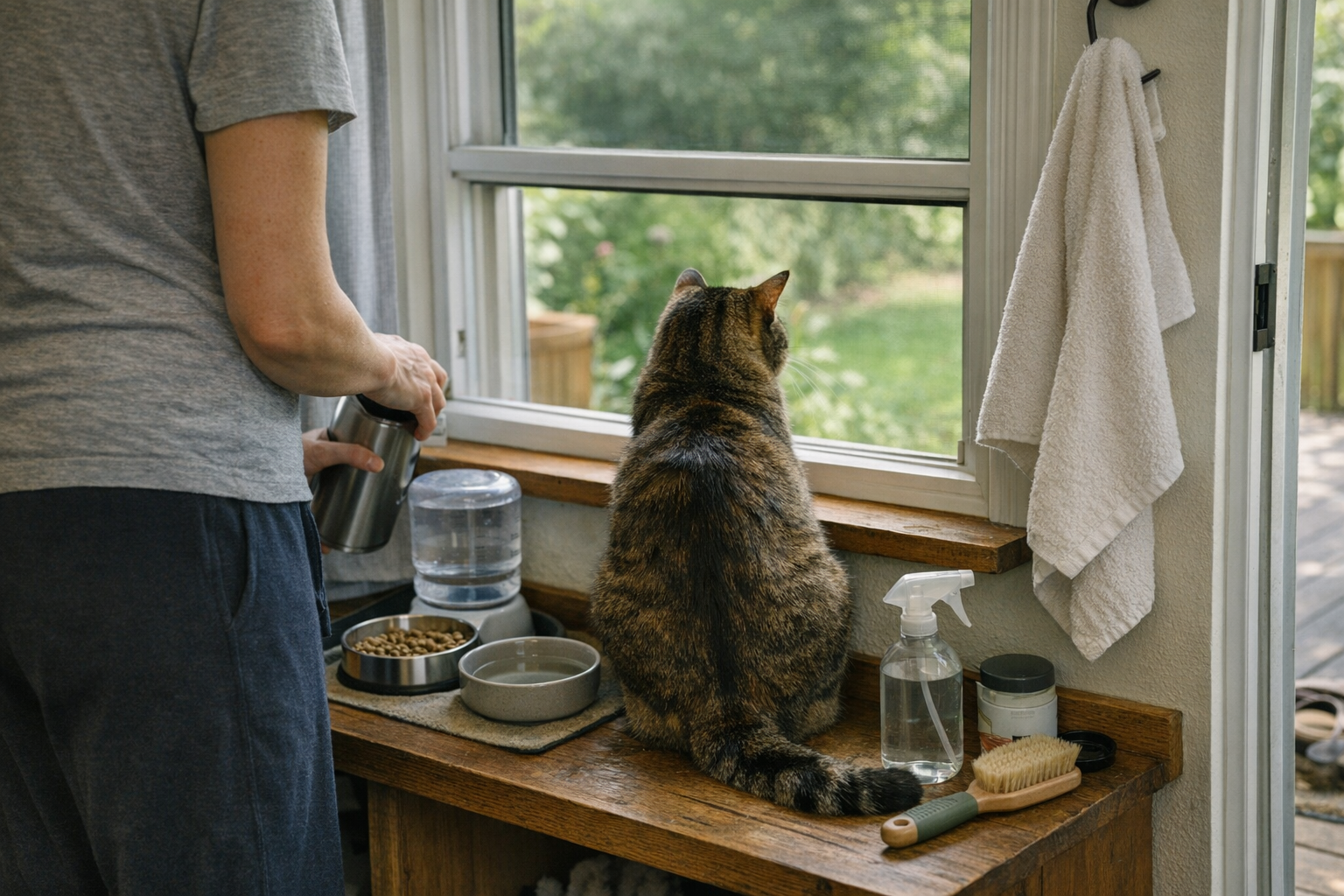
There’s a certain kind of restfulness when a cat settles into their favorite window spot or a dog noses through the door after a quick loop around the yard. That quiet ease feels almost undemanding—until you realize you need to make another trip down the hall for that one thing you didn’t leave by the bowls. In everyday pet care, small actions like refilling water or grabbing a towel should fit smoothly into the day, but when those few steps get interrupted or forgotten, the calm fragments. One missed refill, a towel not within reach, just enough food dust beneath the bowl to force an extra pause—and suddenly routine tasks begin to crowd your quiet moments.
A Setup That Looks Easy—Until It Isn’t
You start to notice after a few rounds of feeding or cleanup: the difference between a smooth routine and one that drags is smaller than it seems. At first, the feeding area looks neat—a tidy bowl on a mat with no leftover crumbs. Yet every few hours I found myself backtracking for a water bottle or wiping up spills with a towel that should’ve been close but wasn’t. Small gaps like these gradually made the setup feel like a patchwork of missed steps. The routine seemed to hold only if I kept chasing these loose ends.
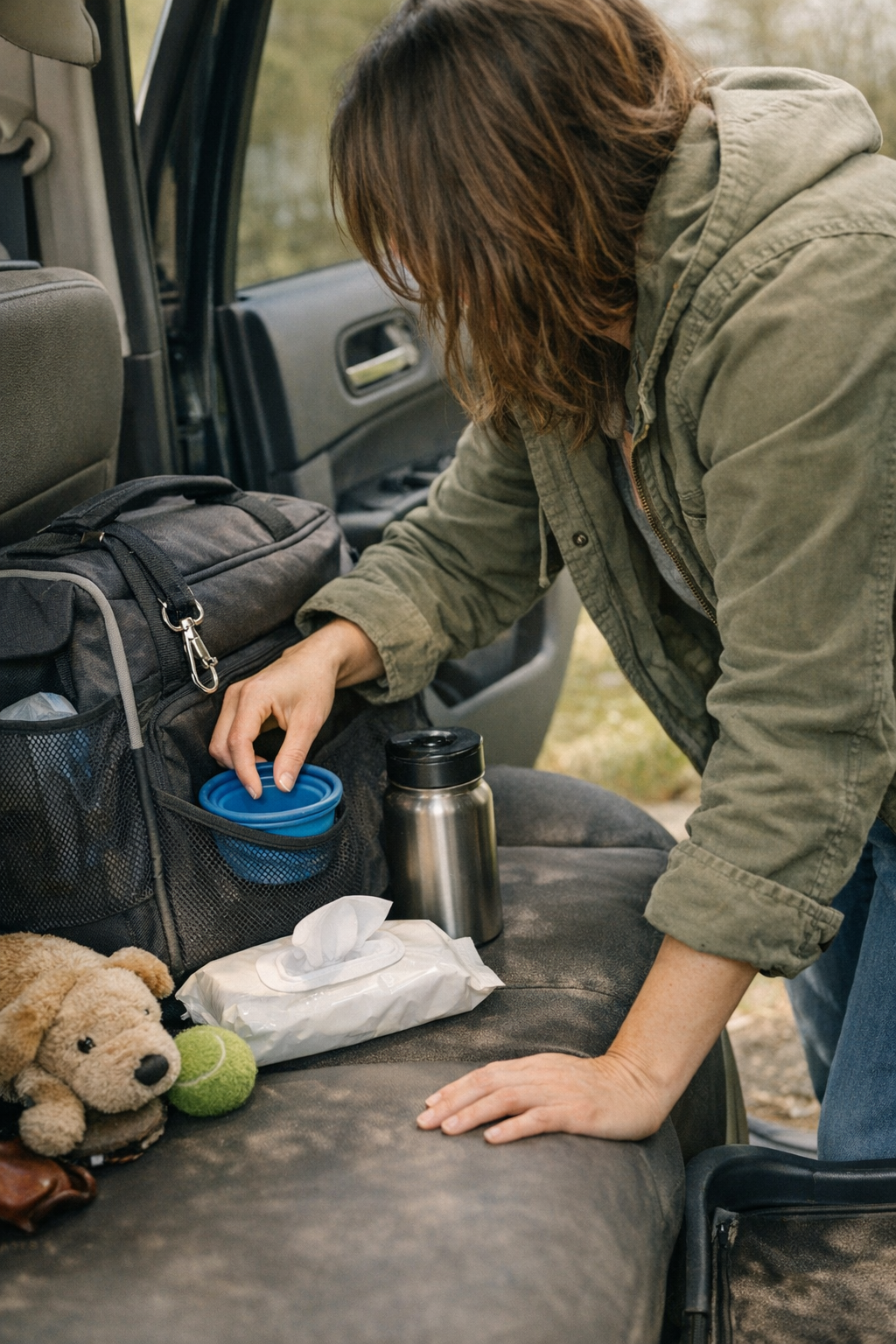
The pets always expect what’s next—be it fresh water or a bit of grooming—so if I wasn’t ready, small delays piled up. Damp paws at the door, crumbs tracked across tile, the water bowl running low just long enough to demand attention: these details blurred together, fragmenting simple care moments.
Where Interruptions Grow
Those tiny pauses—quick departures from one space to another, a backtrack for a missing rag—don’t register immediately as problems. But counting them up shows how often they break a smooth flow. Each time I had to fetch a brush or towel after the fact, cleaning took longer and felt less final. The “almost done” moments stretched out: half-wiped counters, waiting pets, and minutes lost to small fragments of effort.
What began as a simple set of tasks slowly became a tangle of unfinished chores quietly pressing into each other. The clutter didn’t grow loudly but from these small, paused steps, leaving the setup always a little half-ready.
Making It Steady, Not Just Tidy
It took patience before changing the approach. I slowly reshuffled a few things—kept a towel right next to the feeding station, stashed the water refill bottle there, hung a brush on a reachable hook. These small shifts weren’t dramatic, just a quiet reset. Suddenly, the chores folded into each other: cleanup after a yard dash or window watch happened in the moment, not because I had to run down the hall for basics.
The change didn’t speed everything up exactly, but it softened the edge between tending pets and tending the space. The pattern repeated with fewer pauses, less lost rhythm. With a steady setup, you don’t leave the spot to finish what you started.
Some days still require an extra pass through the hall, but the loop shrank—and the window watching stayed calm a little longer. For anyone curious, I found more of what helped right here: http://www.calmpetsupply.myshopify.com