Quiet Shadows Lifted in the Kitchen’s Late Hours
Ceiling lights leave kitchen counters shadowed, hindering late-night cleaning; under-cabinet lighting provides focused, even light, improving visibility and cleanup.
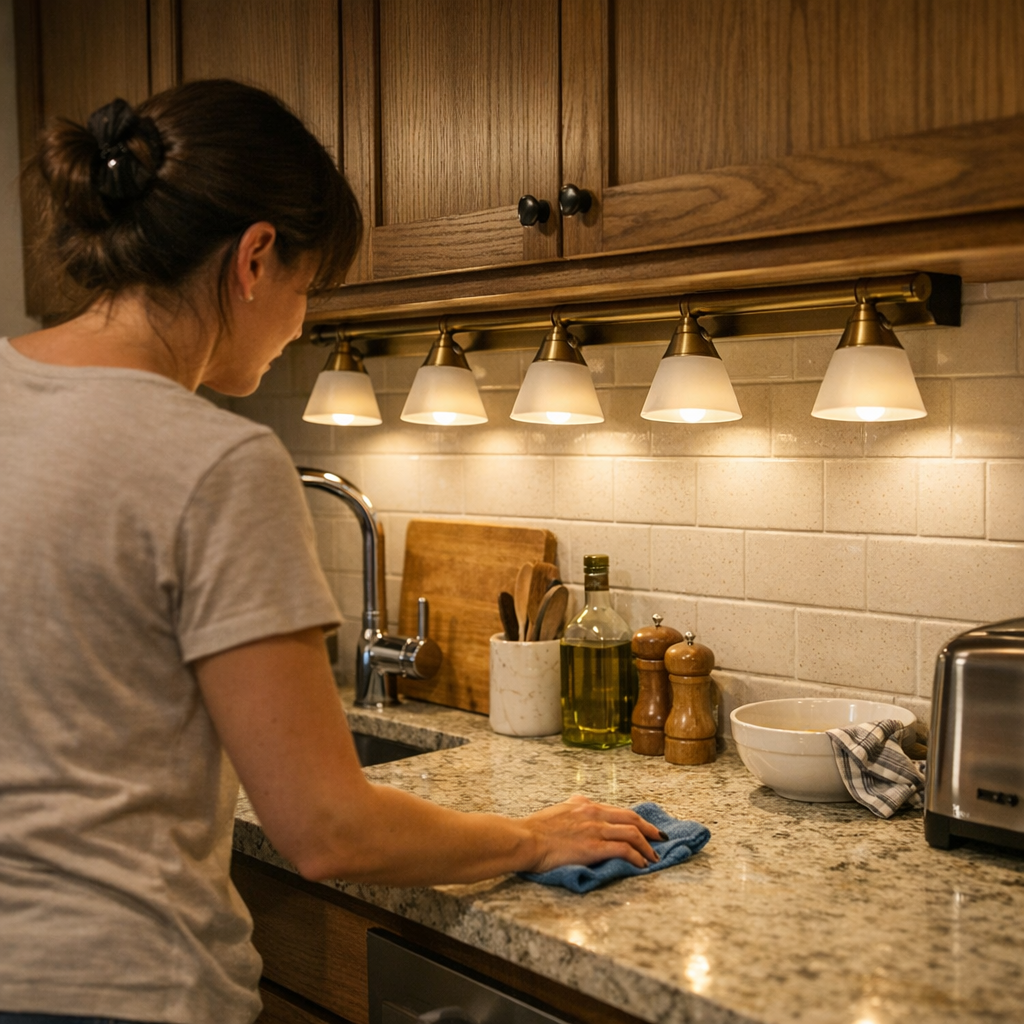
It’s often at the end of the day that what’s missing in a room’s lighting becomes clear—literally. A quiet kitchen at midnight, wiping down counters after the day’s activity has died down, reveals exactly where the light falls and where it doesn’t. It’s not about the overall brightness of the flush mount or semi-flush mount ceiling lights overhead. The real gap shows in those narrow stretches under the cabinets, where crumbs linger and shadows settle, just beyond the reach of ceiling light alone.
You don’t notice it immediately. But you feel it.
Shadows That Follow the Routine
Most evenings, the kitchen feels bright enough with just overhead lighting—whether it’s a linear panel or flush mount fixture. But during the nightly cleanup, the flaw starts to show: a faint uncertainty near the backsplash, a patch that doesn't quite read right, as if something is hiding just out of your direct sight. A hand passes over a spot on the counter and comes back again—not from habit, but because the light hasn’t fully clarified that surface.
This recurring search for missed spots, those last streaks or crumbs obscured by uneven lighting, underscores an often overlooked challenge in kitchen lighting: task surface clarity under cabinet runs.
The Difference When Light Shifts
Adding under-cabinet lighting changes the scene—not suddenly, but quietly and profoundly. The focused strip light, positioned close to the outer edge of the cabinet, creates a steady, glare-controlled pool of light. The countertop no longer divides into bright and shadowed patches, especially at the back wall where crumbs settle or sinks collect water.
Night tasks become more straightforward. The puddles near the sink are visible rather than surprising the next morning. The work doesn’t drag on with doubled checks using phone flashlights or awkward leaning. This fixed task lighting brings a clear, calm confidence to routine kitchen activities, easing tension built up around unclear visibility.
Not Just Brighter—Better in Use
Ceiling lights like panel or semi-flush mounts set the general ambiance and brightness for a room, but the real functional difference comes down to where the light lands. Well-placed under-cabinet lighting fills in those dark edges, controls shadows along backsplash zones, and balances illumination across work surfaces exposed to daily use.
Positioning task lighting along cabinet runs reduces glare and eliminates “blind spots.” This creates a consistent, even spread of light that supports movement through the kitchen, reduces backtracking during food prep, and ensures every corner is visually accessible. Cleaning, prepping meals, or simply making a cup of tea all happens with full visibility—missed spots quietly disappear from the routine.
For kitchens with low ceilings or narrow layouts, integrating hardwired wall lights or vanity-style fixtures near critical zones further helps manage light layering and shadow control, especially around mirror zones or stairway turns adjacent to kitchen spaces. Damp-rated fixtures for wet areas like sinks add an extra layer of reliability to the lighting scheme.
Some evenings, once the under-cabinet and targeted task lighting are in place, it’s almost hard to remember what it felt like before.
If you find this kind of difference interesting, you’ll find a few examples here: http://www.lighthelper.myshopify.com



