Resetting Your Bag for the Next Journey’s Flow
A post-trip carry-on reset prioritizes quick-grab items and reduces access friction to prevent delays during security and boarding.
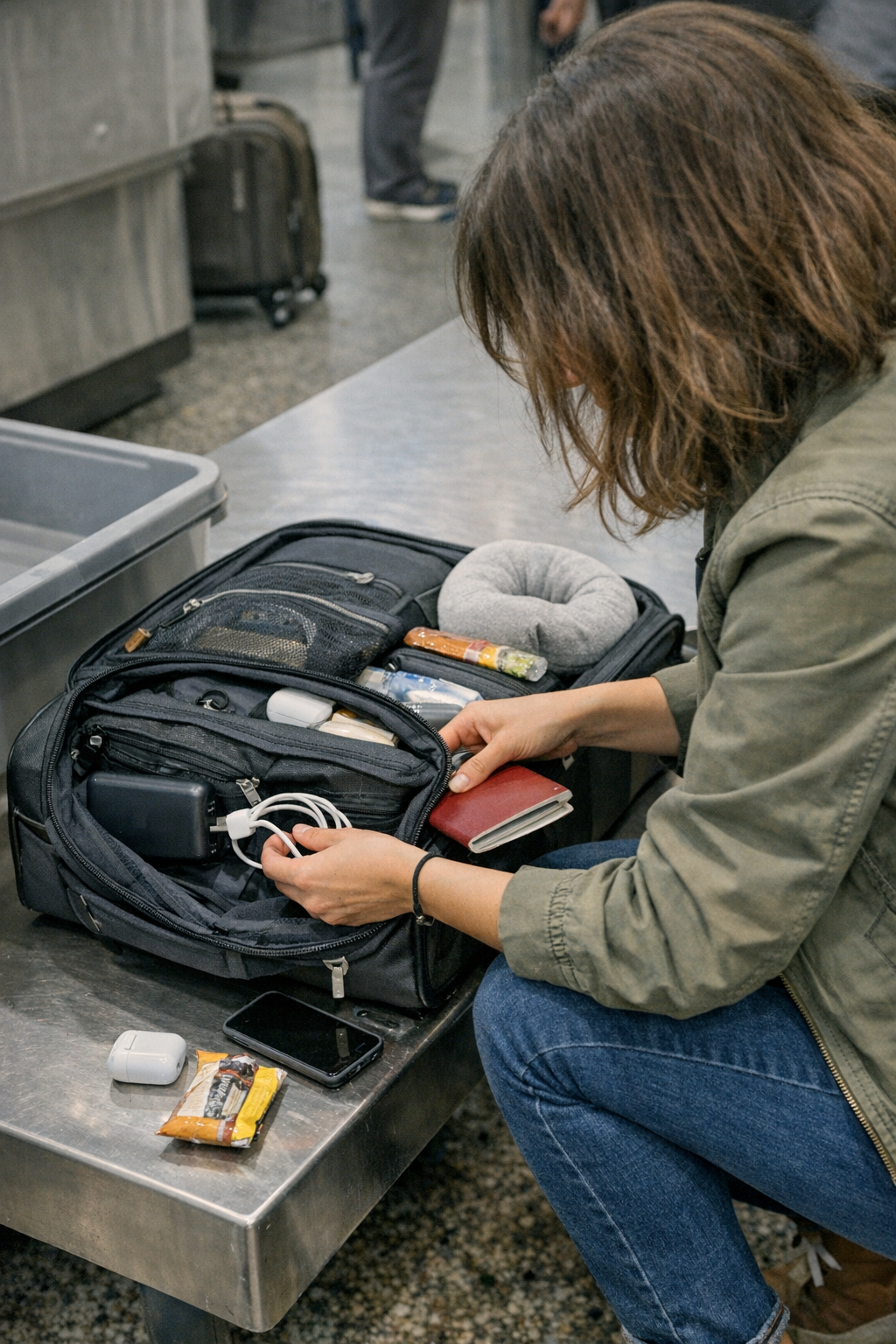
It’s surprising how quickly a smart-looking carry-on can stop working for you once you’re moving through the airport. One minute, everything is zipped in, lined up, and apparently “set”—the kind of order that looks perfect on your bedroom floor. But after a few trips, that polished arrangement often becomes its own source of friction.
You notice it at transitions: the bag opens for boarding, or you’re nudged forward in security, and suddenly, the system that made sense in stillness unravels. A charger tangles with travel documents. Toiletries slide against cables. You end up hunting for a power bank under layers that once seemed logical—until urgency hits. That recurring moment of digging is frustrating, but familiar.
The Difference Between Neat and Ready
At home, it’s easy to confuse neatness with readiness. You restore every pouch, refill each pocket just as before, and it looks perfectly organized. But at security checkpoints, boarding gates, and overhead bins, neatness gives out at the zipper. What really matters is not only where things go, but how quickly and smoothly they can be accessed under someone else’s timeline.
If you find yourself pulling out three items to get one, or swapping pouches mid-boarding, it’s not from lack of effort. The test comes fast: Are your travel documents, charger, headphones, and pen exactly where your hand expects them? Or are they buried one layer too deep—protected, yes, but out of reach when you need them most?
Repeated Interruptions Stack Up
One layover isn’t a problem, but multiple airport transitions turn these tiny obstacles into a slow series of snags—snagged pockets, awkward repacks, delays at security trays, and moments wasted before boarding. The frustration isn’t sudden or dramatic, but it accumulates. In fast-moving lines, you feel the gap grow between “organized” and “accessible”—the way one blocked pocket can ripple across three more exchanges.
You get a quiet reminder every time searching for one item undoes the rest of your bag’s order. What looked controlled while still can slow you down over hours in motion. Small inefficiencies become habits, and habits turn into unnecessary stress.
Movement-Friendly Means Letting Go of Perfection
Eventually, you adapt—not because advice suggested it, but because travel’s demands shape what works. The most-used essentials drift closer to the zipper’s edge. A pouch stays half-empty to create fingertip space. Things no longer go back exactly as they came, and quick access starts to outweigh symmetrical order. The payoff isn’t just less rummaging; it’s real ease in movement.
These adjustments don’t look like much on paper. But the next time the overhead bin is cramped or security trays come too quickly, you notice one less pause. Your hand finds what it wants without that extra shuffle. A carry-on arranged for movement, not just looks, stays quiet when you need it most.
If you want to see what that looks like in practice, you’ll find some examples here: http://www.carryonsupply.myshopify.com



