Small Changes That Quiet the Chaos at the Door
A smooth paw wipe routine depends on where each step breaks down in real use, not just what looks tidy. Adjusting towel location reduces delays.
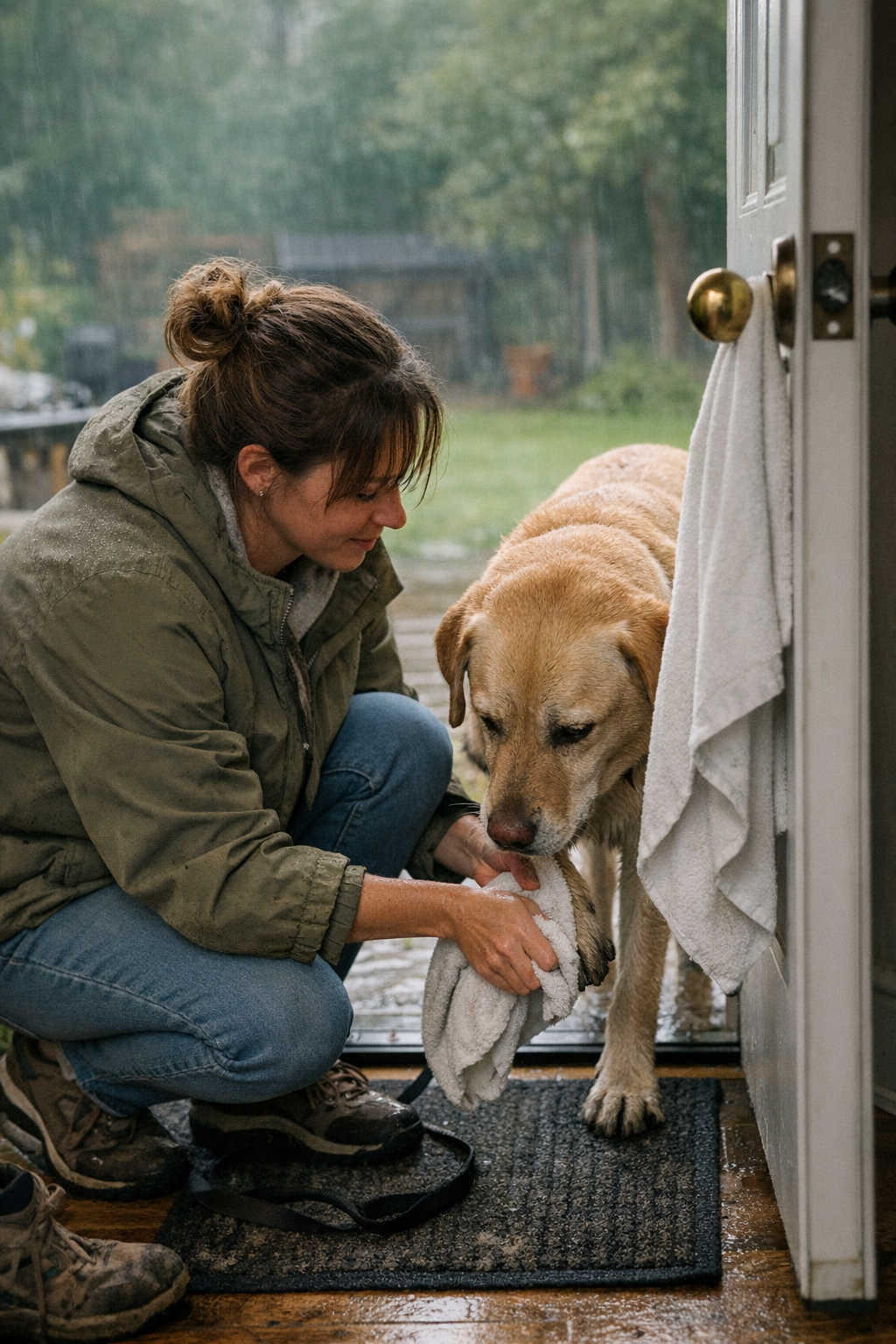
Most days, the pattern is almost invisible but always there: coming back inside after a walk, pausing at the threshold while the dog shifts, dirt and moisture loosening from each paw. What begins as a short routine—wipe, unclip, move on—gradually becomes less smooth as small friction piles up. The hand reaches for the towel and misses, lands on the wrong spot. The dog senses it, moves further inside, and the pause turns into a scramble instead of a calm reset. At first glance, it looked fine.
You start noticing it after a few mornings: how the dirt at the door creeps wider, or a wet pawprint shows up near the dog’s bedding just when you thought everything was wiped. My own routine kept stumbling over the same issue: the towel felt just out of reach when I needed it most. Sometimes it was thrown half-folded on a bench or tumbled into a basket with the leashes, slightly damp from an earlier rushed use. The difference always came down to those lost seconds—small gaps when everything is supposed to reset but doesn’t.
The Unremarkable Loop That Keeps Returning
Paw wiping isn’t a big event. It’s wedged between unclipping the leash and feeding, or slipped in before anyone washes up for dinner. But the slowdowns persist—they always find a way in. If the towel is misplaced, the dog steps onto the clean floor, pivots, or sits just shy of the door, making cleanup drag on. On wet days, you see mud patterns; on dry days, it’s faint grit that finds its way between your toes a couple of hours later.
That was what kept coming back: the split second lost searching, or pausing to manage a twisting, expectant body. Not dramatic, just quietly disruptive. The routine looks tidy from a distance, but doesn’t run cleanly in motion. The cleanup afterward never feels like a one-time thing.
I tried folding towels different ways, keeping them stacked neatly, swapping in new batches with fun patterns. The difference showed up in subtle ways, always at the repeated moments—lunch break, evening walk, rain-soaked errands. A pause at the door that should finish quickly enough to forget instead sticks in your memory.
When Setup Fails Quietly, Everything Takes Longer
It’s hardly noticeable at first, but the real cost is cumulative. One missed wipe, one extra fidget, and suddenly the bedding smells off or there’s a faint trail across the hall after you thought you’d wiped everything. Dogs track what we miss. The next meal runs late, the rest spot needs fresh blankets, the entry rug ends up bunched in the washing machine late at night. It’s the background noise of dog-life—not urgent enough to break everything, just always there.
The routine frustrates precisely because it’s so simple. It should work easily, yet the friction stays until you pinpoint it. I kept blaming the towel—maybe a softer one, a bigger basket, something new that would “fix” this. But nothing really stuck.
After weeks, one thing stood out: whenever the towel hung on the doorknob—removing that small “where did I put it?” moment—the whole routine smoothed out. Coming inside became just one flow: unclip, wipe, move through. My dog paused at the mat every time. There was no extended dance, no searching. The smallest change eased everything else.
A Subtle Shift Changes the Day
Eventually, I stopped focusing on “better” towels. As long as something absorbent hung on the doorknob, the rest happened automatically. That pause at the threshold gave us both a moment to reset—not for performance or training, just the natural next step. The routine held even on muddy days or busy schedules.
This subtle detail showed especially on days when my hands were full or I was on the phone. The real gain wasn’t softness or style—it was zero hesitation and no new mess inside. Cleanup got easier, not because the task changed, but because the starting point stayed constant. My dog noticed too, slowing at the same spot and waiting for that familiar motion.
The routine isn’t perfect now, but the old loop—pause, reach, readjust, mutter—rarely comes back. Dog-life spills over in small ways, but it helps when one piece stays quietly anchored.
Sometimes the simplest routines need the least invention to smooth out: just something always where you expect it, right at the door, ready for the next day. For anyone replaying that low-grade hassle at the threshold, you might find a few ideas here if you look around—this is one spot I did: http://www.dogpile.myshopify.com



