Small Changes That Transform Everyday Entryway Chaos
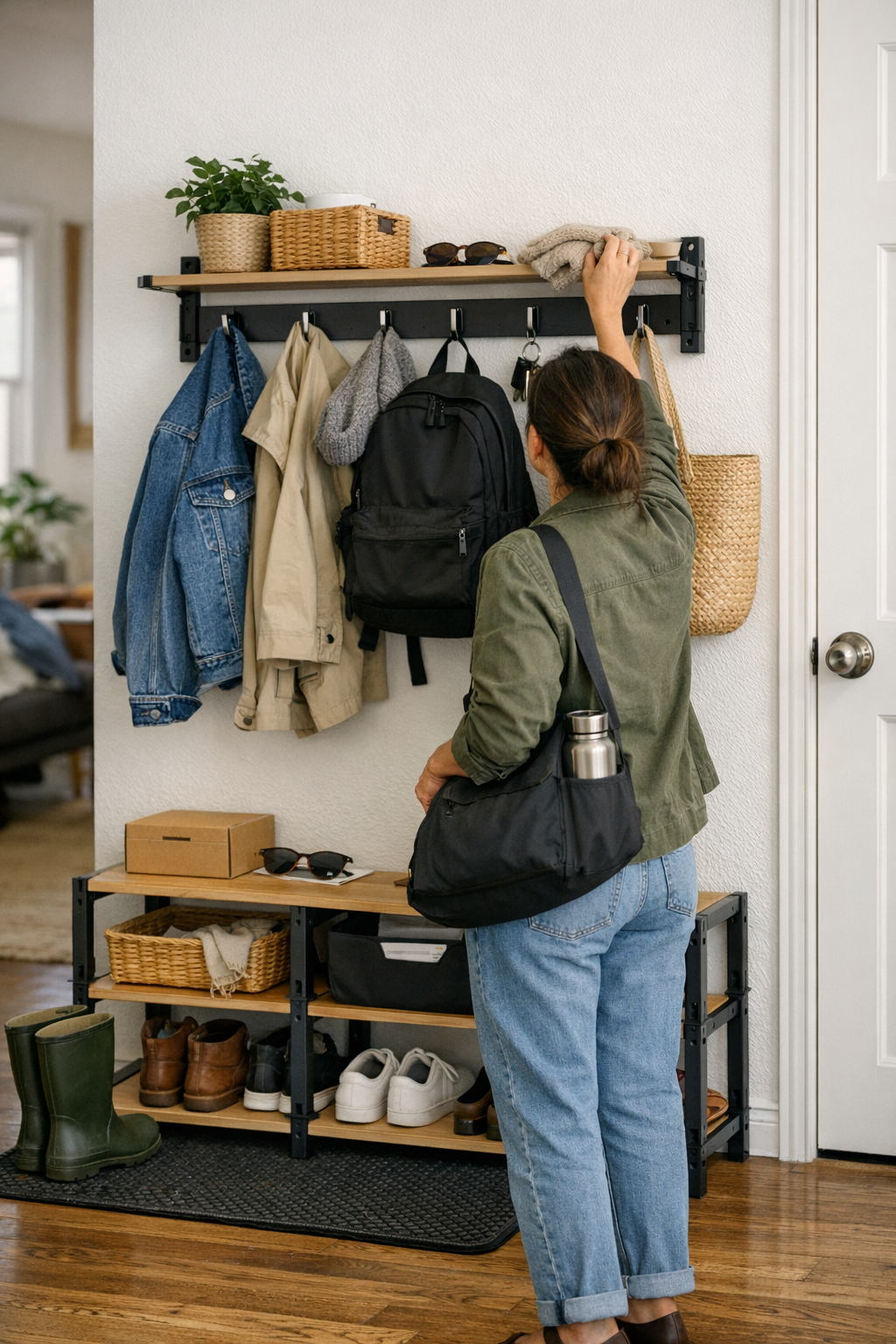
A coat tree clutters floors quickly; wall hooks with a shelf store vertically, clear walkways, and ease daily resets effectively.
It almost sneaks up on you—the way a drop zone, designed to be simple, becomes the busiest spot in the house. I used to think storage was about keeping things out of sight, but over a few weeks, I found the real test waiting right at the threshold: those first and last five steps, where shoes scatter, coats slump, and mail drifts dangerously close to the floor. The entryway never seemed quite complete, caught between looking managed and being lived in. That tension—between order and the slow spread of everyday items—settled into my mind before I even realized it.
How vertical alignment quieted the threshold
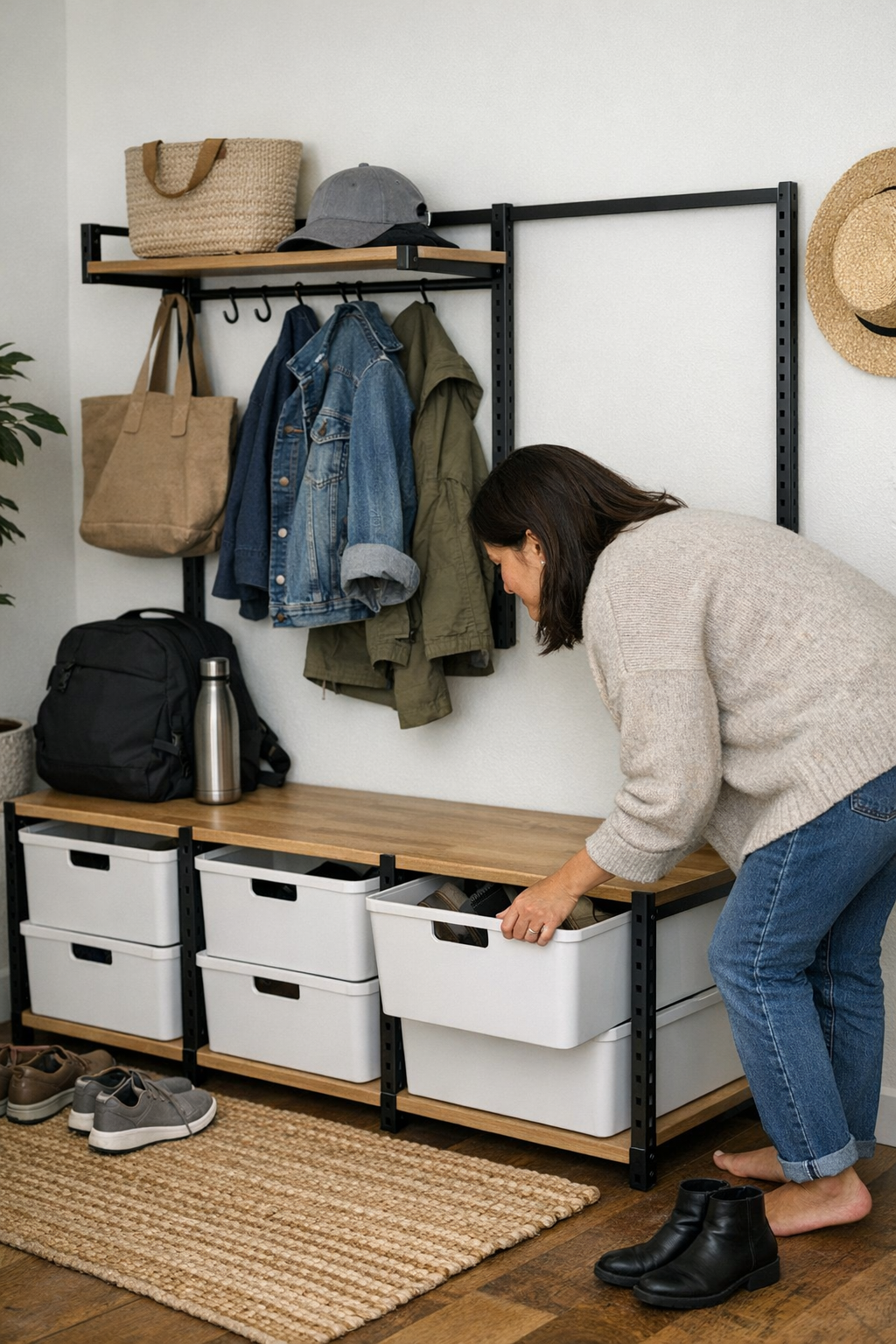
At first, adding wall hooks and a shallow shelf felt mostly symbolic. The coat tree had its charm, but as days filled with comings and goings, that charm faded beneath bags slipping off, boots piling up, and the silent frustration of blocked passage. Vertical storage nudged everything upward, assigning jackets, hats, and bags their own space on the wall and reclaiming the floor beneath.
You don’t notice it immediately. But you feel it—a certain friction dropping away with each routine. That was the part I kept coming back to: how everyone, without saying a word, found the new rhythms easier. The rows of shoes shrank. The impulse to toss things in a heap softened. Passing through felt simpler, and the boundary between “in” and “out” became clearer.
The quiet work of setting limits
The right setup begins enforcing its own edges. Each hook and shelf slot asks you—almost wordlessly—to sort things as you move. I watched family members start gravitating toward their own hooks, their own little shelf spaces for hats or keys. No decree, no sudden system—just a shift that helped the entryway hold against the steady tide of backpacks, jackets, and muddy sneakers.
It’s subtle but real. The times I found stray umbrellas or forgotten bags drifting across the floor grew rare. I realized I didn’t mind the visible arrangement; if anything, open storage made it obvious what needed attention. Nothing could really disappear in a pile, and shoes rarely blocked the door for long.
The hidden comfort in routine resets
Switching out a crowded standing rack for spaced hooks and a slim shelf didn’t just tidy the entry—it rewired my routines. Resetting the space at night took a few quiet gestures instead of an overhaul. When a mat caught wetness from boots and spaced hooks aired out damp jackets, I began to grasp the quiet benefit: less time hunting lost hats, less hallway chaos during the busiest hour.
Maybe that’s what stuck with me—the way transition storage, used day after day, becomes less about looks and more about how easily you can start and end each daily loop. These days, I barely think about it at all. But that’s the comfort.
If you’re curious where these kinds of small changes might lead, you can step into the world I’m describing here: http://www.betweenry.myshopify.com