Small Shelf, Big Change in Everyday Entryways
A wall-mounted floating shelf, sized and positioned carefully, keeps keys off surfaces and prevents clutter buildup in entryways.
How a Floating Shelf Quieted the Rush at My Front Door
There’s a strange comfort in reaching for your keys and knowing exactly where your hand will land. For a while, that wasn’t my reality. Each arrival or departure triggered a small scramble—keys vanishing beneath coats, receipts piling over the bench, the space losing order with every pass through the door. I didn’t expect a simple floating shelf to change much. But once it settled into place above the entry’s daily churn, the feeling around coming and going quietly shifted. One dedicated landing spot, out of the way but never far, began to shape how the space held together.
A Place That Stays Open, Even When Life Is Crowded
The pressure at the threshold builds gradually. You don’t notice it right away. Shoes gather at odd angles; stray bags slide off benches; the walkway narrows on rainy days. I started realizing how much energy gets spent—energy only noticeable in hindsight—simply clearing old clutter again and again. Tables and seating fill up, overflow, and then lose their function. That was the part I kept returning to.
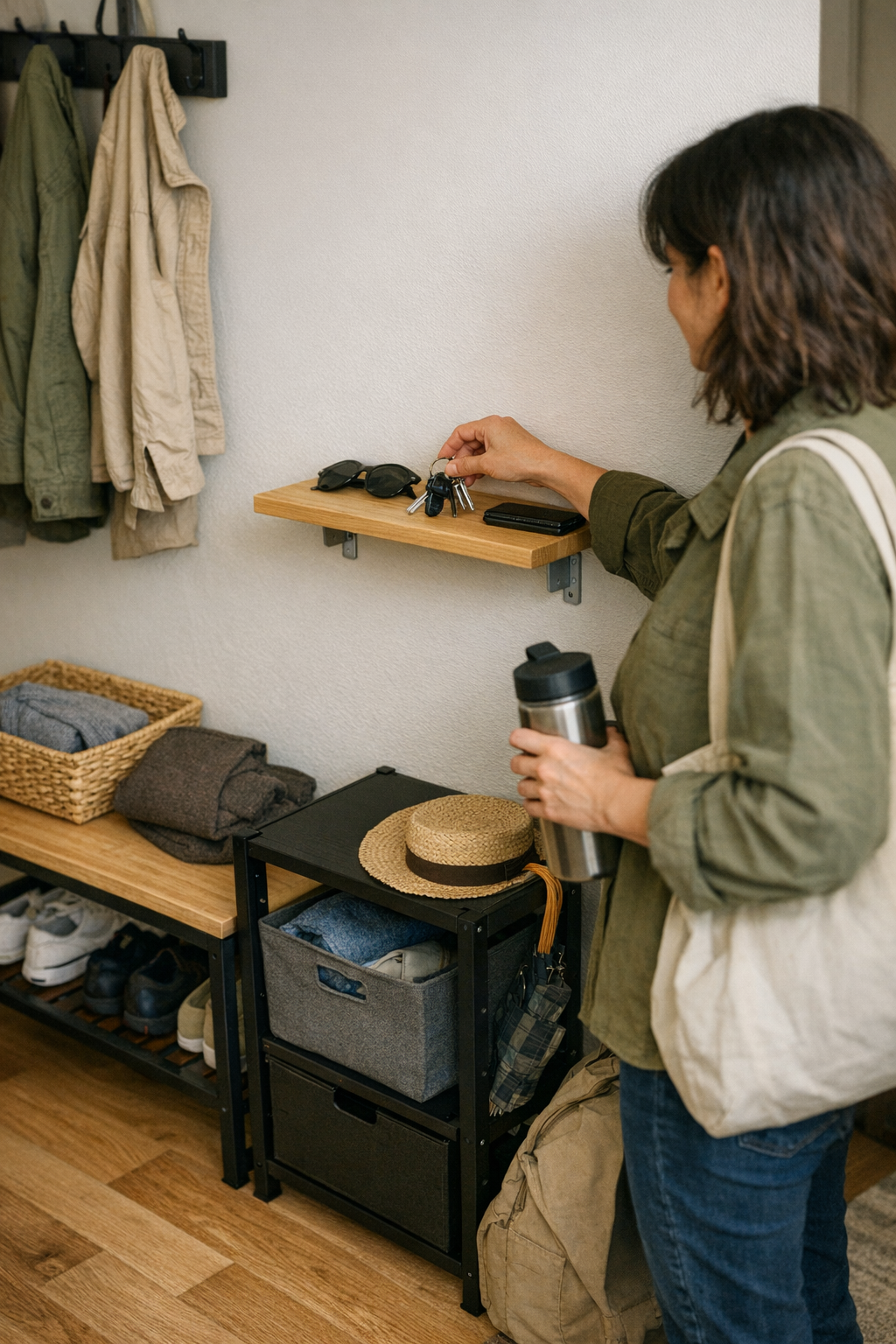
By hanging a wall-mounted shelf just high enough and just beyond the main drop zone, I created one small surface that always stays open. It didn’t compete with bags hanging on hooks or the slow spread of shoe rows along the floor. Keys began landing where they belonged—a small piece of certainty above the noise. The shelf became a quiet punctuation, not another surface to manage or rescue.
A Reset That Holds, Not Just for Looks
There’s a simplicity to a shelf that demands only essentials. At first, I thought a neat tray on the bench might be enough. But bench surfaces blur and blend once days stack up. By midweek, bowls and trays overflow. A floating shelf stands apart, holding a critical margin: keys on top, transient items below—always ready and rarely out of order.
That’s when it hit me. This reset wasn’t just visual—it was structural. No longer was there a need for a daily sweep of the bench or frantic searching beneath piles. Even after a busy day when everyone comes rushing in, dripping or tired, the shelf rides above the mess. It keeps the threshold passable and the routine smoother, almost making the act of coming home quieter and more deliberate.
Small Distances, Fewer Frictions
Over time, what settled in was less about aesthetics and more about friction and flow. The shelf’s careful placement—high but within easy reach, outside the main drop zone but close to the entry route—meant it never got buried or overwhelmed. This simple shape to the entryway mattered more than any decorative choice ever could.
There’s a kind of balance to a transition space that holds its purpose as days change. Keys now pause exactly where they’re needed, without blocking the door or disappearing into another stack. The tension between order and use—between looking ready and actually being usable—feels less sharp when a single element holds steady through the churn of arrivals and departures.
If thoughts like these linger during arrivals and departures, there’s more inspiration quietly gathered at http://www.betweenry.myshopify.com