Soft Light and Quiet Corners in Everyday Entryways
Entryway lighting that lasts combines indirect fixtures with cable management, preventing glare, shadows, and clutter in daily use.
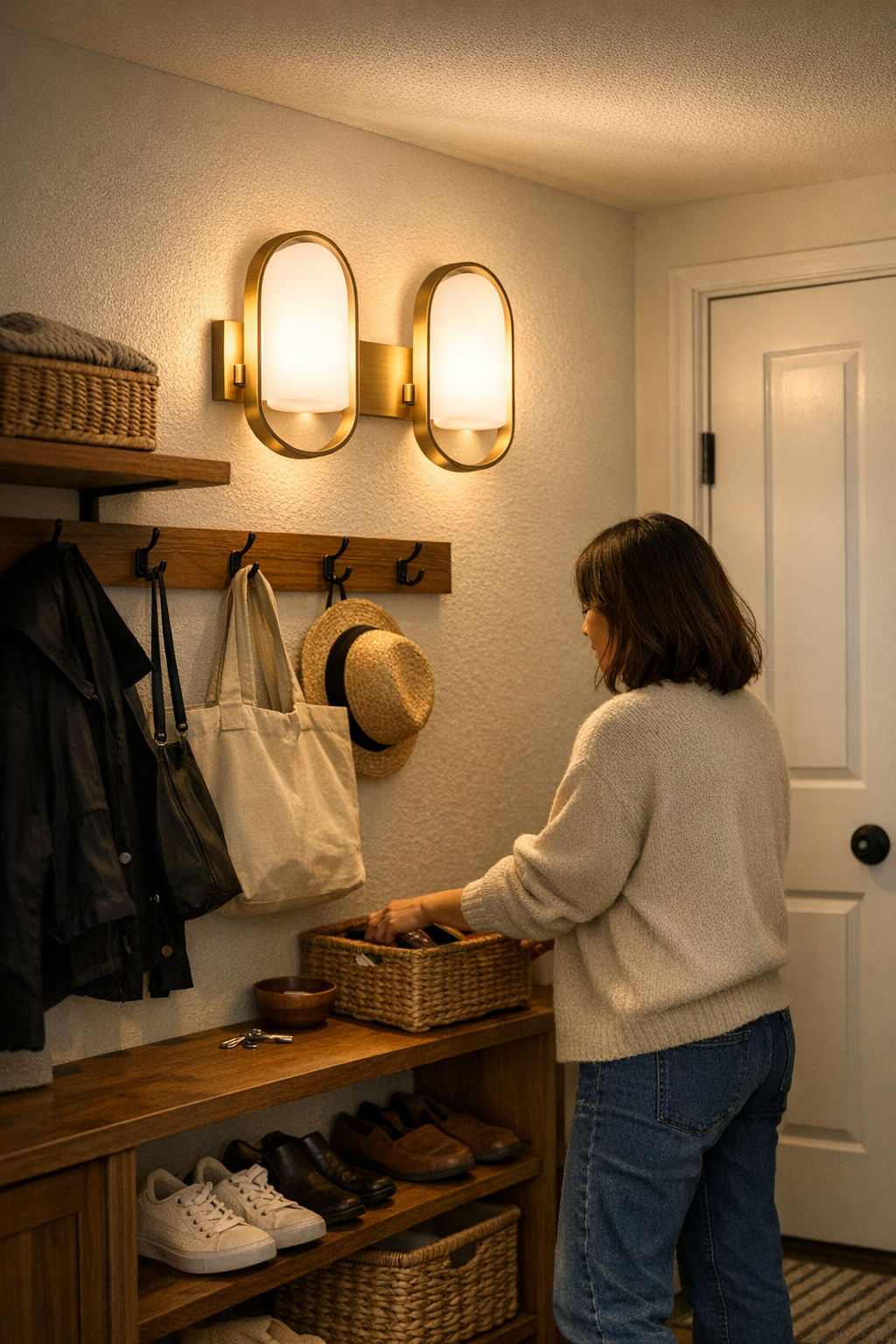
There’s an odd comfort in a hallway lighting setup that just works—the kind that greets you quietly, without drawing attention to itself. I used to think good lighting was all about brightness or the right color temperature. It turns out that it’s the small details—the angle of a beam, where cables run, how a bracket sits behind a shelf—that determine whether an entryway feels easy to move through or, over time, slightly irritating.
Entryway lighting isn’t dramatic, but it sets the tone for everything that follows.
The Softenings That Sneak Up on You
Mostly, what trips up a hallway isn’t darkness, but little spikes and interruptions—harsh light catching you as you turn the lock, cables hovering just out of sight at first and then collecting dust within a week.
You don’t notice it immediately, but you feel it. What seemed efficient and neat on day one—a panel above, a cord tucked along the wall—soon turns into a setup demanding attention every time you come home.
The moments that bring you up short are the lived ones: a shadow cutting sharply across the mat, cables inviting your foot or broom, the bracket you knock into on an absent-minded evening.
The Quiet Difference Between ‘Done’ and ‘Easy’
It’s funny. You lay out clean lines, pick a bright fixture, and everything looks finished. But day after day, the space teaches you what it’s willing to accept. Ceiling panels—especially slim, modern LEDs—can paint the floor efficiently, but leave odd shadows by the door or under hooks. Cables, almost invisible at installation, soon become magnets for stray dust or clutter.
That was the part I kept returning to: a space that looked settled in daylight but turned stubborn in regular use. Over time, I realized the most satisfying shifts weren’t about impressing the eye. They were about hiding the process—the cables tucked behind a shelf, the sconce aimed just above eye level, the bracket supported and out of the way.
It’s less about perfecting a look and more about never having to think about the lights—except maybe to notice the absence of frustration.
What Holds Up When the Routine Returns
In the end, it was a quieter detail I remembered. After a few weeks with two small sconces—mounted on slim brackets, cords invisible behind the storage cubby—the entrance stopped calling for tweaks. No more harsh lines at the edge of the mat. No scramble to adjust anything that should have been settled.
Soft light, tucked hardware, nothing to catch on or gather dust. It wasn’t dramatic, and it didn’t ask to be admired. But the space returned something subtle: a feeling that coming home wasn’t about managing the setup, just using it.
Sometimes a small shift—like tracing cables behind furniture or letting light skim along useful spots—can change the way you cross a threshold.
If you want to see how these details play out, there’s a quiet collection here: http://www.lightsupport.myshopify.com



