The Quiet Care Behind a Steady Ceiling Light
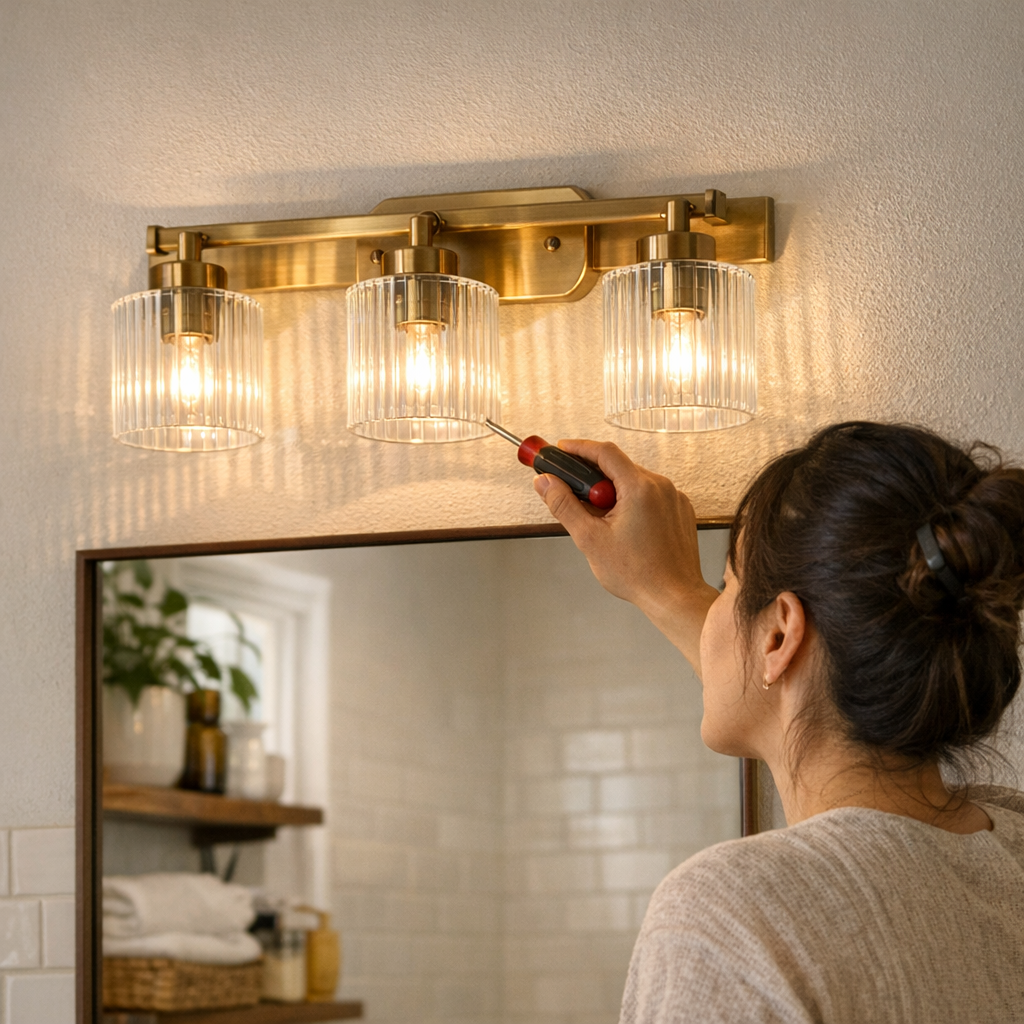
Finishing lighting installs with a manual screwdriver preserves alignment and seals, preventing wobbles, gaps, and grime for lasting results.
You notice it most when the day starts quietly. A hallway, just bright enough under its ceiling panel, feels familiar—edges straight, light pooling exactly where you expect it. It’s the kind of lighting you rely on without a second thought until, one morning, something’s just slightly off. A shadow where there shouldn’t be one. A small line of dust against the trim catching and holding your eye. That was the part I kept coming back to.
I hadn’t thought much about how a flush mount stayed so perfectly set. You install it, switch it on, move on with routines—the usual trek through the entryway, the steady glow in the bathroom mirror, the confident reach for something under a kitchen cabinet. But after some months, there’s a shift: the base tilts, a seam collects dust, and cleaning takes longer than it should.
Most days, you don’t notice it immediately. But you feel it.
What the Last Turn Means
It turns out, for flush and semi-flush mounts, vanity lights, task lights—almost any hardwired fixture—what holds everything together isn’t just the hardware or design. It’s the last bit of pressure during installation, the force behind that final turn. Power tools get the job done quickly (and at first, everything looks fine), but speed sometimes leaves behind an invisible tension. Overtightening or even the faintest twist past snug can warp a mount, compress a gasket, or leave the trim ever so slightly off.
You return to the room again and again. The fixture seems a little less square than you remember. A hallway light starts to have a faint ghosted arc above the lens, or a bathroom sconce refuses to wipe clean in a single pass. No drama, but a series of low-level annoyances—the kind that almost blend into the background, except they don’t.
Humidity, Edges, and One Quiet Correction
The bathroom fixture was where I really noticed. Damp mornings, fast showers, steam thick enough to find any breach in a seal. At first glance, nothing seemed wrong, but after a few weeks I could trace my finger along a faint, dark outline circling the flush mount—dust and moisture clinging exactly where the gasket never fully touched. Cleaning once was an effort; cleaning regularly became a habit.
With the next fixture, I finished the mounting by hand. One careful turn with a manual screwdriver, not so tight as to flatten the gasket, but just enough to feel the base settle firmly against the ceiling. This time, after weeks of steam, the edges stayed clear. One swipe with a cloth and the surface was clean. No tight shadows on the ceiling, no grimy outline. The effect was subtle but lasting.
You don’t always realize the difference until months have passed. But once you see it, you can’t unsee it.
Light That Holds Up to Life
There’s something almost invisible about light that simply works—steadily, day after day, no wobble, no drifting seam, no creeping dust line. In a laundry room where baskets often brush against a semi-flush fixture, I noticed the mount didn’t rotate at all after that final careful turn by hand. Even when the door banged open or elbows nudged the lens, the fixture held steady. The light fell exactly where it was supposed to, and cleaning was just another quick moment, not a small project.
It’s easy to overlook the simple mechanics behind a sealed fixture, but living with one that stays true changes how a space feels in small, persistent ways. Once the edges seal tightly and the light stays even, you stop thinking about repairs or touch-ups. The room becomes what it should be—a place that simply works.
These thoughts came together over many ordinary days and a few quiet adjustments; if you’re interested in where indoor lighting quietly meets daily routines—whether in flush mount ceiling lights, semi-flush ceiling lights, wall sconces, vanity and mirror lighting, bathroom-rated fixtures, or task lighting along cabinet runs—you might find more here: http://www.lighthelper.myshopify.com