The Quiet Change That Keeps Bottles From Falling
Shelf lips prevent bottles and small items from rolling off carts during daily use, keeping entryways tidy and routines smooth.
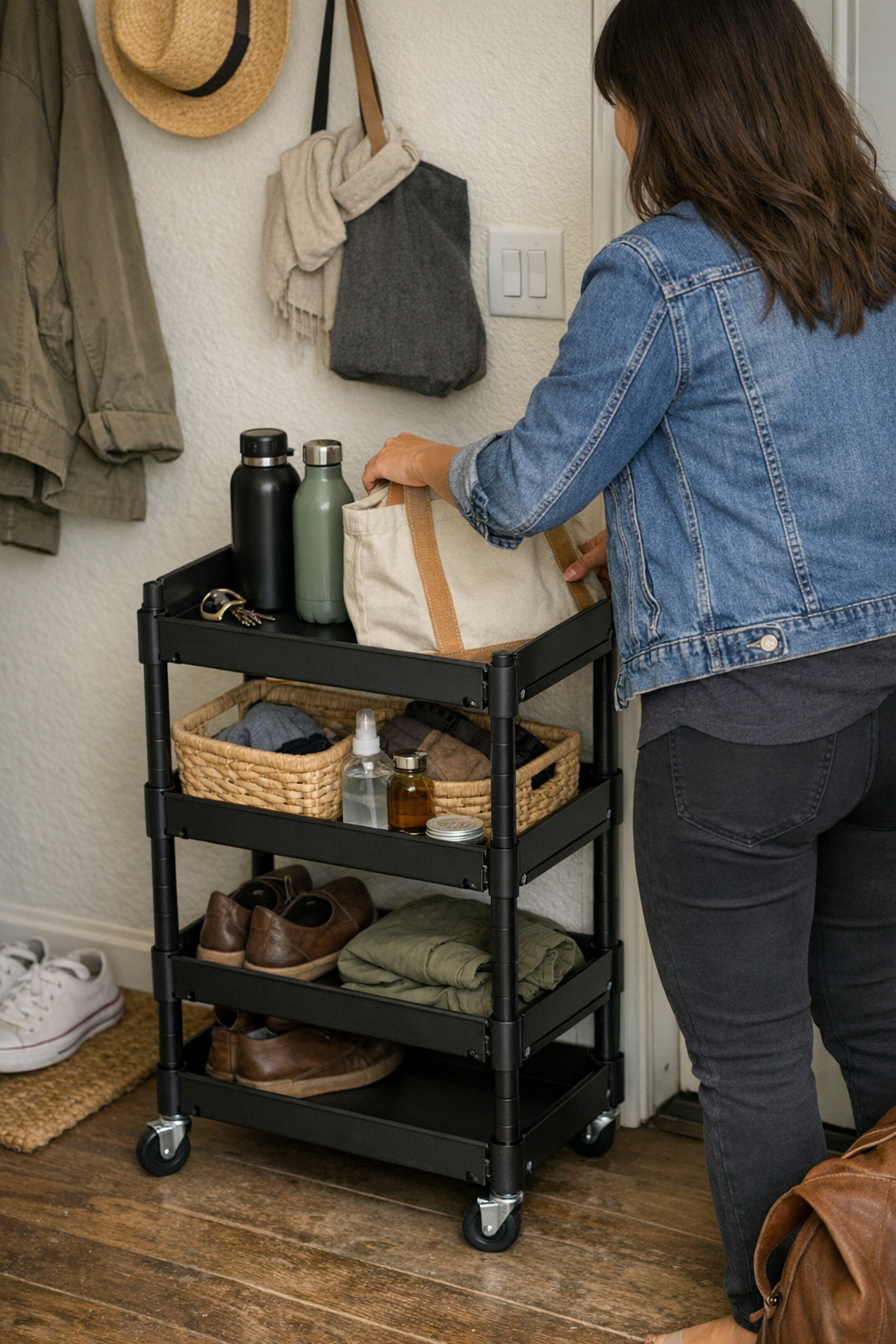
It’s a small, specific kind of frustration—hearing a bottle hit the floor just after someone breezes through the door, their momentum carrying them onward while the clutter lingers behind. These little slips begin to wear at the space, especially in entryways where each arrival leaves another trace: a shoe left adrift, a bag half-balanced, something round and reusable rolling toward the door. I started noticing how often these things happened once I lived with a transition cart that didn’t quite keep things contained. In real drop zones, where order and disorder take turns, the tiniest bit of extra edge—a modest shelf lip—turns out to matter much more than it seems.
Noticing the Weak Spots with Time
At first, a lipless cart looked elegant—clean lines and quick access. Bottles lined up perfectly in the morning, and for a brief window everything appeared under control.
But then the routines repeated. Shoes edged further out, bags settled too close to the margins, and bottles—light enough to drift on their own—began to migrate. Each time the cart was nudged, something inevitably tipped.
You don’t notice it immediately. But you feel it.
It wasn’t just the inconvenience of picking things up—it was the sense that the storage zone couldn’t keep pace with the ebb and flow happening at the threshold.
Edges That Catch More Than Just Clutter
The change came quietly. A narrow front lip, only about an inch high, was added. It barely registered visually, but its presence became clear every time someone dropped something in a hurry and moved on.
Now, if a bottle rolled or a bag’s corner slid, this small edge intercepted the drift. What surprised me was how often this tiny backstop stopped the minor chaos from rippling outward—no more bottles hiding behind the cart, no more stepping around stray jars.
I realized the shelf wasn’t just a surface; it became a small zone where arrivals and departures could leave things imperfectly placed without everything tumbling onto the floor. Stability outweighed the negligible difference in reach-in ease.
The Ways We Return—and Why Containment Matters
It’s in those crowded moments—the school-day rush, juggling soggy umbrellas, slips of mail, lunch boxes—that the lip quietly does its work. People aren’t thinking about perfect placement; they’re just moving through. The shelf lip doesn’t keep things pristine, but it makes the difference between a zone that resets itself and one that constantly needs a hand.
That was the part I kept coming back to. The right edge doesn’t stop the spread of shoes or fix bench clutter, but it quietly limits how much chaos leaks onto the floor, leaving the rest of the space just a little more navigable.
Sometimes, it’s something so minor you wouldn’t choose it for aesthetics alone. But in the daily repeat of leaving and returning, the practical value becomes obvious in a quiet way.
I found myself paying more attention to small details after that—edges, boundaries, and the ways a space can shape itself around real habits instead of resisting them. For more thoughts on the lived-in side of transition storage, I’ve left a link here: http://www.betweenry.myshopify.com