The Quiet Comfort of a Consistent Dog Bed Place
Consistently placing a dog’s bed reduces hesitation and restlessness, making nightly routines smoother and rest easier for both dog and owner.
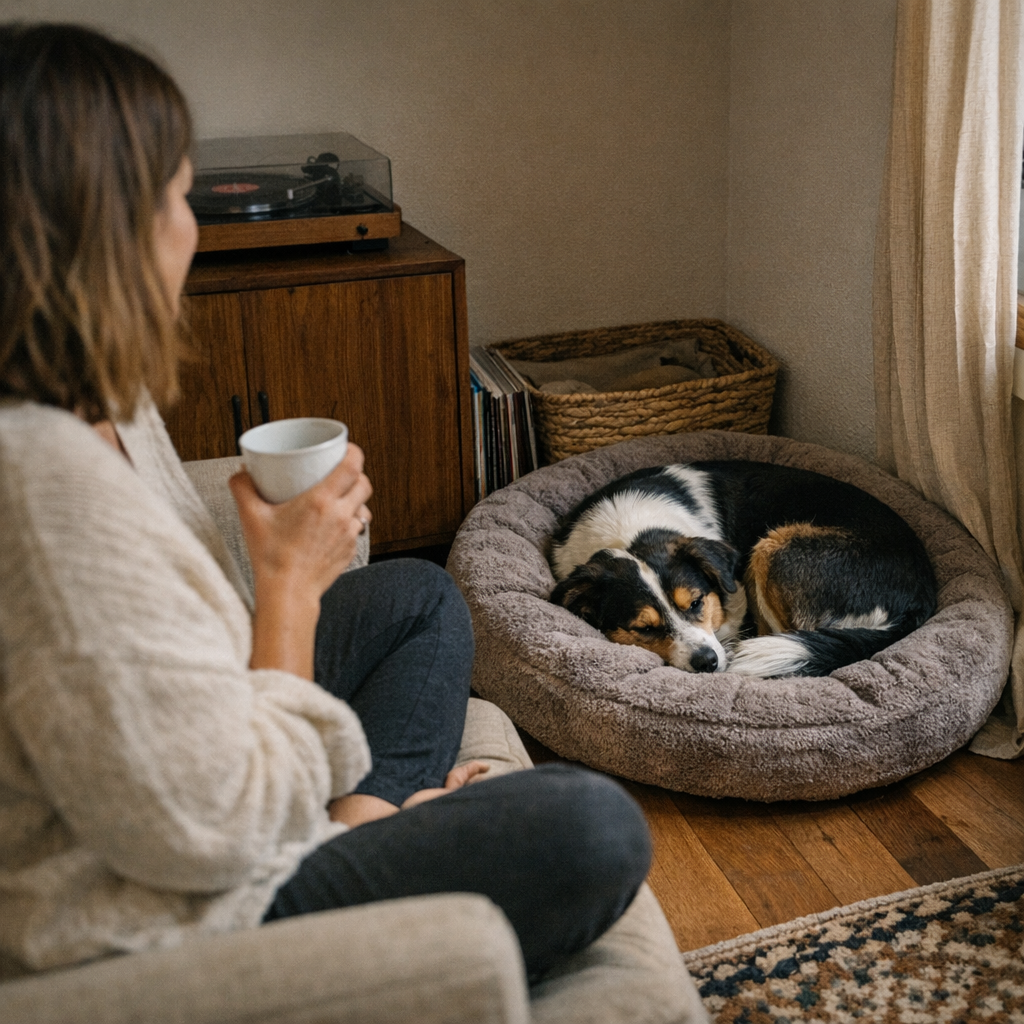
It’s easy to overlook how much small changes in our dog’s space affect their comfort. I used to treat the dog’s resting spot as flexible—sliding the bed from one end of the living room to another, or laying out fresh linens wherever there was a free corner after laundry. Most days it seemed harmless, just background detail—until I noticed my dog hesitating before settling down. That hesitation grew longer night by night, circling and scanning spots that no longer felt right, as if searching for a familiar place in a room that quietly stopped making sense.
You see these subtle signs most during the quieter parts of the day—late at night or right after the last walk, when both of you expect things to slow down. Maybe the crate gets pushed a little further into the walkway to keep the floor clear. Bowls shift spots after a rushed breakfast, or toys spill into the wrong corner, making it harder to find clear floor for your feet. None of it is one big change—just little shifts that sneak in, harder to notice but adding up.
Objects Drift
Small changes drift over time. After a few weeks, the crate that used to sit an arm’s length from my reading chair was nearly pressed against the kitchen door. I only realized this because my dog started pausing, staring at the spot, then looking back at me as if checking, “Is this still the right place?” Sometimes it took two or three circles—something that never happened before—before finally settling.
At first, it looked fine. The room felt more open with the bed tucked away from the main path. But every evening followed the same pattern: stop, look back, circle, then settle. The difference wasn’t dramatic—just a subtle friction that built up, leading to quicker frustration at night and a rest that felt less natural. It wasn’t alarming, just a low key resistance quietly clouding the end of the day.
You only notice it after a few evenings of moving quietly and still bumping into the crate now out of place. Routines break down not because of one big mistake, but because enough small misalignments accumulate.
The Order of Bowls and Towels
The morning rush often caused the biggest mess. The water bowl started the day on one side, then got moved elsewhere after breakfast—water spilling just enough to soak the edge of my socks. Towels weren’t where they needed to be after a muddy walk, forcing extra steps to fetch the right wipe. Half the time I found myself retracing steps just to gather what should have been within easy reach.
What’s striking is how these small shifts aren’t just about where objects sit—but how they relate to daily rhythms. How far the leash is from the door when you need it, or how deeply buried a favorite toy is in the overflow bin. Even tiny moves slow everything down. A bowl that once fit neatly by the fridge now leaves kibble on the floor when I grab a half-asleep sip of water.
That pause before the dog settles, or the extra step to pick up towels, is so slight you almost miss it. But repeated daily, these little stumbles turn into a background tension that wears on the whole routine.
Returning to a Reliable Place
I didn’t realize how much these small misalignments mattered until I started putting the bed back in the same spot every day—immediately after cleaning or laundry—always in the same corner, just within reach of my chair. One or two hesitant circles turned into just one, then none. My dog would walk in, glance once at the corner, and settle with calm that felt familiar again.
Things ran smoother with hardly any extra thought. Not only at night, but also during morning routines and after walks, I stopped stepping over toys or searching for leashes. Spaces that looked more “open” or tidy before were actually more complicated to use. The best spots aren’t just clean, they’re reliably in the same place—anchoring the whole routine.
That routine—the quiet certainty of the same spot—kept returning. It slipped quietly back into the daily flow, making each transition easier: after walks, during feeding, cleanup times, or waiting by the door. Life with a dog relies more on repetition than newness. A predictable corner does more than clear the floor; it makes the entire routine work again and again.
If you’re curious what this looks like in practice, some of those patterns show up over here: http://www.dogpile.myshopify.com