The Quiet Comfort of a Well-Known Resting Spot
Maintaining familiar bedding reduces settling delays and restlessness by preserving scent, improving comfort, and easing cleanup in shared spaces.
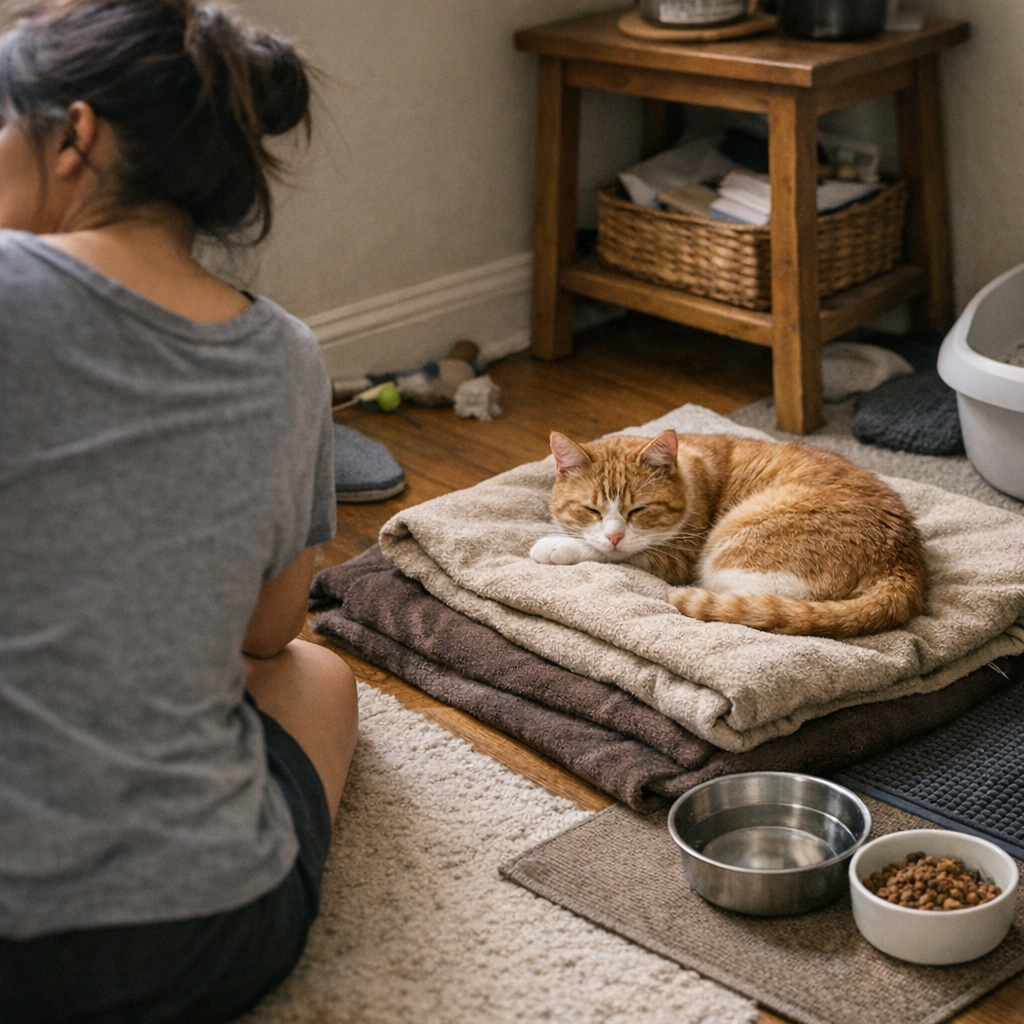
It’s a small thing, but you notice it quickly. You swap out the cat’s bedding—unfolded and freshly laundered—and there’s a brief lift: the corner looks crisp, the space feels in order. Maybe you’re doing this more often now, thinking it keeps everything easier. But after the third or fourth cycle in a week, something else appears: your cat lingers at the edge, pauses, sometimes skips the spot completely. The rest area meant to anchor her daily routine starts sitting empty, no matter how neatly you shape the blanket.
These patterns unfold quietly, folding into the rhythm of small resets that define indoor cat life. The rest zone often sits just a few steps from feeding bowls, brushes past the edge of the litter mat, or near grooming supplies tucked out of sight. Lately, your cat seems to wander a little more—circling before settling or choosing the sofa’s edge instead. It looked fine at first. Only later do you realize that what feels fresh to you actually unsettles the ground for her; the loss of scent and texture makes each return less certain, as if the space no longer offers a steady place to land.
You notice it most after a few resets. The “clean” bedding can’t compete with the pull of old comfort. Each full wash erases the familiar layers your cat has mapped for herself—her world built on loops past water corners, food dishes, and toy runs left scattered under nearby shelves. Keeping bedding so new it loses its lived-in scent blurs the borders between rest, play, and cleanup zones. That was the part that kept returning: the neater everything looked, the faster the bedding area faded as an anchor point. You’d tidy, and she’d drift elsewhere.
That slow shift reveals how these overlapping indoor zones behave differently once the same room and routine are repeated. When full bedding resets become routine, the slow refilling of water bowls or the slight delay between litter edge cleanups leaves more traces around the adjacent spots. Toys spill over in scattered carryover, and grooming-adjacent storage tucked away means less frequent handling and slower reset of desired comfort routines. In a shared indoor space, blocking access or creating too-fresh transitions makes predictable comfort harder to maintain.
There’s a small adjustment that changes this. Rotating only the top layer of bedding, while letting the base remain, allows enough familiarity to settle back in—even while you keep up regular cleaning around food and litter areas. As soon as I let the middle blanket linger—spot-cleaning fur but leaving the base edges untouched—I watched my cat slip back into a faster, more confident curl, barely pausing before returning to her spot, even while I topped up the nearby bowl. Less bedding churn, and suddenly the rest area held its ground again; comfort became predictable, laundry less constant, and stray toys didn’t spill across the floor as often. The daily routine slowly stopped unraveling.
Living with cats indoors, especially in a setup where feeding zones, water areas, litter edges, and grooming spots overlap alongside hidden-storage and shared living spaces, brings these details into sharp focus. Some zones will always need a full clean, especially when residue keeps returning or buildup accumulates. But for bedding nestled near food mats, window corners, or the soft boundary of a litter edge, keeping a bedding setup “almost clean” lets routines run right through—less friction for both of you, and less stray work scattered across your day.
If you’re curious about what a lived-in indoor cat routine can actually look like, there’s a bit more here: http://www.stillwhisker.myshopify.com