The Quiet Comfort of a Well-Organized Pet Journey
Effective pet travel setups ease repeated use by keeping key items accessible, reducing delays and interruptions to keep trips smooth and pets calm.
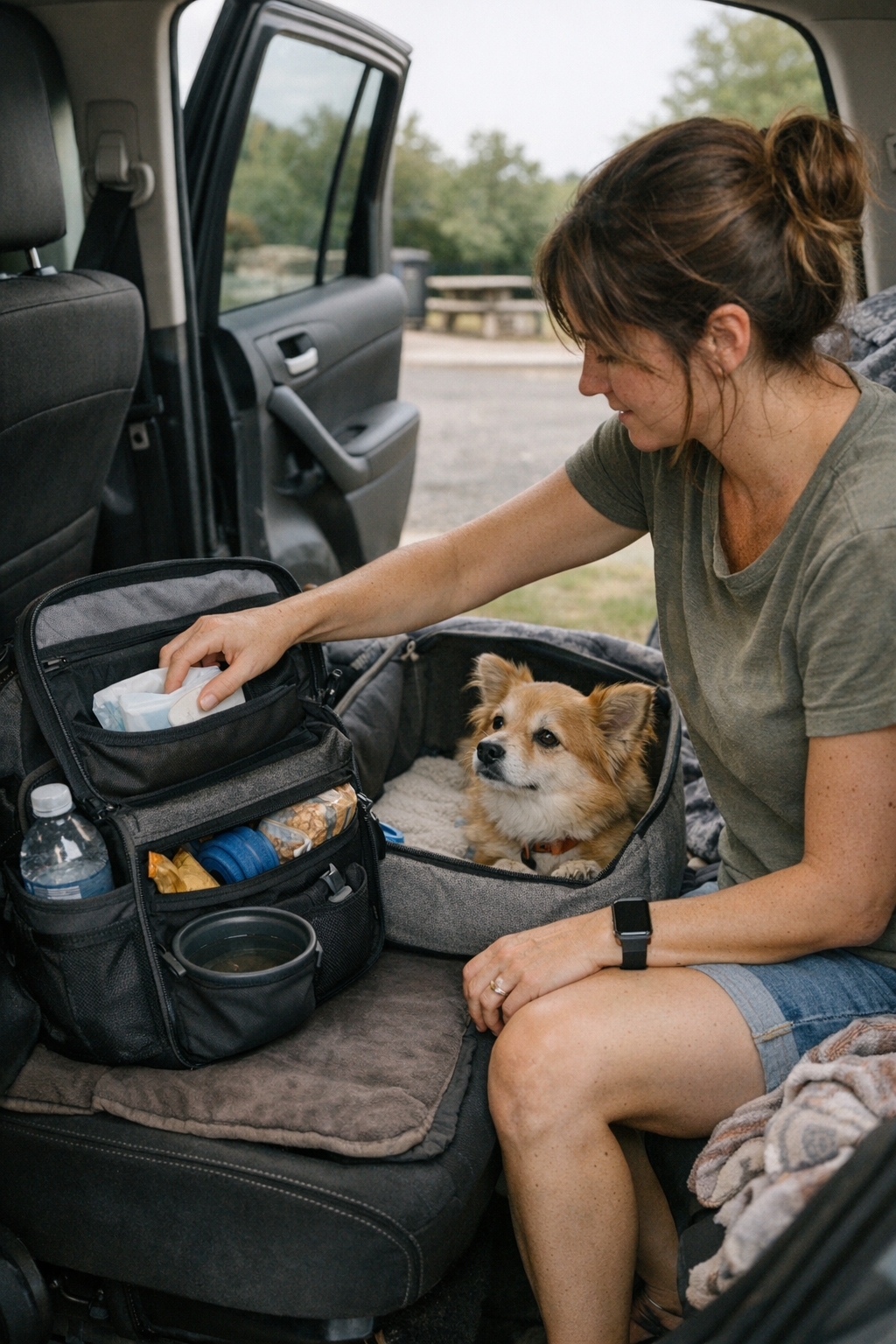
It sneaks up on you sometimes—a slow drift from smooth movement to small, repeated interruptions. At first, you might think your pet’s calm depends on timing or temperament. But somewhere between stops, your attention shifts to what’s in your hands, what’s tucked away under something else, and how that one bag you thought had everything in the right place suddenly doesn’t help you move any faster.
You only catch it after making the same trip more than once. The carrier, the organizer, the packet of cleanup wipes, the foldable water bowl—they all behave nicely in your mind’s eye. But on the road or pausing at rest stops, they rarely line up for you on the first try. What looked fine at first becomes obvious after the second or third stop, when the same small friction keeps appearing.
The Difference Between Ready and Repeating
You plan for each moment: leash clipped near the zipper, wipes pressed into a side pocket, mat rolled and slotted under a pouch of treats. It’s organized—until you actually move, again and again.
What happens is a quiet drift from order to ritual: reach, pause, reshuffle, adjust. Some things you go after so often they become a kind of test. For example, I used to keep cleanup wipes in a pocket meant for waste bags, thinking “easy enough.” Yet each time, the leash blocked my hand, and the wipes sat just out of reach.
You notice these things after a few trips. The friction isn’t dramatic—just enough that every restart feels heavier on you and your pet.
Small Moves, Real Changes
Sometimes the shift happens by accident. A few trips ago, I moved the wipes into a seat-facing pouch just to see if I’d forget less. By the end of the day, those seconds saved turned into an easier rhythm; there was no pause for digging, less reason for my dog to get impatient with my hands.
Comfort items that live outside the main compartment—not buried under everything else—quietly change the feel of the whole stop. Bowl at the top, not the bottom. Treat pouches clipped where you actually reach mid-trip. Resets no longer eat up the mood. The bag felt less like a container and more like a partner.
It wasn’t a transformation, just a small reordering. But the difference kept showing up.
When the Setup Gets Out of the Way
There’s a tug between what looks tidy at the start and what keeps working after three or four stops. Carriers that force stacking or rely on one central zipper tend to hide the things you need most. It’s never obvious until your pet is watching you, waiting, while you hunt for a mat or fumble with pockets.
The setups that work best aren’t the ones that impress at a glance. They fade into the background. You gain more rhythm, less reloading. Cleanup stops take on the feel of a quick breath, not a timeout. If the basics—leash, bowl, wipes—flow without overlap or blocking one another, the movement stays calm for both of you.
After a while, the right structure doesn’t demand your attention. It lets every trip keep its momentum.
Sometimes a simple shift—like moving anything you grab often to the closest, easiest-to-reach edge—turns a series of wait-and-reset moments into something that feels smooth, almost forgettable.
More often than not, those changes are what stick.
If you want to see the kinds of structures I’m describing, this is where I land between trips: http://www.pawgotravel.myshopify.com



