The Quiet Comfort of Focused Light in Everyday Workspaces
Fixed task lighting targets shadows and glare better than ceiling lights, reducing eye strain and improving daily work comfort and focus.
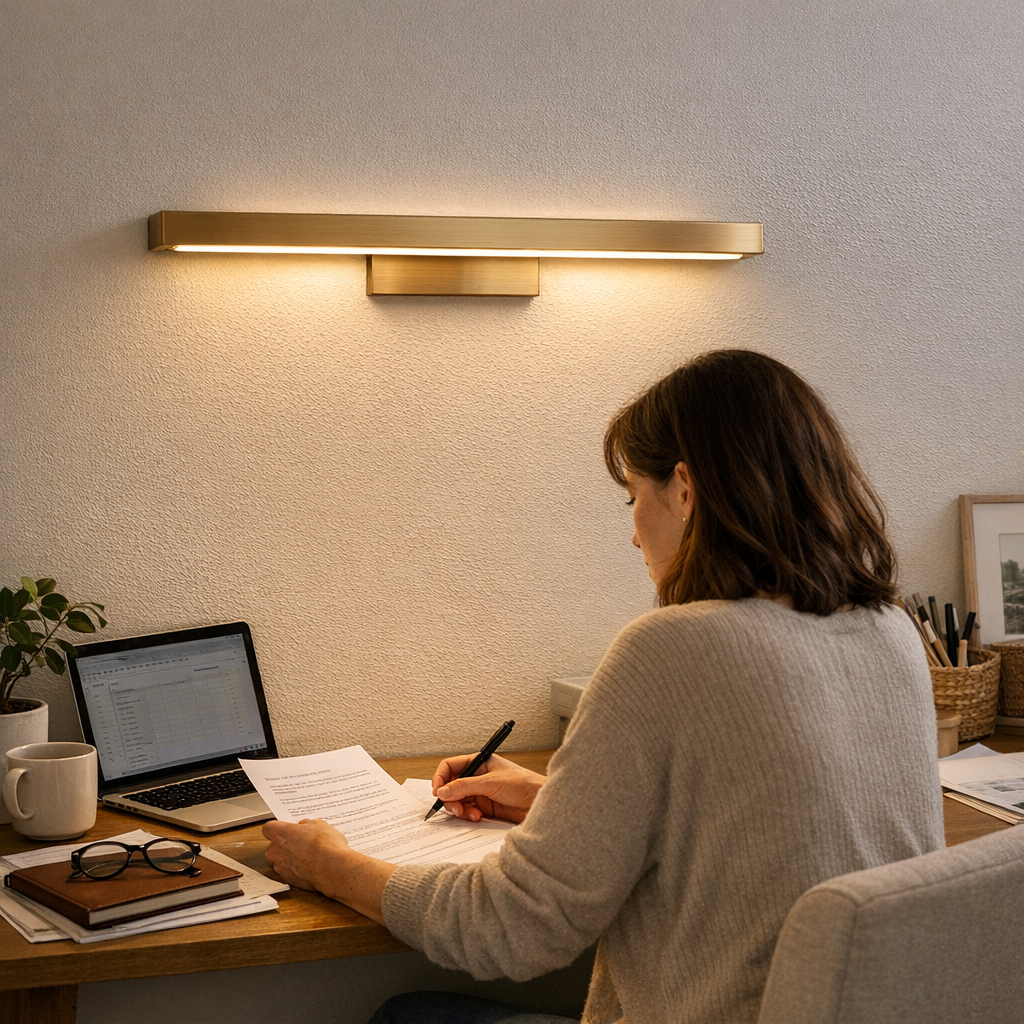
There’s a particular kind of discomfort that’s hard to name at first. It starts as a faint tension behind the eyes—a sense of squinting that builds slowly, not all at once, but over hours. It happened to me when I settled into a new routine at a desk that looked bright on paper. Overhead lighting, like a flush mount ceiling fixture or a slim panel light, filled the room with an even wash, and at first, it felt like enough. But by the second or third afternoon, the edges of the work surface darkened, and a steady shadow trailed across my papers. After a few days, focus faded sooner, and I found myself constantly shifting papers or the laptop, trying to bring the light closer to the task.
When Light Isn’t Really There
At first glance, ceiling fixtures—whether flush mount or semi-flush mount—give the illusion of completeness. The whole room looks finished, maybe softly illuminated from above, promising even light spread. But you feel the missing part when daylight dims or you lean in to read small text and a shadow stubbornly stays in place. You can have a bright room, yet still be starved for clarity.
I caught myself angling documents away from my left wrist, holding things off to the side, searching for that pool of light where glare and shadow might finally ease. The need to adjust became part of the background, but it came at a cost every day I returned.
The Quiet Fix That Didn’t Announce Itself
The change wasn’t dramatic. Adding fixed task lighting—positioned just beyond the laptop and angled gently down—made a subtle but real difference. The beam covered the work area, corners included, and the usual shifting, squinting, and stretching stopped demanding my attention. It was almost eerie how small print lost its blur and how the edges of the desk felt equally useful. For the first time, I wasn’t thinking about the light at all.
That’s the part I kept coming back to. Once task lighting became part of the setup, returning to the same spot didn’t spark the old reflex to chase better vision. Comfort wasn’t forced; it was quietly built in. The only “trick” was to let the beam run neatly across the hands’ work area—left to right, just above eye level, never shining straight into the eyes.
Returning to a Room That Feels Finished
Now, whenever I come back to that workspace—whether it’s with real daylight, hallway sconces guiding the evening, or just that small slice of directed task light—there’s less frustration. The familiar squinting and stretching that once felt routine have mostly slipped away. It’s a relief I notice only in contrast: when I enter a dim laundry corner or find myself squinting at a bathroom mirror lit unevenly from one side, the difference speaks quietly.
It’s not just about seeing better; it’s about the absence of small compromises. After a while, having the right light in the right place simply feels normal, and you realize how much effort you were spending working around what was missing—whether that was uneven glow from an entryway ceiling light, dark edges of a narrow stair landing, or insufficient lighting along a cabinet run.
If you’re quietly curious about other ways rooms change with the right light, a few subtle ideas can be found here: http://www.lighthelper.myshopify.com



