The Quiet Corners That Ease Our Pet Travel Routine
The best pet hotel corner lets you quickly access wipes, bowls, and leashes without rearranging gear, easing repeated in-and-out trips.
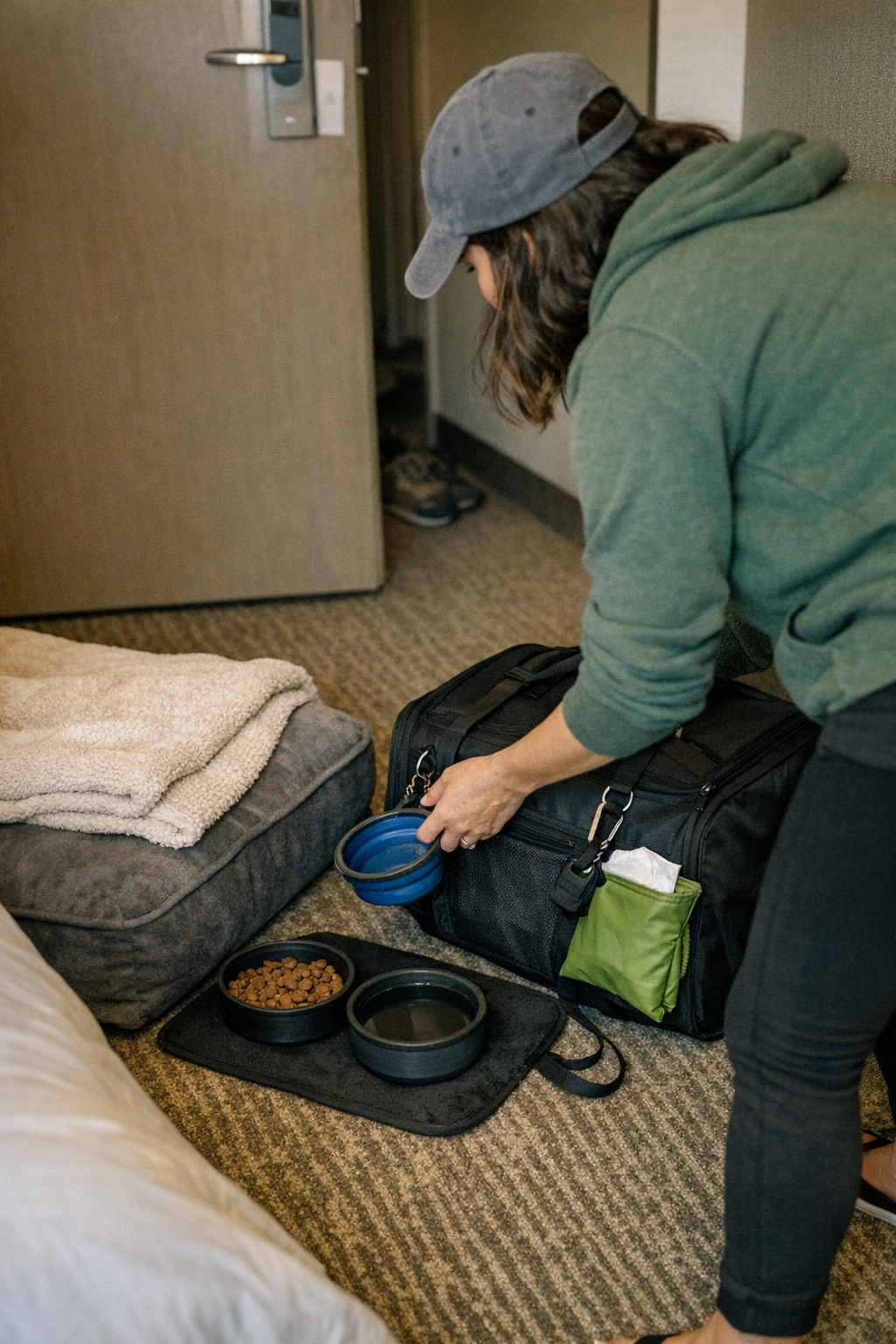
For the first few hours, a well-arranged pet corner in a hotel room can feel effortless—bowls lined along the wall, wipes tucked under a neatly folded bed, zippered bag resting just beside the door. There’s a satisfaction in seeing it all settled, at least until you need to move again. It’s the rhythm of travel with a pet: coming and going, grabbing at essentials, and trying not to lose the thread between comfort and chaos. The gap between a tidy setup and a workable one reveals itself quietly—not in how neat things look, but in how many times you have to stop and adjust before actually moving out the door.
The first trip feels fine. Maybe the second, too. You start feeling the friction around the third or fourth go—fishing for a leash buried under a blanket, or realizing the wipes you need are stuck beneath last night’s mat. It’s a slow recognition. Each re-entry adds to it. The effort isn’t just in finding the item, but in having to move other things first. I noticed it after a couple of evenings, each time my dog circled the mat with dirty paws and I was left clutching keys, leash, cleanup pouch, all at once. The annoyance grows not from any mess, but from the extra steps just to do something simple.
It looked fine at first. But over time the difference kept showing. Setups that seem organized—layers of essentials carefully nested—require more resets than expected. With repetition, the pile turns into a delay. There’s small relief in discovering that shifting just one item—like hanging the wipe pouch up instead of leaving it inside the gear pile—means not reshuffling the whole corner each time. That repeated adjustment is the catch: setups that hold up aren’t the neatest, but the ones where each essential moves easily when things get busy.
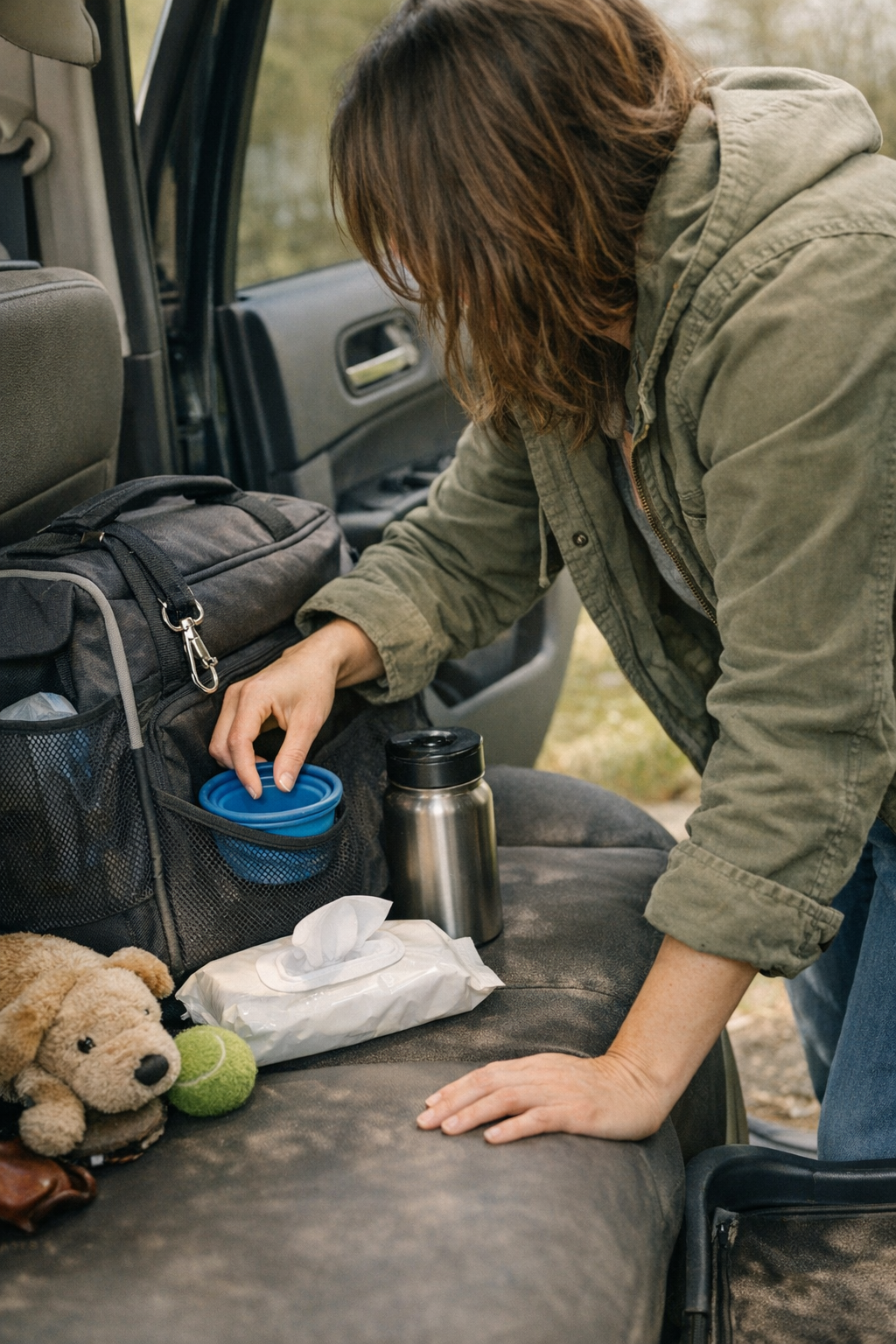
Returning from late-night walks, the rhythm became clearer. It matters whether water bowls live inside a main bag or clip right where you can reach them, and whether cleanup is a smooth grab or a half-unpack. These patterns become obvious when traveling through several stops in a week. Even one change—like moving collapsible bowls to an outside pocket or hanging a cleanup kit from a seat-side hook—cuts motions and stops the stretch across the room with a restless dog waiting. That’s a change you only notice after five or six loops: exit, quick run, back in again. The less you have to second-guess reach, the more travel feels like moving together, not just wrangling gear.
The setups that last are the ones whose order you barely notice after a few rounds. It’s less about looking ready and more about staying ready. Everything else fades when you can reach what matters, even if you’re carrying too much and thinking about your next stop. That kind of quiet dependability makes a big difference when routines keep repeating and movement becomes constant.