The Quiet Difference in Everyday Sawing Moments
High-TPI saw blades reduce finishing work and edge damage, saving time on repairs and sanding for smoother, repeatable cuts.
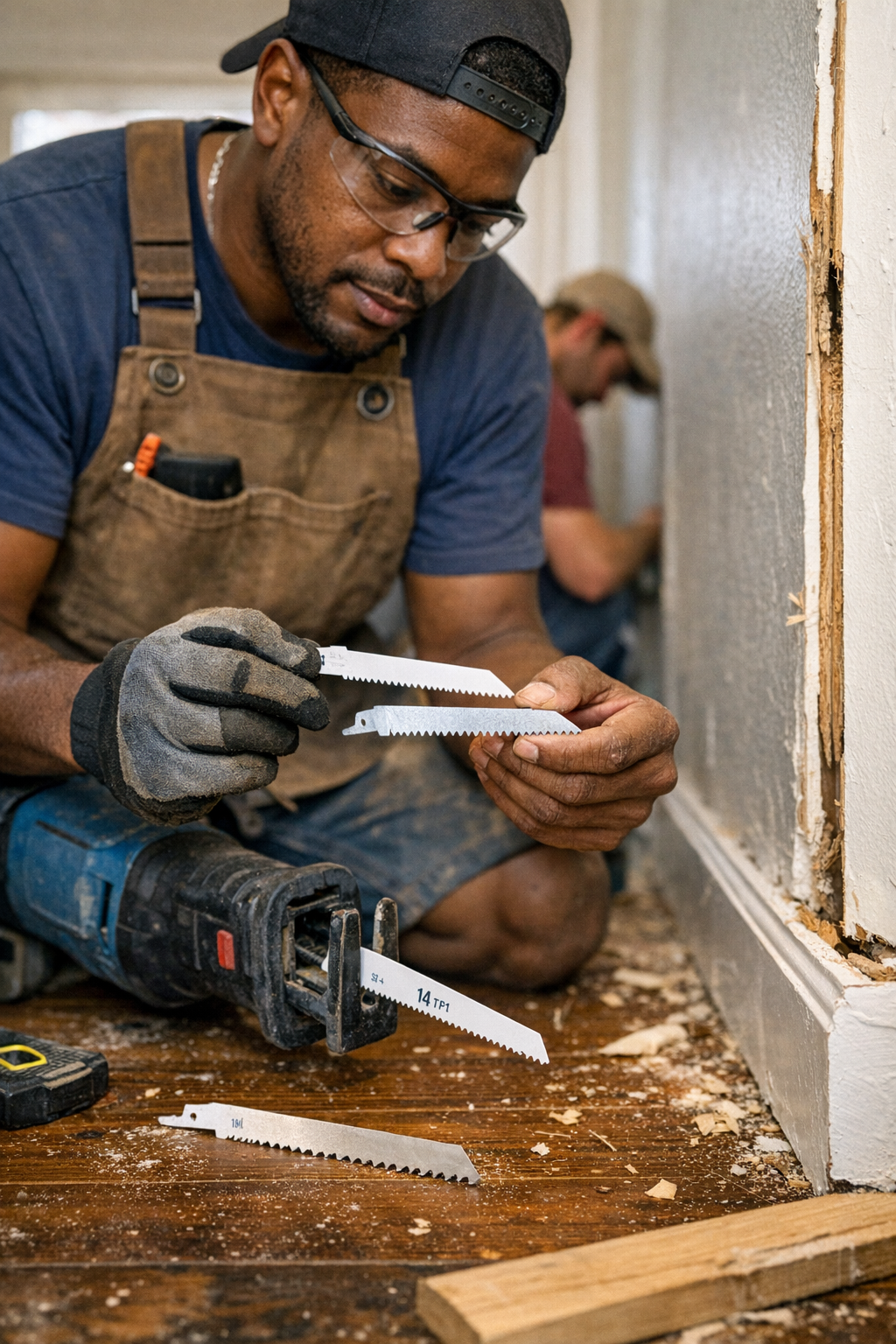
There’s a quiet satisfaction in a clean cut—the kind that barely needs a sanding block. But most of us don’t think much about blade choice until the edges start to fray and the smooth flow of work gives way to fixing what’s already been done.
Reciprocating saws are made for speed. The tooth pattern—high TPI, low TPI, numbers on a package—can feel like background noise, a detail for purists. Both types of blades will bite into wood or metal and seem to do the job. It’s only later, standing in sawdust and splinters, that the difference becomes clear.
What We Don’t Notice
At first, a rough-cut edge looks like nothing more than a minor imperfection—easy enough to hide under paint or trim. But the splintered grain and jagged seams linger in the work. Each pass of the saw leaves marks that slow you down, calling for repair, sanding, or a second attempt to set things right.
You don’t notice it immediately.
But you feel it, usually when the job should be winding down and your hands are searching for makeshift fixes.
A conversation with a neighbor once illustrated this. He had replaced the baseboards in his hallway using a demolition blade, then spent an entire evening perched in the narrow space, sanding away stubborn tears in the trim. “It wasn’t the install that took time,” he said, “it was hiding what I’d already done.”
The Way a Cut Feels
With a high-TPI blade, the rhythm changes. Each stroke is smoother, less jarring—an almost quiet hiss instead of a choppy grind. Suddenly, the work feels less about fighting the material and more about guiding it. The edge stays neat, with minimal sanding needed.
Of course, there’s a balance. For demolition—when finish doesn’t matter and speed does—the rougher, low-TPI blade is still king. It’s only when precision and repeatable finish matter that the difference in blade choice becomes more than a technicality.
There’s an odd satisfaction to seeing trimmed pieces line up perfectly on the first try, or when a painted seam requires just a fingertip of caulk. It’s not always dramatic—but over an afternoon, it adds up.
A Small Shift That Changes Everything
Sometimes, all it takes is one project to shift your perspective. The first time I swapped out a coarse demolition blade for a fine, 14-TPI one when working on narrow window shelves, I could actually measure the difference—not just in material saved, but in time reclaimed. The edge chipping dropped so much that my cleanup was a single swipe with sandpaper.
It seemed small at first. But when cleanup time started shrinking across every project that followed, it became hard to ignore.
The real insight is subtler: tool choices don’t just shave seconds off a task, they shape how you feel when the work is done. Sometimes, picking the blade with the finer teeth is really about valuing your own focus and patience, not just the line on the wood.
Most of the lessons in a workshop come slowly—one edge, one cleanup, one almost-invisible seam at a time.
Some thoughts like these settled in after fixing a baseboard corner on a gray, rainy afternoon.



