The Quiet Frustration of a Disorganized Carry-On Bag
Persistent carry-on friction—blocked pockets and repacking—cumulatively drains energy; frictionless access restores pace and confidence during travel.
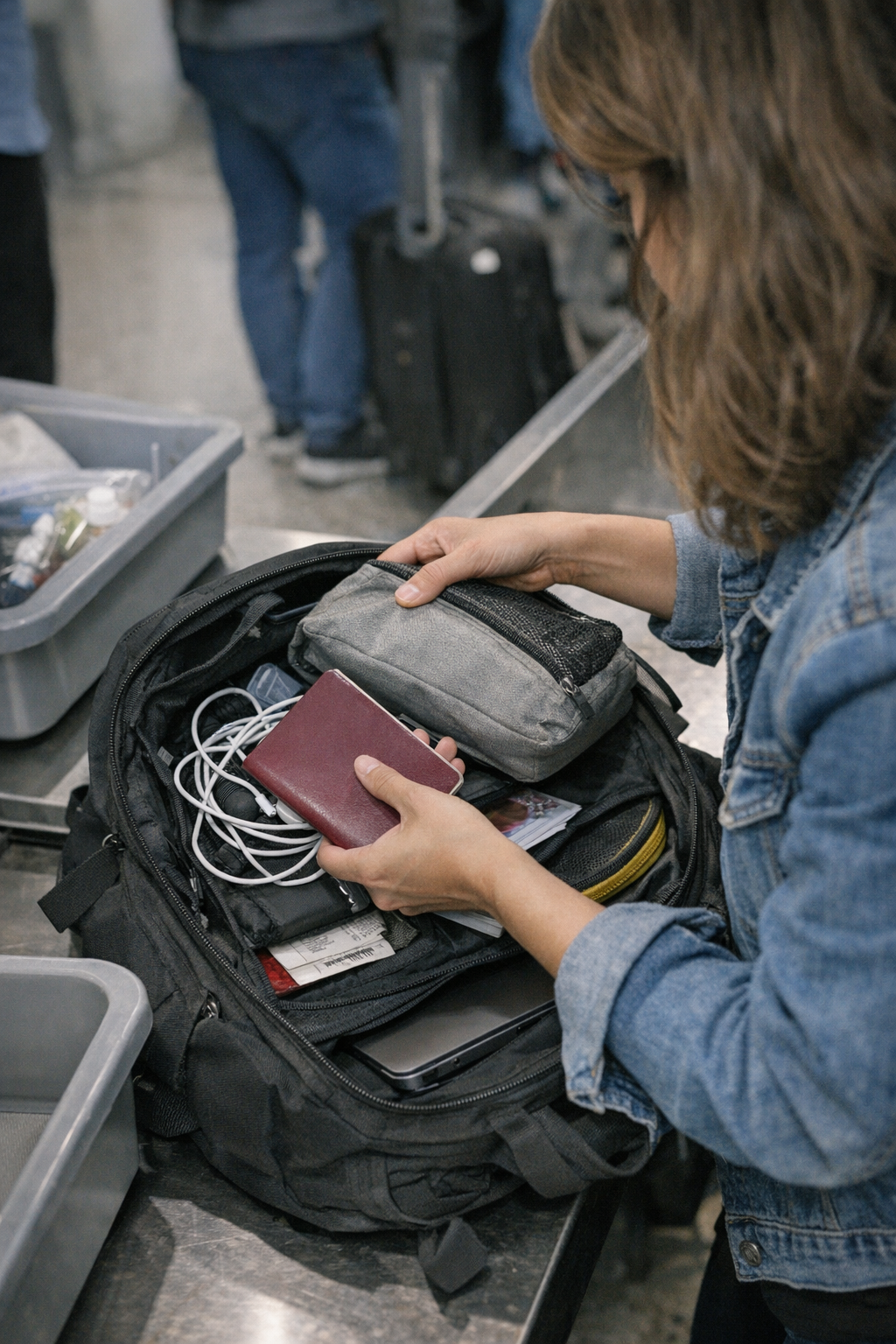
For a while, I put most of my energy into keeping my carry-on perfectly neat. There was a low-key satisfaction in zipping up a neatly packed bag, everything in the right pocket, clothes rolled just so, charger cables coiled next to my passport. At home, it looked calming—a small victory over chaos.
But that order didn’t always hold up in transit. The first signs are subtle: a pause at the security tray, a minute longer at the gate, the nagging tug of something misplaced at the wrong time. Each little interruption doesn’t feel like much, but after a few transitions, the small delays slowly pulled at the edges of any calm I’d packed alongside my socks.
The Small Gaps in a Seemingly-Controlled Setup
Most bags look organized on a bed, right before the trip starts. Every slot seems thought through. But real use exposes overlaps you don’t notice at home.
You reach for headphones or travel documents standing in a busy airport line and find three other things in the way. Cables loop around a pouch, or a passport slides under something bulkier. The zipper feels slower, your hand searches deeper, and each small snag demands more attention than planned.
It looked fine at first, but repeated moments under pressure revealed the difference. The order I’d admired at home didn’t translate well when people waited behind me and the clock ticked louder.
Where Friction Sneaks In
What keeps surfacing isn’t a dramatic tangle, just the slow-building friction of retrieving the same few items over and over under a bit more stress: security trays, overhead bins, aisle traffic. That “smooth” layout can become a mini obstacle course as things shift or settle, and quick-grab essentials end up blocked by items I thought should be easy to reach.
A toiletry pouch presses against my tech sleeve, making both harder to access. The quick-access pocket feels crowded. One item slips out, and repacking loosens more pieces. It’s not just a mess—it’s the micro-effort needed every time I reach in.
The small repeat of pulling out a boarding pass for the third time, noticing it slide beneath charging cables again, then hastily repacking—that adds up. After a while, you want to avoid the clumsy shuffle, and some patience for travel itself starts to fade.
What Quietly Changed the Flow
What felt “efficient” in a static sense wasn’t so efficient in motion. My small change was moving frequently used items—those repeat-grab pieces—into their own open, separate space. It didn’t look as magazine-tidy, but every airport handoff felt smoother, with less second-guessing or zipper fumbling.
My passport no longer hid under a cord. The sanitizer didn’t get caught behind headphones. Not every problem disappeared, but the day itself felt lighter.
What I noticed most was a kind of accumulated relief. Less energy spent fixing what kept undoing itself. Less dread in transitions, more quiet as I moved.
Sometimes the smallest adjustment you make in a bag has the longest reach. There’s more here, if you want to see what I mean: http://www.carryonsupply.myshopify.com



