The Quiet Frustration of Overpacked Travel Bags
Travel organization that works at home can slow you down during frequent airport checks; quicker outer-pocket access reduces interruptions on multi-segment trips.
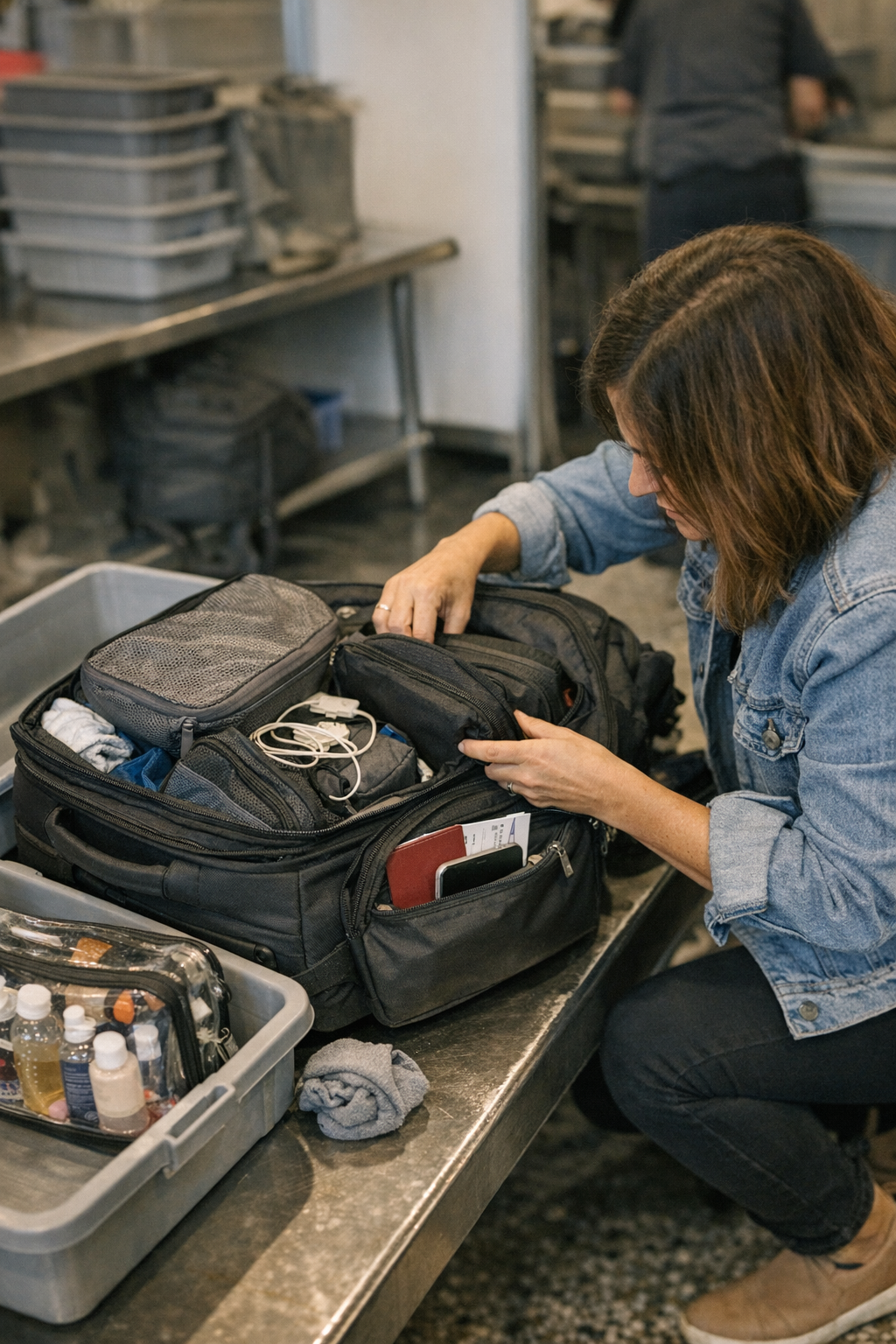
It’s an odd realization to have, usually somewhere between your first and third boarding pass. For a long time, I judged my carry-on’s organization by how neat it looked—every cable coiled, each pouch zipped, a sense of potential control lined up beneath the lid. It was a quiet comfort before a trip began. But then, while waiting in security, I found myself wrestling with a zipper that jammed under pressure and digging past pouches for a document I always seem to need at the worst possible moment. Instead of making things smoother, that tidy system started to slow everything down.
The Choice You Don’t Notice Until You’re Moving
You begin to sense the difference after a few transitions. At first, the tightly packed cubes and layers of organizers promise efficiency. In the hotel room, it looks perfect: nothing loose, nothing forgotten, everything “in its place.” But movement exposes what still photos never show—when you’re rolling through a crowded terminal, grabbing headphones or a passport becomes less about order and more about the route your hand has to travel.
Reaching for one item and pulling out three is a pattern you only notice when you’re in line and someone behind you sighs. The elegant puzzle of neatly divided storage gets chipped apart by repetition. It’s not dramatic, just quietly tedious. You start to remember which pocket holds which thing not by design, but by repeated need.
Neatness That Feels Efficient—Until It Isn’t
It looked fine at first. But the difference kept showing up each time a quick access slowed to a minor fumble. There’s something about tray transfers at security, or gate agents asking for that same printout again, that magnifies these little inefficiencies. More than once, I ended up putting a pouch back in the wrong spot, or repacking in reverse order because there wasn’t space to spread everything out on a bench.
The tidy setup works against you when you need the same item three times in twenty minutes. Each layered step—unzip, shuffle, extract, repeat—starts feeling heavier. Eventually, neatness becomes something you maintain only for appearances, sacrificing flow for a sense of initial control. I realized the best setup isn’t the one that looks organized, but the one that lets you move, load, and reload—almost without thinking.
Small Shift, Better Movement
That was the part that kept coming back. I tried shifting the go-to items—boarding pass, ID, cables—into one front sleeve instead of burying them with the rest. Suddenly, I could reach for them without breaking stride or balancing my bag on one knee. It made boarding feel a little easier, and getting through security a lot less congested. The difference was subtle but unmistakable: a bag that moved the way I did, instead of resisting each access.
There’s a line between looking sorted and actually being ready to move. You only find it when you’ve repeated the same motions enough times to see which ones you’d rather skip.
Sometimes the next step is just seeing if a different setup changes how often you have to stop. If you want to see what that looks like in practice, it’s easy enough to start here: http://www.carryonsupply.myshopify.com



