The Quiet Frustration of Repeated Travel Pauses
A pet-travel setup can cause delays if essentials are buried; mapping items for repeated movement reduces friction and eases each stop.
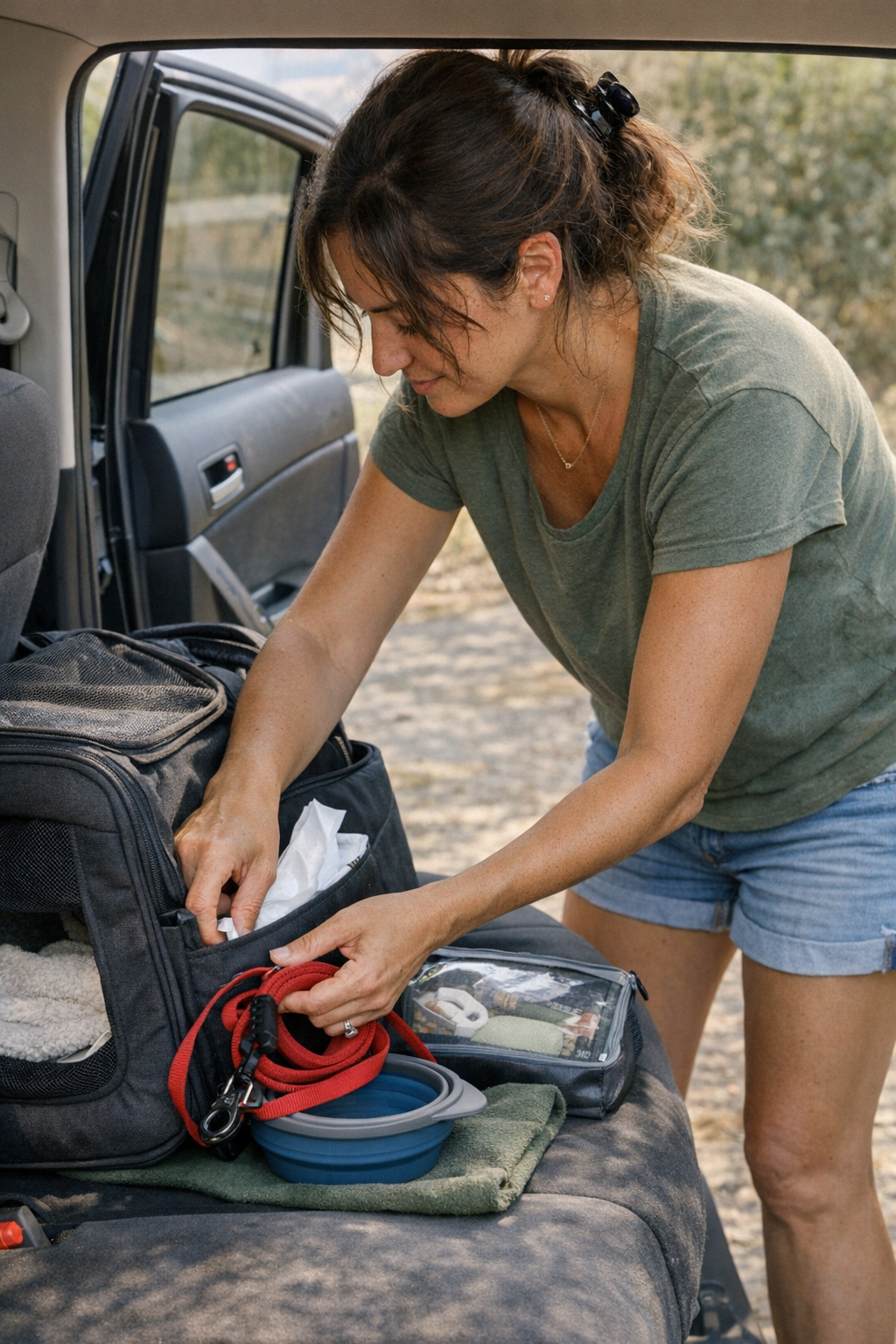
You can stack everything in the pet travel carrier just so—wipes zipped, leash neatly looped, bowls nestled in their spot—and still find yourself pausing at the doorway, fumbling for the one thing you planned to have ready. At first, it feels like a small inconvenience. But after a couple of stops, you realize it’s not a one-time oversight. There’s a pattern that sets in, a quiet drag on the smoothness you wanted for every exit and entry.
You only notice this after living with the same setup through a few real days of movement—the errands blurred with short breaks, repeated in-and-out at rest stops, the casual pull of dog and gear in the same hand. What once felt “packed and prepared” edges into “layered congestion,” every neatly-fit item silently blocking or tangling with something else.
When “Organized” Doesn’t Mean “Ready to Move”
There’s a difference between everything having a place and everything being ready for you. At first, my own routine felt efficient—every item visible, bowls and bags compact, wipes lined up just inside a pouch. It looked fine.
But the difference showed up as the day wore on. After each stop, wipes slipped off their perch, the leash snaked behind a comfort mat, bowls tipped and spilled loose treats out of reach. What looked organized became a small obstacle course for my hands and patience. That so-called order created miniature delays I hadn’t planned on.
That’s the part I kept stumbling over: not the initial pack, but how it played out after the first round of movement. Those minor frictions aren’t obvious at the start—they quickly become very familiar.
The Little Reset That Changed the Routine
I’d picture the next stop, thinking I could simply reach, grab, and go. Instead, each time I ended up hunting for wipes or shifting bowls just to reach the leash. When the weather turned or the pace picked up, that extra five or ten seconds at the car door felt oddly heavy.
One small change finally stuck. I pulled the wipes from under the comfort blanket and claimed a side pocket just for them. Always open, no other items sharing that space. No pouch wrapping them, no blanket on top. They were at my fingertips the instant a muddy paw hit the curb. That small refusal—to stack or double up—quietly altered the entire feel of each stop.
The effect was subtle but real. Movement started to feel rooted again, like the setup responded rather than slowed. I could tell by the way my dog looked up: things flowed, almost as if the bag itself anticipated what was needed.
The Shape of Travel, After the Nicer Setup Stops Being New
Pet-travel routines invite reshuffling, especially with stops close together. After a few trips, it’s clear: if essentials aren’t precisely placed for your hand to grab on the move, the feeling shifts from “packed” to perpetually resetting.
There’s no single trick here. Every friction point becomes part of the travel scenery. Carriers and organizers aren’t just for looking neat at departure. They’re there so you don’t have to keep thinking, digging, or setting the pet down while you reach. Neatness helps—but effortless access is what cuts through the mounting pause.
It’s the quiet structure, not tight stacking, that keeps you moving. The best setups aren’t the cleverest; they’re the ones that let you return to movement a little easier, with one hand free for everything else you’re carrying.
If you’ve found yourself reworking your own pet travel rhythm, I came across a small line of gear that quietly absorbed a few of these lessons: http://www.pawgotravel.myshopify.com



