The Quiet Glow That Calms Nighttime Restlessness
Small lighting adjustments near your dog's bed can reduce bedtime friction, making settling faster and smoother with consistent, indirect, dim light.
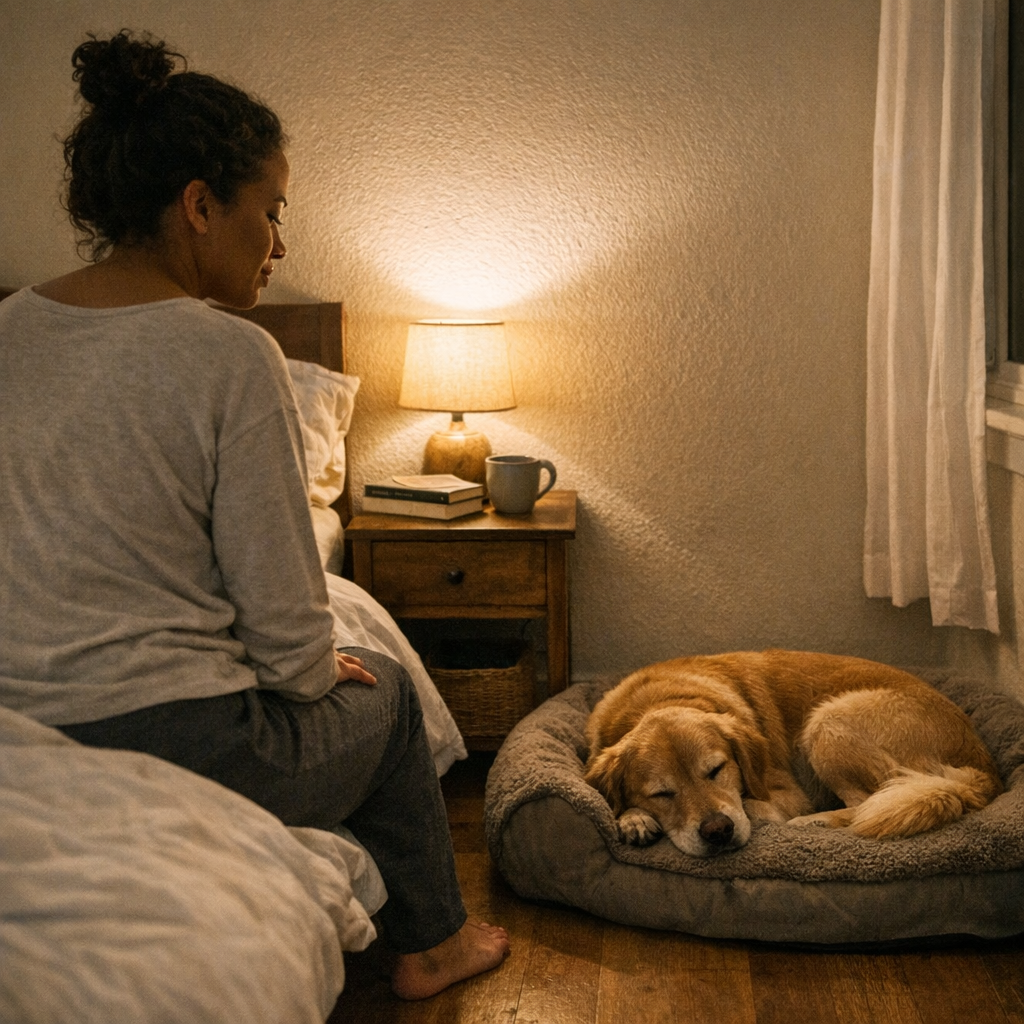
Mornings usually come with just enough time to handle breakfast before the rest of the day pushes in. For a long time, I placed the dog’s bowl in what seemed like the obvious spot—tucked against the kitchen wall near the door we barely used. It looked neat, a little out of the way, and shielded from foot traffic. But over weeks, a small pattern kept showing up: my dog would stall by the counter, almost as if waiting for the setup to change. Water would splash against the bowl’s edge. I’d move a boot aside just to reach the bowl for cleaning. These weren’t big problems, just small interruptions that felt like scraping against the same rough edge every single breakfast.
It’s the kind of friction that doesn’t stand out until it piles up. After a few mornings, you notice how your palm brushes the wall when you lift the bowl at a crooked angle, or how crumbs collect under it for no clear reason. I realized the setup favored appearance over function. The dog’s tail knocked the lower cabinet, the water mat stayed damp because it was pressed against a cool corner, and the kitchen, while tidy, felt slower and tenser to move through.
The Space Between How It Looks and How It Works
At first, everything seemed fine. Tidy. Like a finished thought. The bowl pressed flush to the wall, the mat aligned, and the spare scoop neatly tucked nearby. But the problems kept reappearing in small ways: the dog would half-turn to get comfortable, I’d have to step sideways, and cleanup always felt inconvenient enough to postpone until later. I started to expect food tracked past the mat, dribbles of water just out of reach, and a quiet frustration that never really pointed to one cause.
With repetition, these little issues add up—a constant awkward reach, the sound of kibble scattering on tile, the dog pausing mid-meal to look down the hallway. It’s the difference between a space that simply looks tidy and a routine that actually runs smoother. Sometimes it takes dozens of repeated breakfasts to see the difference clearly.
Eventually, I moved the bowls a few steps closer to the open part of the kitchen, away from the cramped nook. Suddenly, cleanup was faster, there was room to stand without shifting awkwardly, and the mats dried properly. The dog didn’t circle twice before settling down to eat. These were small but measurable improvements, easier to notice with every morning routine after. It showed me that a setup change doesn’t need to be dramatic to clear away daily friction.
Rhythm in the Ordinary Mess
Kitchens have a rhythm as they fill and empty throughout the day. It’s not silent—water bowls get refilled, kibble spills, paws slide across mats. But when the setup works well, movement flows without interruption. I noticed my habits changing: my feet stopped hesitating, towels stayed dry, and I no longer nudged the bowl with a sock just to make room for coffee or groceries.
The dog seemed less hesitant too—a small detail but one that matters. Morning routines settled into a gentler flow, moving straight from the door to the bowl and on with the day. Sometimes this meant less to wipe up; sometimes just not having to sidestep the bowl when mornings were already rushed.
This difference only becomes clear after living the old setup long enough to notice the contrast. The ease comes from absence—no stops, no boots to move, just fewer obstacles in the way.
The Small Fix That Changes the Routine
The quiet realization was this: the dog didn’t care about where the bowl “should” go or how tidy the mat looked. What mattered was the flow—the ease of access for both of us, the way the water mat dried out, and how cleanup shaved minutes off a hurried morning.
It’s not a dramatic fix. It’s just one less daily annoyance, a routine that feels less like a series of obstacles and more like a steady background rhythm. Now, most mornings are just breakfast—simple, calm, and with a dog who doesn’t have to pause mid-step to sort out his spot.
The thought lingers because small repeated changes like this tend to ripple out, smoothing the rest of the day. For those who like to keep adjusting their spaces, I’ve gathered more ideas quietly here: http://www.dogpile.myshopify.com