The Quiet Impact of a Leash Hook by the Door
Mounting a leash hook beside the entry latch reduces clutter and resets by guiding the leash back to the same spot every time.
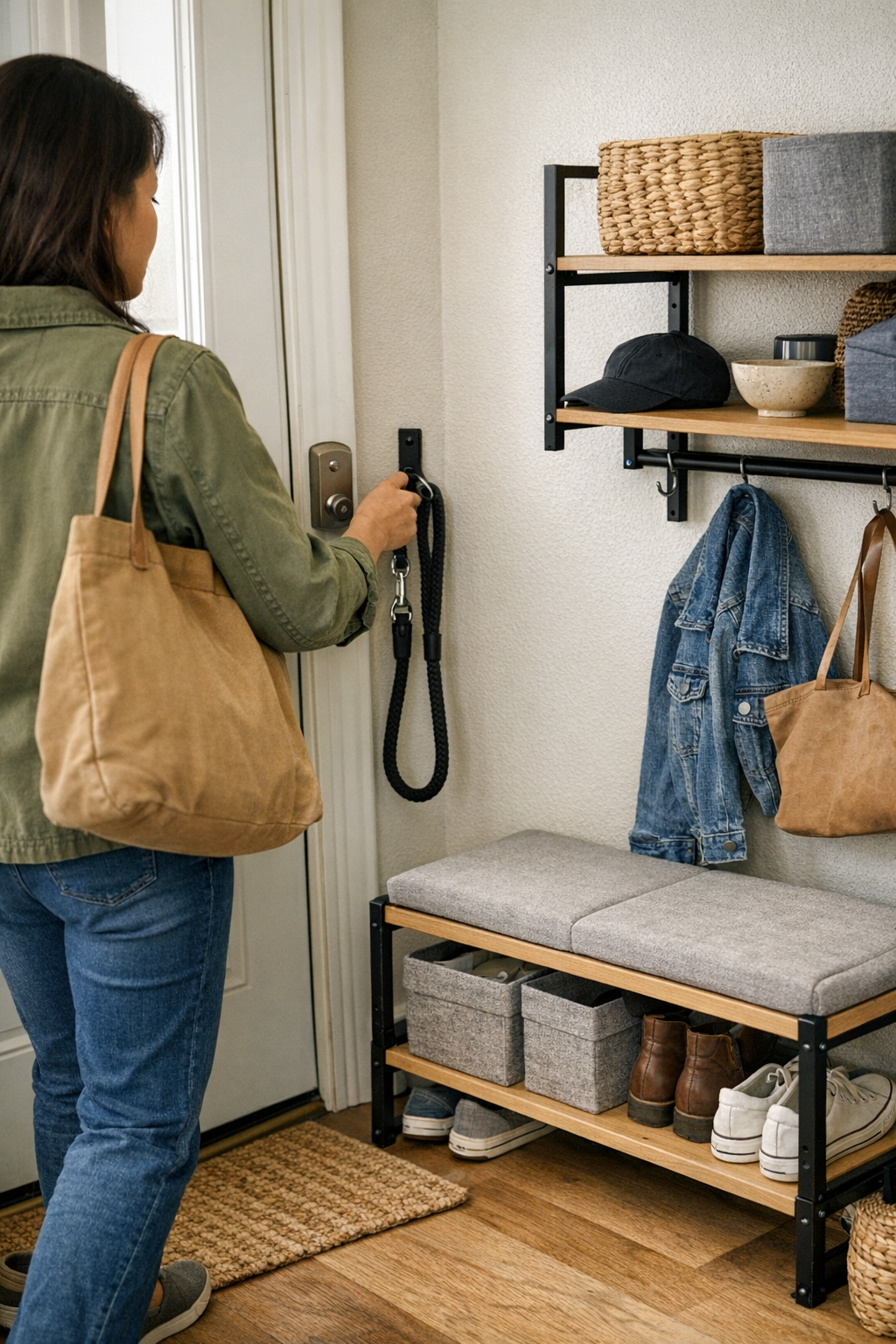
There’s a particular feeling in the seconds after coming home—a kind of gentle rush at the threshold, arms full, mind already drifting to what’s next. I used to step inside and feel an immediate snag: where to drop the leash so it wouldn’t join the tangled company of stray shoes and bags by the entry bench. For a while, this friction felt normal, just background noise in the rhythm of arriving and leaving. But over time, the placement of a single wall-mounted hook—right at the entry latch—began to dissolve that familiar tangle and improve the flow of the transition space.
The Subtle Weight of Placement
You don’t notice it immediately.
I moved the leash hook once, aiming to tidy the look of the space. Instead, leashes migrated to seat edges and shoe racks, creating odd little piles that spilled into the narrow pass-through near the door. It became clear that what mattered wasn’t the intention but how the lines of movement demand their own logic. The hand, full or empty, follows the same arc every time; if the return spot is right there—just where your hand naturally rests as the door swings inward—order happens without effort.
When the hook is flush by the latch, the leash return becomes automatic. There’s no pause to calculate or resist. In this sense, clutter is less about keeping discipline and more about matching storage solutions to actual daily routines and repeated arrivals and departures. This was the insight I kept coming back to.
Forgetting About It Is the Real Success
There’s an odd relief when something useful disappears from conscious thought. The hook became a punctuation mark I stopped noticing. No more searching under coats or shifting bags just to get out the door quickly.
It’s not only about the leash, either. With the hook right there, the shoe zone seemed less prone to sprawl. Borderless open floor stayed a little more available—for boots, bags set down hurriedly, even the mildly chaotic shuffle of wet umbrellas or stray gloves. You notice the absence of pile-ups more than you appreciate those few unrestricted feet of floor, until one morning you realize you don’t have to sidestep a tangle just to reach your shoes.
The Difference Is in Those Small Interruptions
There’s a rhythm to coming and going, an almost automatic choreography that sets the emotional tone for the entire entry. A misplaced hook interrupts this flow; a well-placed one rides along unnoticed, making each return seamless.
I started seeing these minute, forgiving features as small resets—ways to let the transition-space storage catch up to the real movements of everyone who passes through. It’s not perfection. On busy days, there is still some clutch of bags and shoes near the bench, but the passage doesn’t jam the same way. That quick, one-handed leash return has quietly kept the threshold open longer, even when everything else feels in flux.
If you find yourself wondering how entryway and drop zone storage really hold up to daily routines, I found a little more about that here: http://www.betweenry.myshopify.com



