The Quiet Impact of a Simple Donate Bin in Busy Homes
A clearly marked donate bin near the entry stops clutter cycling back, easing resets and keeping pathways clear in busy households.
Sometimes, coming home means dropping whatever you’ve carried—keys, shoes, a bag hastily unshouldered—right where the day’s pattern breaks. The entryway, that shifting line between outside and everything waiting inside, never quite goes still. I used to think the jumble was just part of the rhythm, inevitable when afternoons stack arrivals on top of departures. But over time, I noticed how certain things never seemed to move forward, how each reset felt a little heavier than the last. The simplest detail made the difference: a missing exit for things on their way out.
The Quiet Loop That Settles In
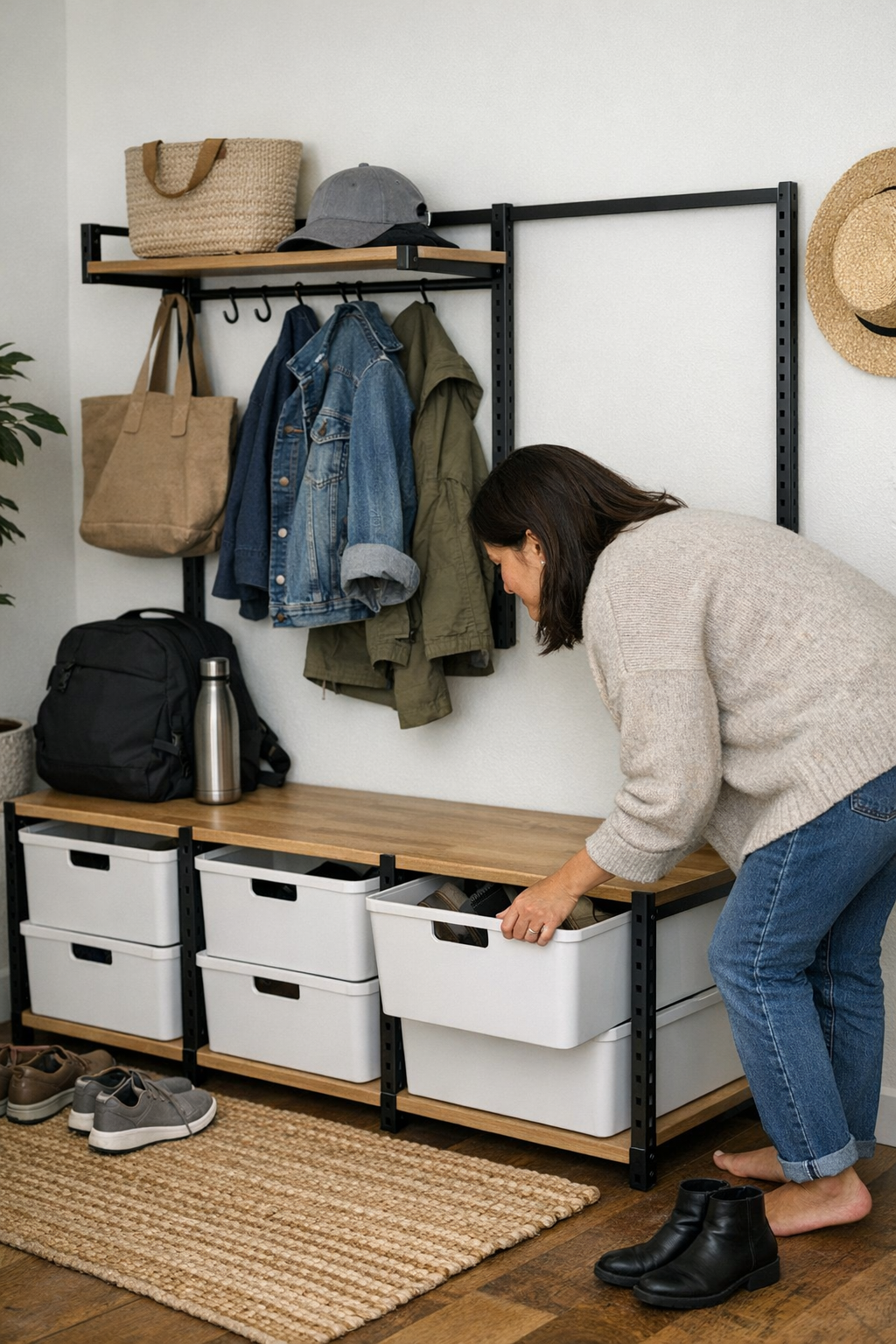
At first, no one notices how unresolved piles begin to form a kind of undertow. Even the cleanest-looking entry zone gathers ghost rows—outgrown shoes tucked beneath the bench, jackets nobody wears twisted on the last hook. When the threshold is busiest, shoes spread from mat to wall, bags hover in the uncertain territory by the utility cabinet, and clutter creeps along every accessible opening. But it never really leaves.
You don’t notice it immediately. But you feel it.
Temporary placements harden into their own logic, and the same bag or jacket cycles from spot to spot in a silent loop. There’s a pressure at the entry—each transition slows as if the way out has narrowed. That was the part I kept coming back to.
An Off-Ramp Changes the Flow
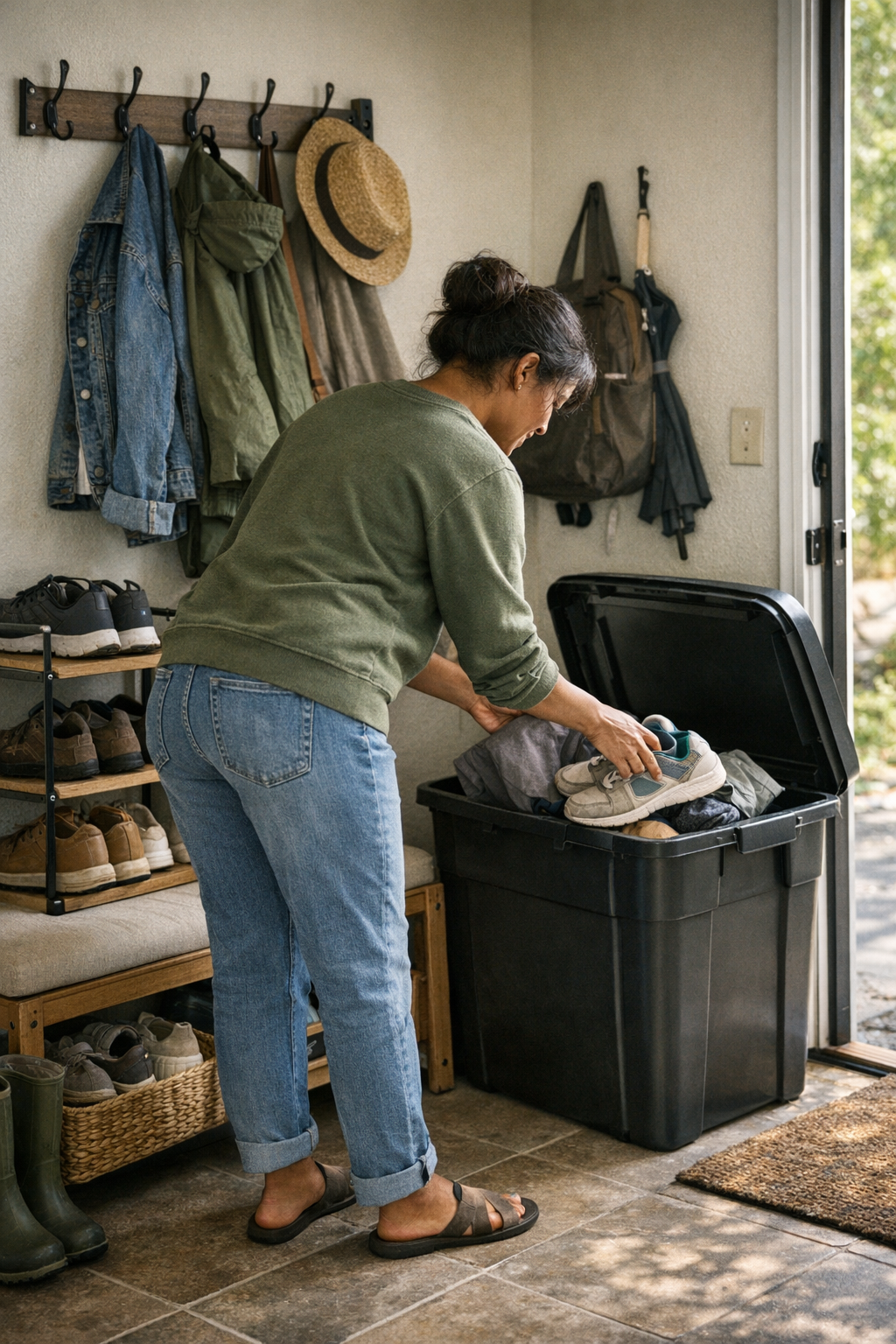
One afternoon, I made a small shift—a weather-resistant bin marked for "donate," tucked past the bench but before the overflow shoe rack. That was enough for unused layers and sizes to step out of the cycle. Instead of drifting back to the same pile, things with no place in the main flow moved directly from hand to bin. Week by week, this held.
It surprised me how quickly the pressure at the threshold lessened. Household movement felt easier, less crowded. There was no need to explain where things went; the real-life signal did the work. Resets became shorter, and exits felt less like a negotiation with everything accumulated.
Movement Defines the Space, Not Just Its Order
A transition zone—the mess, the movement, benches edged with stray shoes—rarely stays perfectly organized. Function matters more than first impressions. What stuck with me was how outflow needed an intentional path as much as inflow. Without it, surface order is temporary, and what matters most—actual movement—quietly grinds to a halt.
It’s a realization that keeps working on you, softening obstacles without fanfare, and letting the threshold breathe again.
I sometimes look for new ways to keep that flow open, and if you’re curious too, there’s more at http://www.betweenry.myshopify.com.