The Quiet Impact of Barefoot Lighting Installs at Home
Skipping shoes on quick lighting installs often causes misalignments and shadows that repeatedly disrupt daily use in damp indoor spaces.
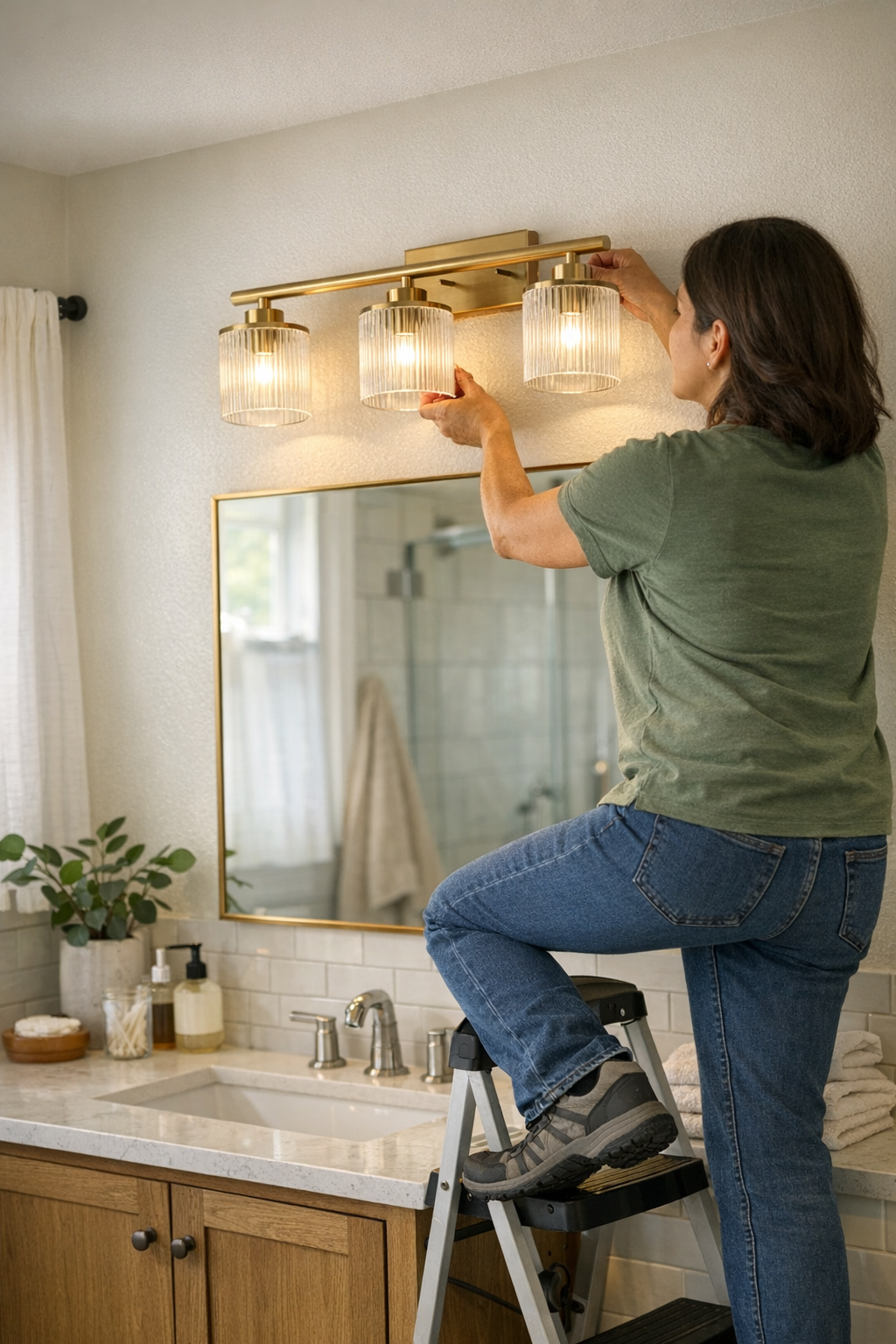
Living with a ceiling light means crossing under its reach dozens of times a day, but you don’t always notice how it shapes your experience right away. The payoff—and the nuisance—lives in tiny details: the way shadows fall against stairs, how light bends unevenly around a bathroom mirror, or how a quick install can leave subtle flaws. You might confidently secure a bracket from a wobbly ladder or bare toes, thinking the job is done once the bulb glows. But by the next morning, there’s a subtle stutter in your stride. That was the part I kept coming back to.
The more fixtures I swapped or installed—flush mounts, sem-flush mounts, wall sconces, vanity lights—the more it became less about brightness and more about evenness. Small adjustments echo back into your daily routine. In the spaces you move through most—hallways, stairways, laundry and bathrooms—it’s never just about getting the job done.
Where Your Feet Touch the Floor, Your Day Begins
My first half-careless installation was a low flush mount in a narrow hallway. Socks on, quick fix, and I missed by just a finger’s width. The effect showed itself every night: light pooling unevenly in one patch, casting a long stripe along the baseboard. You don’t notice it immediately.
But you feel it.
Stairs, laundry corners, the reach to switch on a hardwired wall sconce behind a washer—these are moments where light’s placement matters. When lighting falls off-kilter, a quiet nag sets in. Tensions creep into your movements: a pause on a wet tile, a slow check of the mirror’s edge. None of these moments are dramatic, yet they add up, like a pebble shifting in a shoe.
Especially in damp or crowded spots, what became clear is how much stable footing controls the outcome. Even a half-step more sure on the ladder made a difference. Real results seemed to last only when my shoes were on and the bracket’s level found true, almost by accident at first.
Everything Gets Noticed, Eventually
Time does odd things inside a home. The first night, a newly wired light looks finished. A week later, shadow bands appear on the floor where none belong. Water beads on bathroom tiles, fog crowds the mirror, and the effort saved on a quick install turns into an everyday workaround.
I caught myself stepping wider near the laundry just to read the machine’s timer. Each time, I wondered why — until I realized the light faded right there. That was the miss from when I hurriedly set the fixture. What’s off by a thumb in the install turns into extra thinking, repeated compensations every day.
These interruptions aren’t obvious at first. But once they’re there, they never really leave.
The Odd Relief of Getting It Right
There’s a tension between wanting speed and ending up with lighting that actually fits the rhythm of daily tasks. It’s easy to sell a brighter fixture, but none of that matters when shadows pool where you need clarity—on stair turns, under cabinets, or around the mirror zone.
I started putting my shoes on, even for the simplest updates—a sem-flush mount in the hallway, a wall sconce in the laundry sitting straight over the cabinets. It sounds small, but the light began sitting where it should.
That’s the practical bit I didn’t expect: stable footing gave me hands free to nudge fixtures perfectly in place, without awkward, off-balance stretches across damp tiles or narrow stairs. The shift wasn’t immediate, but later—when light spread evenly and I moved through each room without thinking about where shadows would catch—a small change made everything else follow.
Sometimes the best part of getting the light right is when you don’t notice it every time you pass through.
If you ever want to look deeper, you’ll find more here: http://www.lighthelper.myshopify.com