The Quiet Impact of Daily Litter Care at Home
Routine daily litter scooping keeps spaces fresher, lowers cleanup strain, and prevents minor problems from spreading in the home.
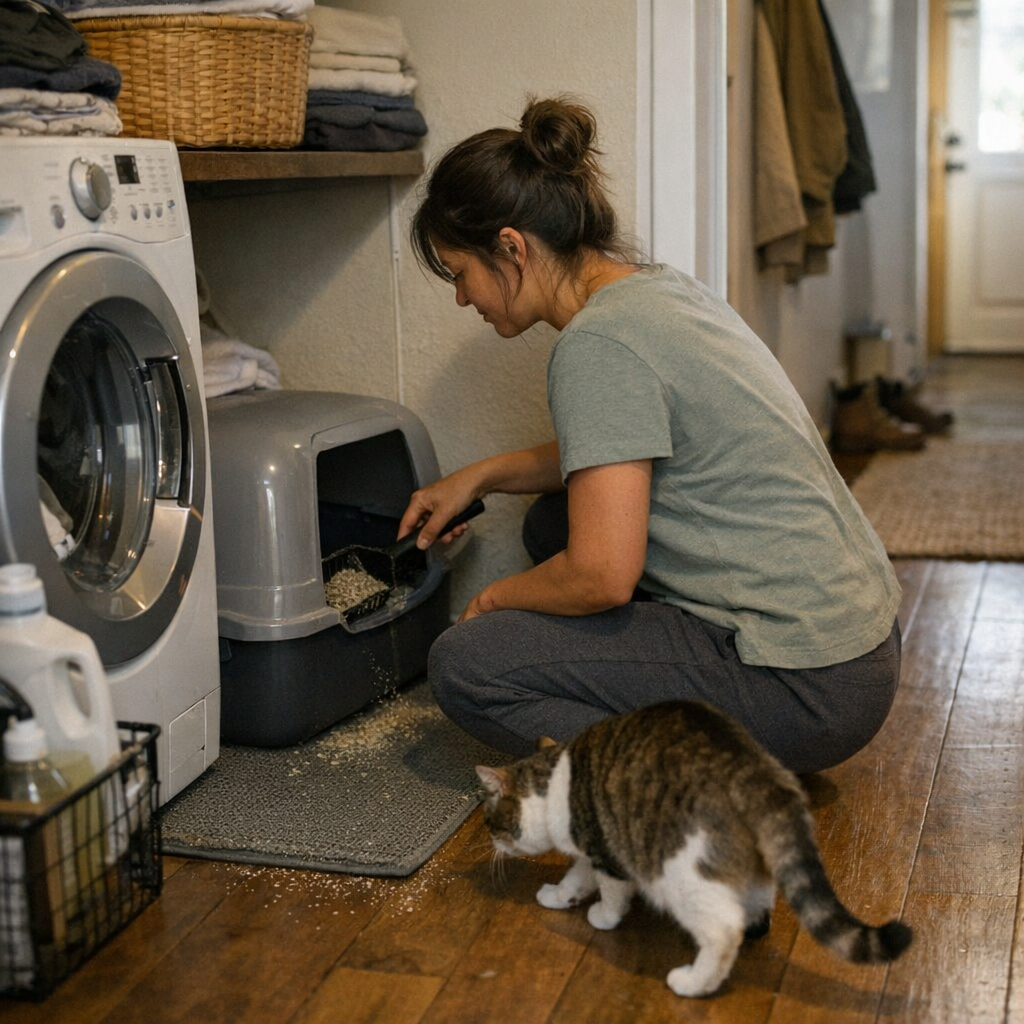
Some household details fade into the background before you realize their impact—a fine line of scattered litter edging past the mat, or a faint, shifting scent lingering near the laundry corner. It’s subtle. But living with an indoor cat, you start to see how small daily routines—like scooping the litter box or resetting feeding areas—shape the feeling of every shared space. For a long time, I thought an area could look tidy enough by just keeping things mostly in order. Yet the difference between a space that only looks managed and one that actually feels quietly livable kept showing itself, little by little, day after day.
The Thin Line Between Order and Accumulation
At first, the setup feels settled: litter box tucked in the laundry area, mat in place, litter container nearby, feeding bowls aligned, water refilled. But skip a step even once, and subtle signs appear. It’s there in the scent that lingers when folding towels near the litter corner, or in the soft crunch beneath your shoe just past where you last vacuumed. The room that looked fine at first slowly drifts toward something less comfortable—not all at once, but through small delays and overlooked resets.
It’s surprising how quickly a routine can tip. One slower refill or skipped wipe-down becomes a lingering odor or invisible dust spread, pushing beyond the immediate area and asking for more attention than a quick fix.
Where Shared Spaces Reveal the Truth
In homes where litter boxes and feeding areas share corners with daily life, impact builds gradually. Clothes pick up faint dust traces; shoes carry litter grains closer to hallways. These aren’t obvious problems—they appear almost invisibly, as micro-signals that reveal cracks beyond the spot you think you contain. The setup can stay outwardly orderly, but cleanup demands more time and effort each pass, especially when scattered toys or grooming tools don’t find their place and mats aren’t reset.
It’s not big cleanup sessions but the smallest daily touches—scooping the box right after refilling water, wiping down the mat after cleaning—that hold the boundaries steady and make all the difference. That repeated habit shapes how easy it is to move through the room and keep it feeling neutral.
When Maintenance Becomes a Comfort
After enough cycles, you realize that “once a day” maintenance has a real effect. The odor softens. Litter residue stays behind the mat, not creeping into rest corners or feeding zones. Laundry tasks become just laundry again, not a reason to pause and negotiate a damp, dusty, paw-print-marked zone. This was the shift that kept returning—the moment upkeep turned invisible.
Living with a cat indoors, the real progress is in how habits reduce daily friction—making feeding areas, water setups, litter-adjacent arrangements, and grooming corners easier to manage. When work feels lighter as days go by, the setup is probably working right.
The thought keeps unfolding, but if you want to see a quietly effective, lived-in setup that supports this kind of low-friction cat life, you can find one here: http://www.stillwhisker.myshopify.com