The Quiet Impact of Thoughtful Stair Lighting at Home
Stairway lighting boosts confidence by reducing shadows, glare, and cable clutter with well-placed, supported lights—not just brighter bulbs.
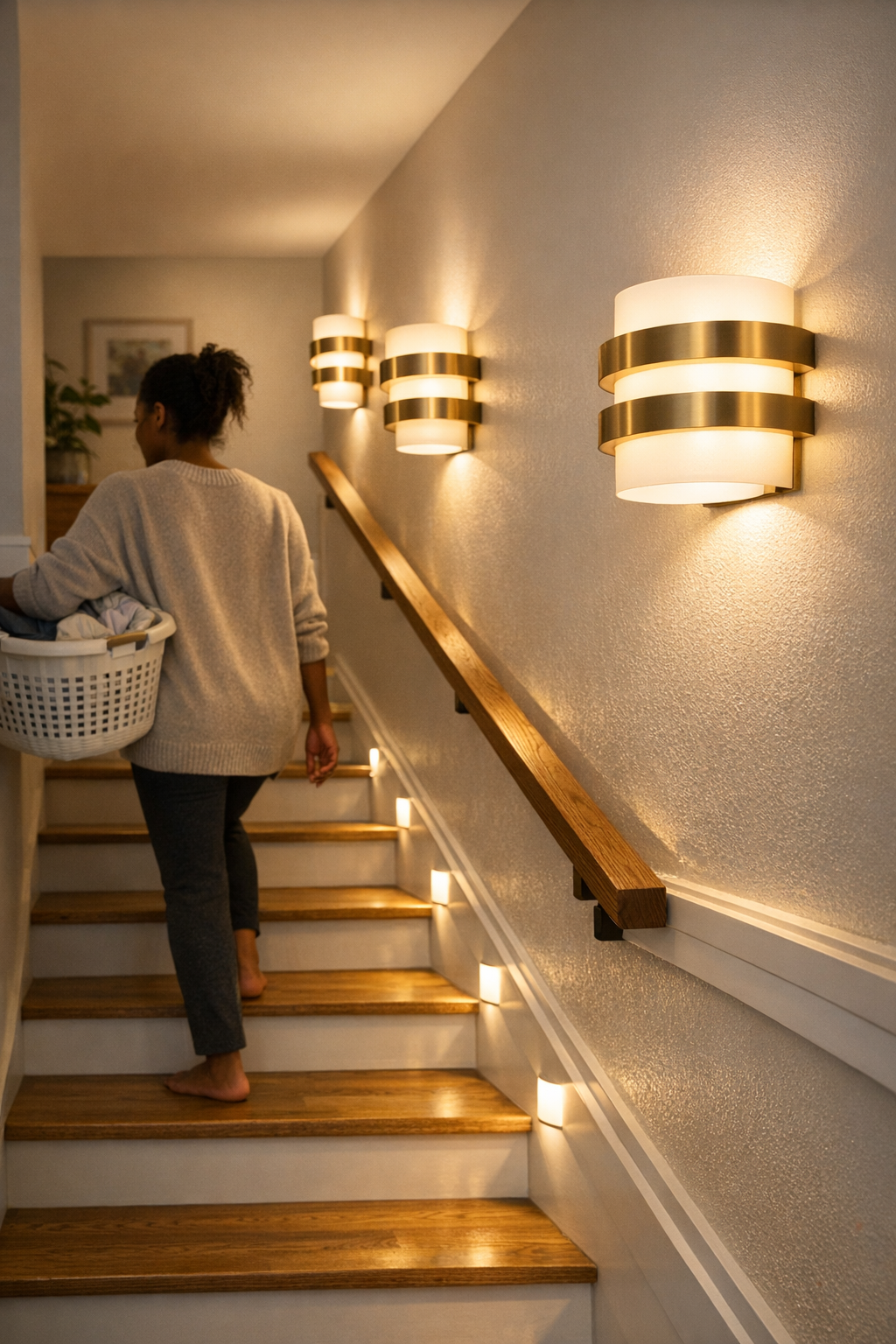
There’s an unease in the body before the mind registers it. The pause at the top of a stairway, or the subtle check of a hand along the wall—these little hesitations appear most often in the evenings, when the hall’s scatter of shadows sharpens. Not enough to call unsafe, but enough to shape routine. I didn’t think much about stairway lighting until a series of half-lit steps made me slow down, then stop altogether, just to be sure.
Overhead fixtures had given the space a kind of generic brightness, but it was the pattern of hesitation that started to matter. The light worked invisibly until it didn’t.
Where Light Really Lands
You don’t notice it immediately. Most days, it’s just the usual walk up and down, laundry under your arm, mind elsewhere.
But it only takes one uncertain landing—especially late or during an early errand—to realize how often the light fails to do its simple job. Downlighting throws broad shapes but leaves the vital edges in blink-and-miss shadows. After dark, I found myself looking for the nearest tread not out of habit, but from a quiet lack of trust.
That was the part I kept coming back to: how a single exposed cable, or a glare from the ceiling, could move a regular step into the background of daily second-guessing.
Edges, Cables, and the Quiet Work of Support
I tried swapping bulbs. It was never about wattage. Brighter overheads only exaggerated glare and polished out any helpful difference between one step and the next.
What’s left is how supports work—wall mounts at step-level, cables tucked behind the trim, nothing to catch a shoe or your eye. Cleaner cable lines turned out to matter; the distraction of a loose wire or crooked bracket lingers longer in daily use than it should.
There’s relief in the subtlety when you get it right. Even a narrow set of LED wall lights, arranged just close enough to each tread, started making each edge feel definite again. Before long, my foot moved without checking, and that small tension evaporated.
Light That Stops Being Noticed
Eventually, the whole arrangement faded into the background, in the best way. I noticed the lack of worry more than any single fixture: no stopping at the fourth tread where the haze used to be, no pausing to push a cord aside, no sidelong check for the right landing.
When lighting support finally does its quiet work—neatly routed, bracketed, and aimed at what you touch and see rather than above your head—the routine gets lighter too. Sometimes, the biggest change is simply not thinking about it again.
Some of these details came together over time and with more trial and error than expected; for anyone curious, I found small things here: http://www.lightsupport.myshopify.com



