The Quiet Moment Before Every Walk That Changes Everything
A repeated doorway pause often marks leash friction start; a calm cue and slack leash help smooth transitions for steadier walks.
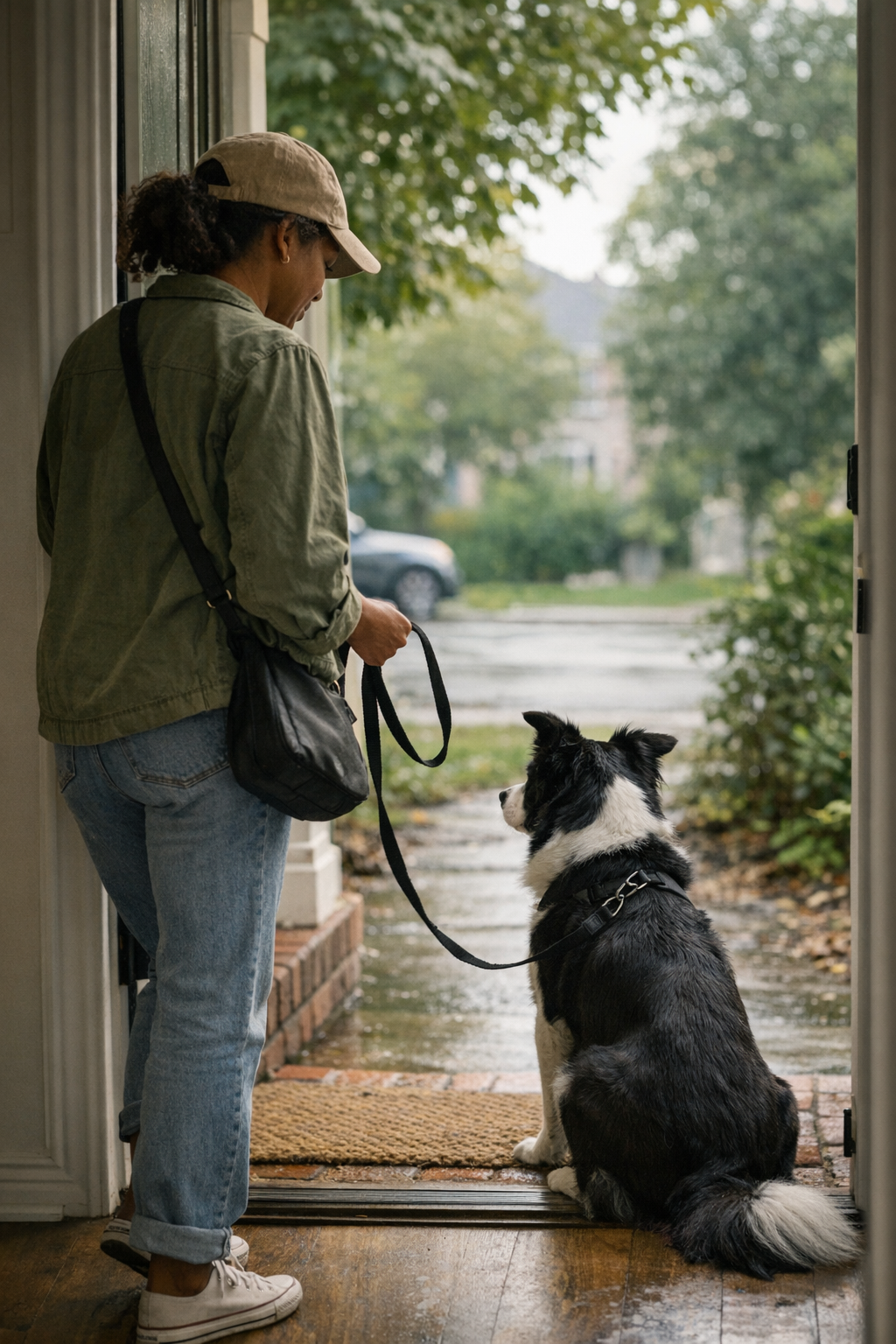
You notice it after a few mornings, right around the time the leash comes out and your hand reaches for the doorknob. There’s no big spectacle—just a small, repeated pause that creeps into the threshold right before a walk. It happens almost every day. At first, it looks like a natural hesitation—maybe your dog is sniffing the edge of the mat, glancing up, waiting for some silent cue. But over time, it’s clear: this moment, as minor as it seems, quietly shapes how every walk begins.
The pattern isn’t always dramatic. Sometimes it’s just a few seconds longer than you expected, your dog shifting weight back while you wait for momentum. Sometimes it’s the way your shoulders tighten against a slight pull you anticipate, the body memory of last week’s zig-zag down the steps. In the rush of the morning—groggy, hands juggling bags or calls—the pause at the door becomes a tiny negotiation that neither of you really win. It isn’t until these small hang-ups keep stacking—tangled leash, stuttered exit, dog pulling too far ahead—that you realize how the start of every outing shapes the rest of it.
It looked fine at first. I’d grown used to the doorway as just a pass-through, a background checkpoint. Open the door, step out, dog follows—it’s basic. But living day in and day out with the same clipped rhythm, you start to sense how this sliver of transition directs much more than those first steps outside.
The Weight of Routine Friction
I started noticing the little things: shoes half-tied, leash hooked on, trying to tuck mail under my arm, the sound of the city blending with my dog’s soft breath behind the door. The pause grew sticky. My dog would freeze, back up, or lunge forward if I rushed us. If I reached for her too quickly with a “let’s go,” sometimes she’d ignore it, still weighed down by her own logic. We’d stumble out—me making quiet apologies, her pulling ahead in bursts.
Neither of us was in sync. The difference showed up in small ways; not during the walk itself, but in the mood that followed. The leash stayed tense, minor corrections becoming the baseline tempo of our route. When we got back, both a little frazzled, the hallway felt narrower, toys pressed against the wall where we’d nearly tripped trying to leave. The routine reset didn’t land; it just spiraled back whenever we tried again.
I kept wondering if the pause was distraction or stubbornness—if asking my dog to hurry was just a test of patience. Most mornings, though, it became clear: this was a space neither of us were managing well. The routine looked neat enough, but living through it told a different story.
Where Transition Quietly Directs the Day
After enough repeated clatter, I tried slowing down at the door without drama. No long cues, just a breath and a few seconds letting her take in the threshold—the air outside, whatever signal or scent she needed. I kept the leash loose. Sometimes she moved ahead right away; sometimes she needed the full beat before nudging the door herself. It smoothed some rough edges—not all—but the exits got less jagged.
Inside, I noticed the setup that kept tripping us up: the towel too far from the door, food and water bowls nudged out of reach, bags crowding her crate, toys spilled out into walking space. Every obstacle hardened the feeling that we were making quick work of the morning, but not easy work. That’s a small difference—quick versus easy—and once you live with a dog every day, the gap becomes obvious.
The quieter exit created space for a small realization: often friction isn’t about what’s in the way, but what never gets cleared out in the first place. The most helpful reset wasn’t flashy; it was just routine things having a little more space. Towel within arm’s reach, leash hung ready, nothing to fumble with while opening the door. The relief wasn’t dramatic. It just meant we landed in those first steps outside without either of us already half a pace behind.
Small Returns That Matter Most
The tiny changes went largely unnoticed by anyone else, but for us there was less cargo at the door. Neither of us tangled with overlapping items, neither crowding the entry to get going, neither skirting around clutter caused by ignoring it. The reset began to spread backward through the rest of the morning. Coming back from a walk, bath towel ready, crate open, toy pile tucked in one corner—each doing just enough to make the next routine less of a stumble.
That part kept returning: the doorway didn’t need more attention, just less build-up. The more I pared things back, the less we paused before doing what came next. I stopped treating hesitation like a puzzle to solve and started seeing it as a signal to clear what didn’t belong at the threshold to begin with.
Now, some mornings we move through the door with little more than a blink—no tugging, no sidesteps, no running commentary in my head. It’s not perfect, but small, steady repetition works better than sudden change. Living with a dog isn’t about fixing routines; it’s about smoothing the friction that collects in the seams—those repeated seconds that quietly add up.
Sometimes the best part of the ritual is when it doesn’t snag at all. Quiet morning, leash in hand, and both of us already pointed in the right direction.
If you find your routines piling up the same way, I found it helpful to look here: http://www.dogpile.myshopify.com



