The Quiet Moment That Changes Every Walk
Rushing dog walks without an entryway pause causes leash tangles and tension, but a brief pause calms and smooths the routine.
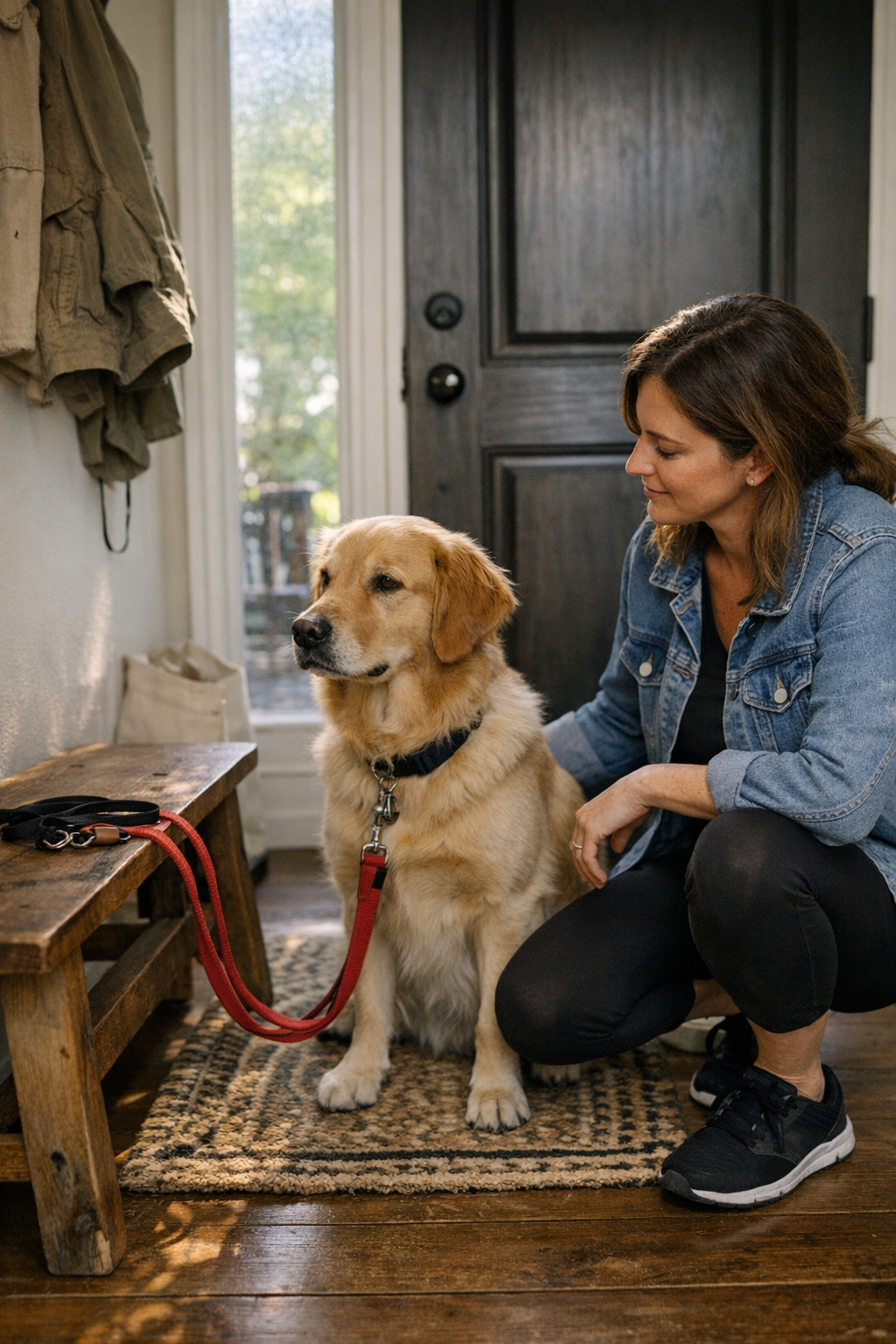
It took several weeks before the pattern became clear. Each morning, right after breakfast, I’d step around the same patch of toys and a half-filled water bowl on the way to the crate. Everything looked fine—tidy enough, comfortable enough. Still, the routine always caught at the same point: a little stumble, a towel shuffled just out of reach, a sense that mornings were a bit more rushed than necessary. It wasn’t dramatic—just a repeated snag inside the daily flow.
The arrangement kept promising ease, but the small frictions never quit. In theory, bowls placed just inside the kitchen entry made feeding direct and fast. In practice, this meant soggy patches from enthusiastic laps and toys spilling into the line between the crate and the water bowl. Every shortcut I set up seemed to backfire in unexpected ways: towel just too far from the door, crate latch sticking stubbornly, a chew squeaking underfoot as I cleared plates. The layout looked organized, but it made moving through the space more difficult than it seemed.
You notice it after a few mornings. The practical and the easy aren’t always the same.
Tidy Spaces Aren’t Always Quieter Lives
At first, I thought more organizing would solve it. Hooks for leashes, toy bins near the crate, towel stacked in the far corner—on paper, it seemed the routine should run smoother. But almost every dog routine, no matter how carefully arranged, leaks its reality into the day.
There’s a peculiar contrast between a photo-friendly spot and a truly liveable one. The scene looked tidy enough until I tried to rush a dripping dog back inside after a rain walk and realized the nearest towel was—inevitably—a few steps past the cranky crate door. Small distances mattered, especially with mud at the threshold.
That was the part that kept returning, twice a day: trailing a damp leash, hands full, nudging aside toys I hadn’t remembered leaving there. The whole process moved differently than it looked. Real convenience wasn’t about where things appeared to fit, but about where hands and paws landed repeatedly during entrances, exits, and daily resets.
The Smallest Reset
I started moving things not for looks, but for actual use in motion. The towel found a home on the inside handle of the door. The water bowl moved farther out of the crate’s swing path. The toy bin migrated to the living room so the kitchen routine could finish before playtime began.
It all felt minor at first. The difference showed up in smaller ways than I expected: fewer tiptoed steps over scattered chews, less water tracked through feeding, a smoother path for rolling the crate door shut before leaving.
With these micro-adjustments, the routine lost some of its background static. I wasn’t fighting the setup every time. The dog’s part seemed easier too—less hustling for space, more presence at each pause. Sometimes, reducing overlap was the best comfort for both of us.
Waiting for Flow
Most routines aren’t fixed by grand resets, but by less—the towel already at hand, bowls away from the main walking line, leash loop slipped over the doorknob instead of coiled for show. Simple, repetitive, and almost invisible.
You miss the real payoff if you only focus on surface neatness. The things that return most often are friction points, not décor. The morning when everything lined up without a pause to dig for the right towel or detangle a leash from spilled toys wasn’t just about speed—it was a small drop in the day’s noise.
Sometimes, living with dogs teaches you that the best kind of order is the one that gets out of your way. The more the setup matched how we actually moved, the softer the whole day felt.