The Quiet Moment That Shapes Every Dog Walk
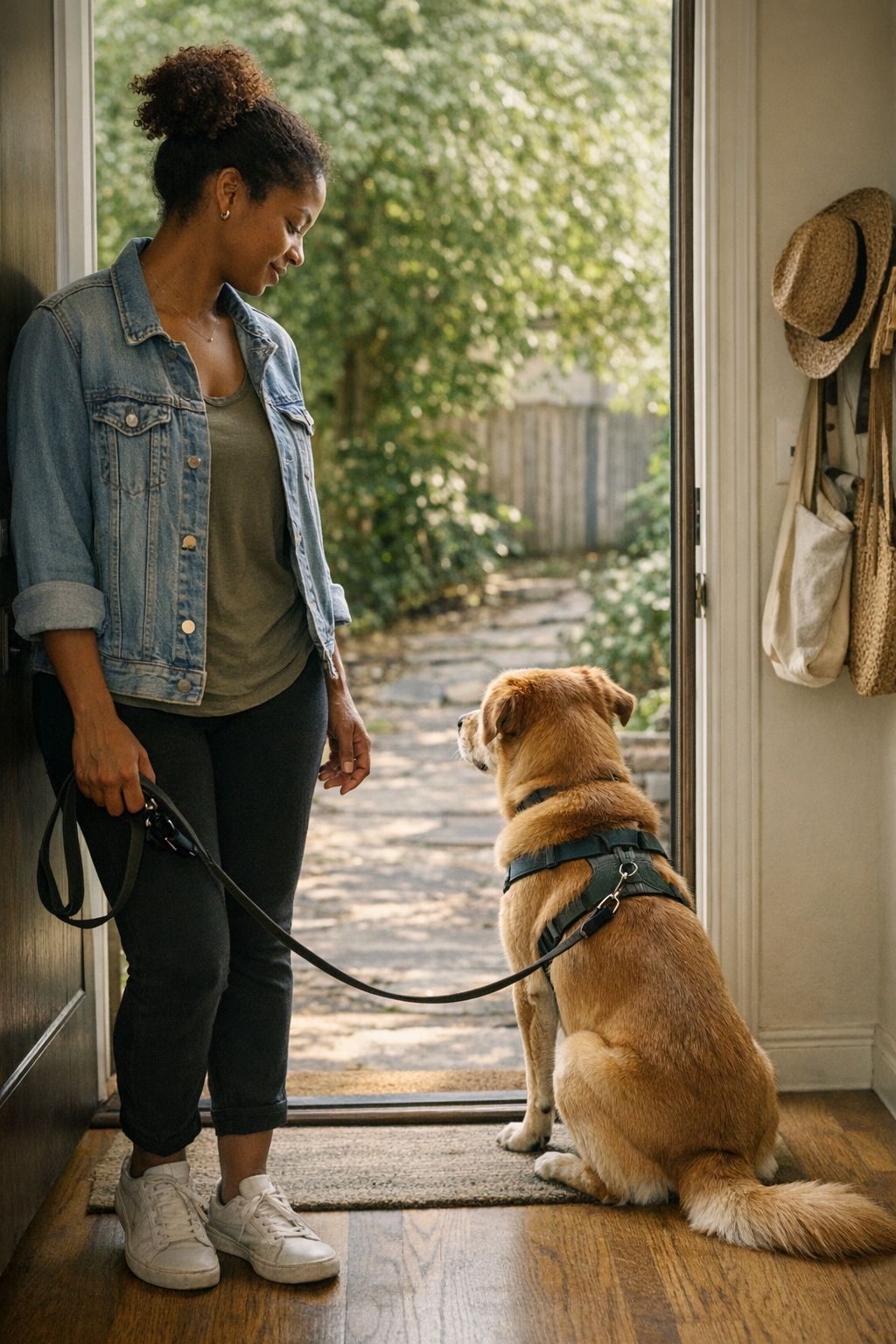
Recognizing a dog’s doorway pause as a readiness cue reduces tension and friction, making walks smoother and less reactive over time.
There’s a moment in the morning when things feel a bit rushed—keys, coffee, the dog close at hand—when you reach down to feed her and, just for a second, your hand lands in the wrong place. The bowl isn’t where you expected it. After a few mornings, you notice this small reroute of your arm. It doesn’t slow the day, but it sends little ripples through the routine.
At first, the bowls seemed fine: placed under the windowsill, tucked against the wall, neat enough in the kitchen’s half-light. But over time, the angle shifted slightly—maybe nudged by the mop or moved gradually through daily use. You don’t notice until you’re bending low and missing the scoop. The dog adjusts without complaint; her collar tags clink a little longer as she waits, and she holds eye contact just a beat more while you fumble.
Sometimes this pattern repeats because you let it slide—blaming the morning blur and promising to “fix it later.” Dogs don’t complain. They sidestep or pause, ears forward, patient in their waiting. The bowls stay in the same sunlit spot, more or less, but the space fills with the quiet noise of misalignment. After several mornings, you admit it’s not just grogginess on your part.
The Odd Reach
This small fraction-of-a-step adjustment isn’t dramatic, but it nudges something in the morning flow. Feeding, simple as it is, piles up tiny frictions: the missed reach, the clattering scoop, the bowl you have to grab by the edge and pull closer. You step over a toy that’s crept into the walkway overnight. Maybe you shift the bowls a finger’s width, hoping for better alignment, only to find them nudged back by midday.
You notice the dog’s waiting posture—shoulders tilted, one paw angled—mirroring your quick lean. When a small speed bump like this happens, hunger and routine become slightly out of sync. It’s not about slowing down; it’s about the moment missing its usual rhythm.
What stuck with me was this: the morning reset isn’t just about tidiness, but about clear, quiet access. A bowl can look fine in a corner—Instagram-worthy even—but in motion, it needs to be where muscle memory expects it. The difference unfolds in subtle ways: the scrape of nails as she slides toward food, the arc of spilled kibble outside the mat.
Small Fixes, Subtle Results
One morning, I pulled the bowls forward before she came in. Just a few inches, away from the clutter of shoes and the leash trailing by the door. Nothing marked or ceremonial—just a quick adjustment. It felt almost too small to matter, but the next few mornings noticed the change.
The collisions eased—no awkward reach or noisy clatter, no stepping on knotted toys in half-light. When she circled to eat, there was real space, not just a staged corner for pictures. It changed the routine in a way only repeated use can reveal; you don’t realize how much friction adds up until several mornings pass with fewer interruptions. She finished her meal without shuffling, and the mat stayed cleaner longer.
Resetting a dog’s space can sound abstract, but it happens in these low-key shifts. Every repeated routine settles quieter. Dogs remember where ease lives, as if waiting patiently for you to catch up. I wish I’d made the adjustment sooner—not to chase perfect order, but to remove one more small interruption from the morning rush.
Everyday Placement, Everyday Calm
There’s grace in not having to think about where the bowl lands or how the leash snakes past unclipped. It isn’t dramatic, but it’s more restful. The air clears in that small patch of floor; the dog returns more quickly after walks, and morning feedings flow more smoothly. You notice this more in the absence—like a dropped noise no longer breaking into the next moment.
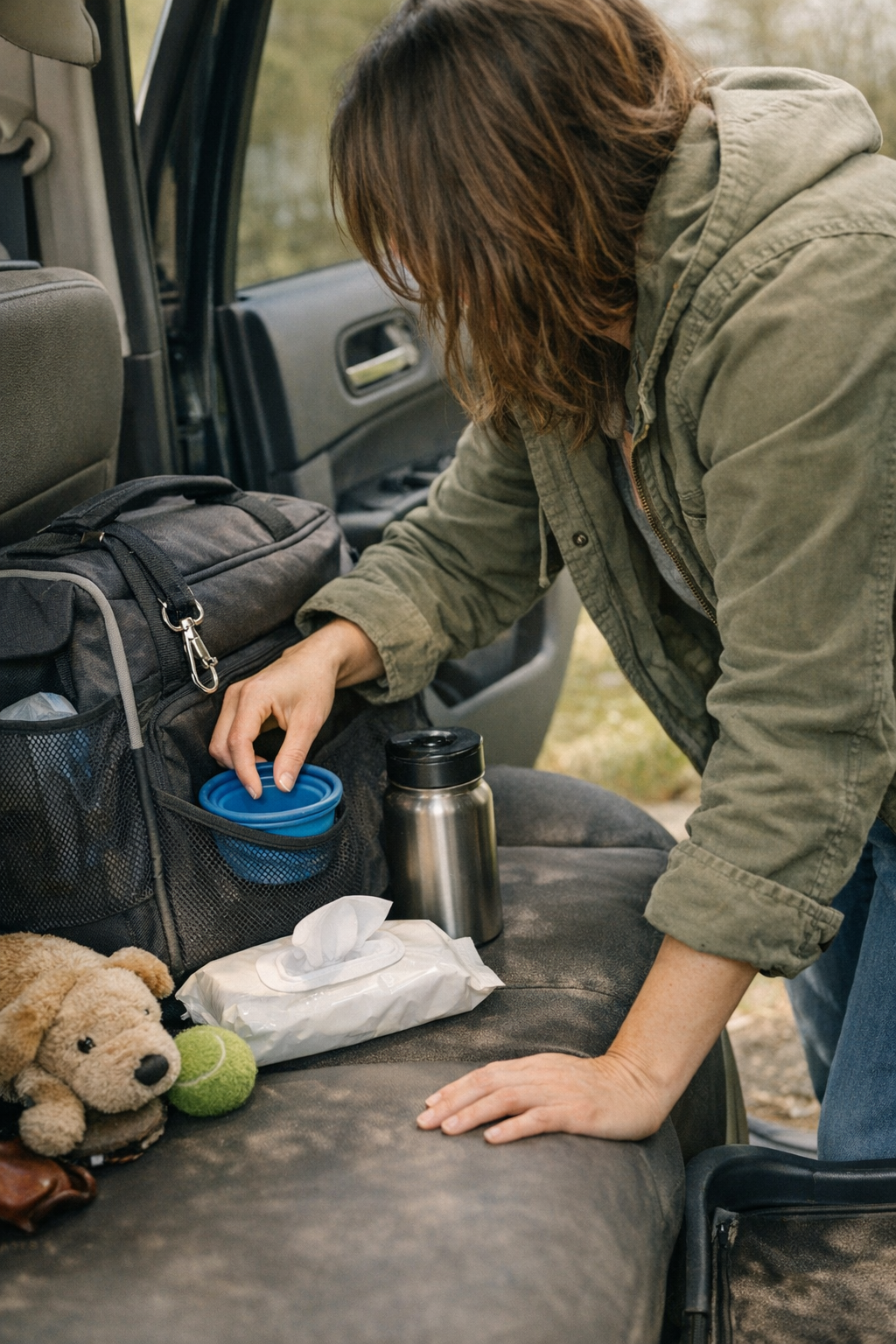
I’ve heard people talk about "optimizing" routines, but mostly it means getting out of your own way. A bowl placed where the dog expects it, a towel within easy reach for muddy paws, a resting spot free from toy overflow—these aren’t big changes, but they cut down on repeated disruptions. The right arrangement, once in place, leaves less to trip over. Mornings go quieter, almost neutral—a seamless loop, tidier in the margins.
If you want to see examples of how these small resets look in practice, you can check out some setups here.