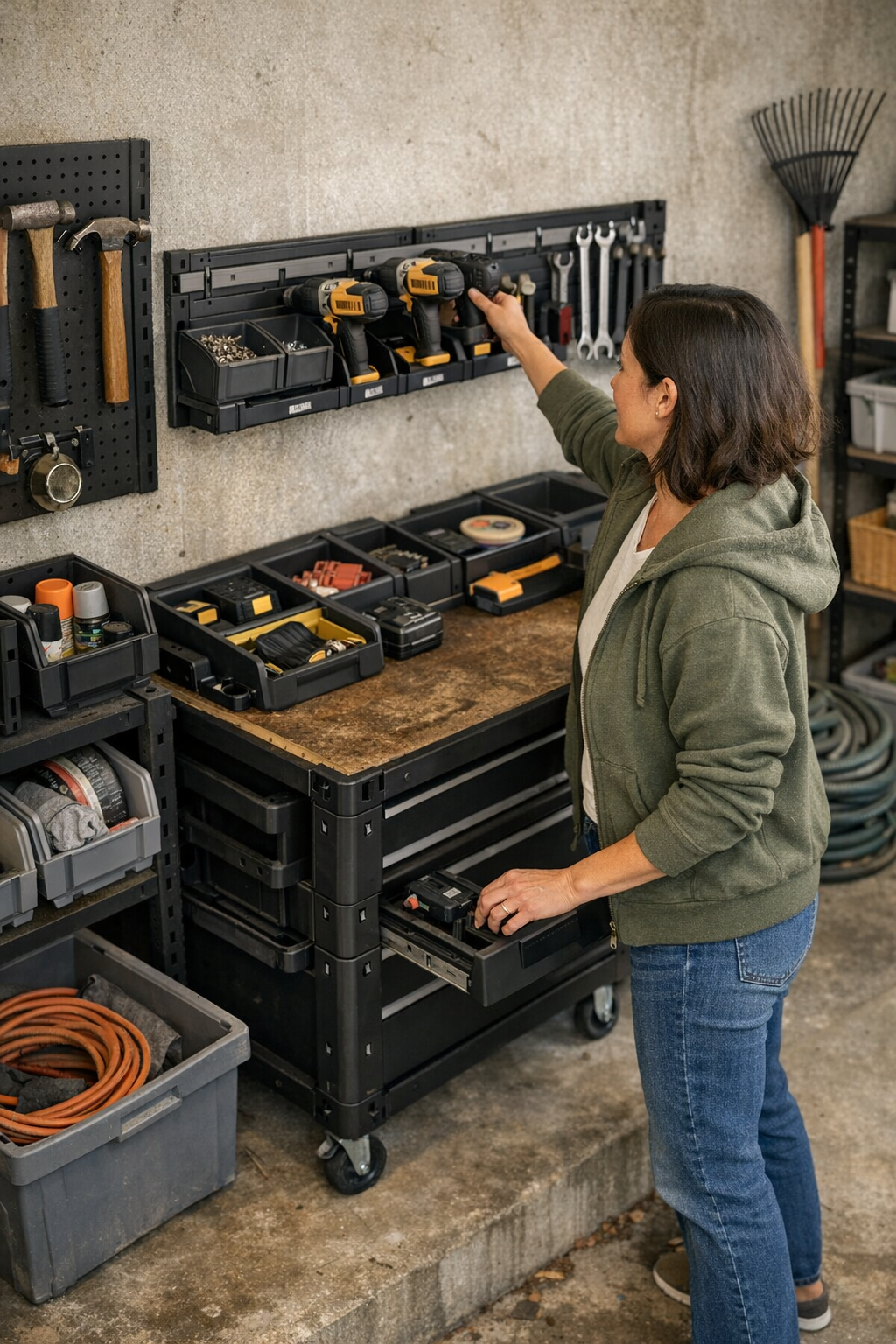
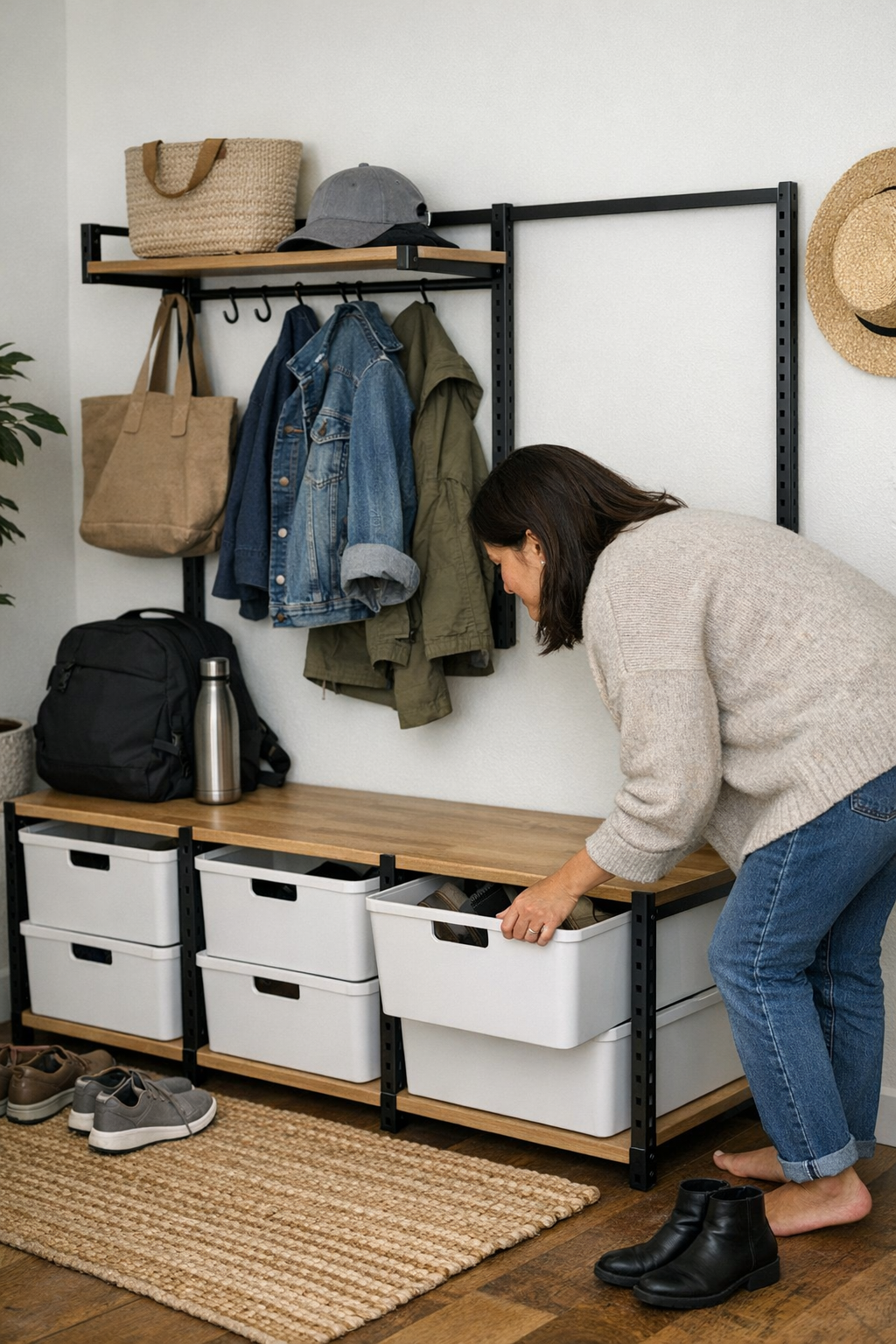
The Quiet Order Behind Everyday Storage Routines
Assigning every portable bin a fixed return address prevents drift, hidden clutter, and supports faster resets in modular storage setups.
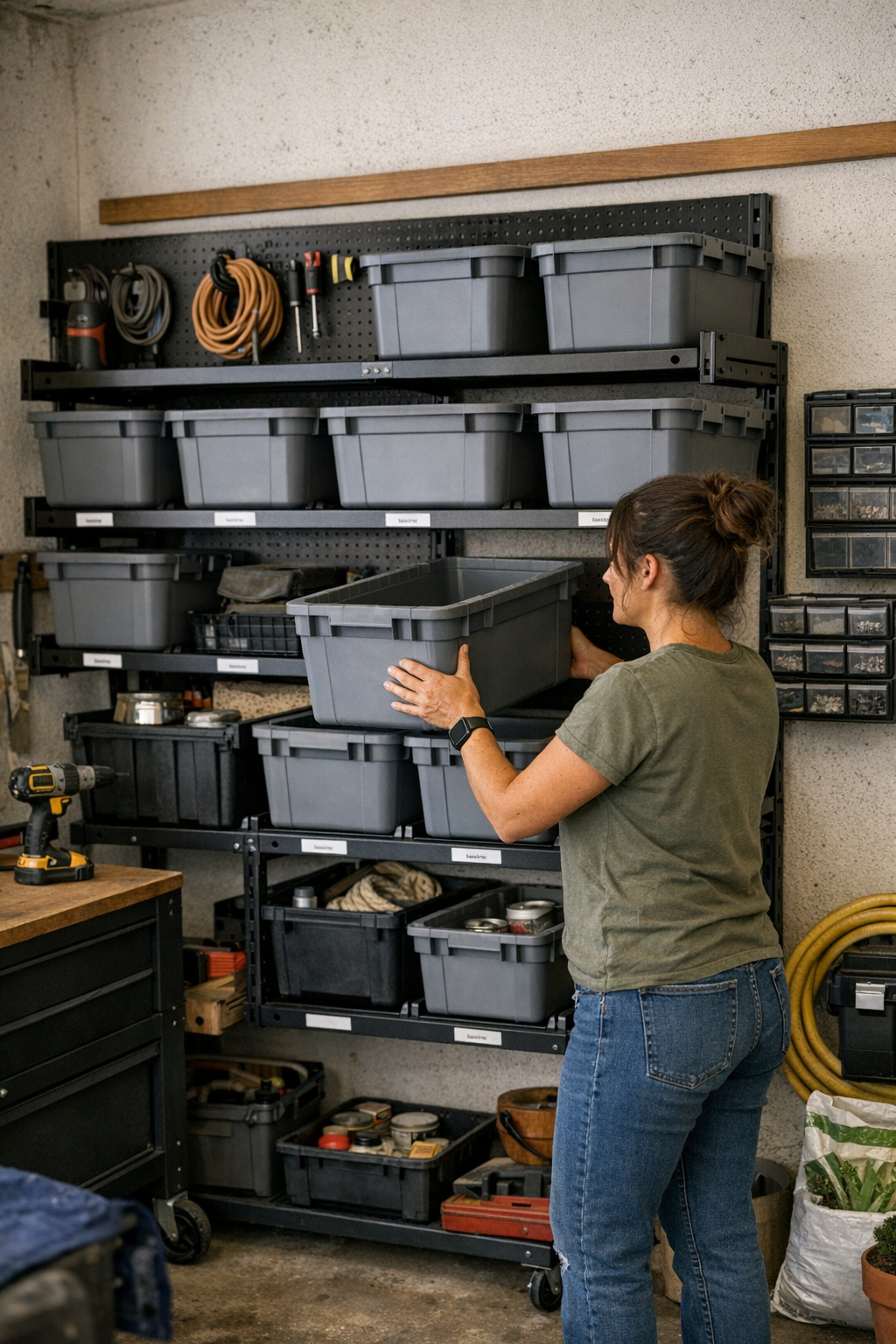
It doesn’t take much for a tidy space in your garage, workshop, or backyard setup to slip quietly into chaos. One moment, your shelves and bins seem to have their act together—the next, you’re edging around a pile or searching for something that was “right here” just a day ago.
Storage isn’t just about where things sit. It’s about whether the same things always make their way back home and how easily they get lost along the way. Even the best modular, mobile, or wall-mounted storage setups—the ones that look crisp on day one—can slowly fall apart as neat bins drift from their intended spots.
You don’t notice it immediately. But you feel it.
The Quiet Creep of Clutter
There’s a strange thing that happens when a bin doesn’t have a fixed home. At first, it’s just a harmless detour—one container nudged out of place, waiting for a proper return. Maybe you tell yourself you’ll put it back later.
But “later” rarely comes. Another project starts. Someone else needs a tool. The bin floats to the floor, then onto a different shelf, then slowly disappears into a vague pile on the edge of your vision.
The effect is subtle but cumulative. Each misplaced bin becomes an obstacle—something to sidestep or shuffle—making even small tasks feel heavier. Soon, the difference between a workspace that feels light and one that steals your time is simply a handful of drifting bins.
Every Bin Needs a Real Address
After a while, I started assigning every bin its own return spot. Not just a general area, but a real, physical address—one particular shelf row, or a labeled slot on a wall grid. I even added a shallow rail to shelves in the garage and workshop areas to keep bins from sliding forward, making their “homes” unmistakable.
This small fix had an outsized effect. Cleanup turned into a natural part of the routine: bins found their way back without much thought. There was less temptation to drop things anywhere—just one place that felt “right” for each container, every single time.
It became clear: the exact location matters less than the clarity of the return point. Whether it’s a wall mount, marked floor zone, or a raised-bed system’s side storage, what matters is that each bin’s spot is visible, expected, and, over time, automatic.
You don’t have to think about it. Your hands just know.
Returning Order, Quietly
Life in busy garages or small workspace setups can’t help but shake things up. After a long afternoon, there’s often one bin set down just for a moment—a stray that might, if left unchecked, block a walkway or hide what you need next time.
But when every bin has a real, labeled home, putting it back becomes part of the rhythm, not a chore. The reset is quicker. There’s no hunting, no stepping around odds and ends, no slow fade from order to friction.
Sometimes, it took me longer to see that the smallest structure—a rail on a shelf, a sharp label—does more than organize things. It holds the line against drift, lets routines flow back into place, and gives even a hectic session somewhere to land. Often, the real difference between chaos and calm is whether something as ordinary as a plastic bin always has a way back home.
These quiet realizations all came together one Saturday afternoon while shifting bins in my own garage setup. It’s a small detail with a surprisingly big impact on the flow of work and ease of access in any modular, mobile, or wall-mounted system.