The Quiet Pause That Shapes Our Daily Walks
A dog’s repeated exhale at the same spot marks a transition; pausing briefly there eases leash tension and improves walk flow.
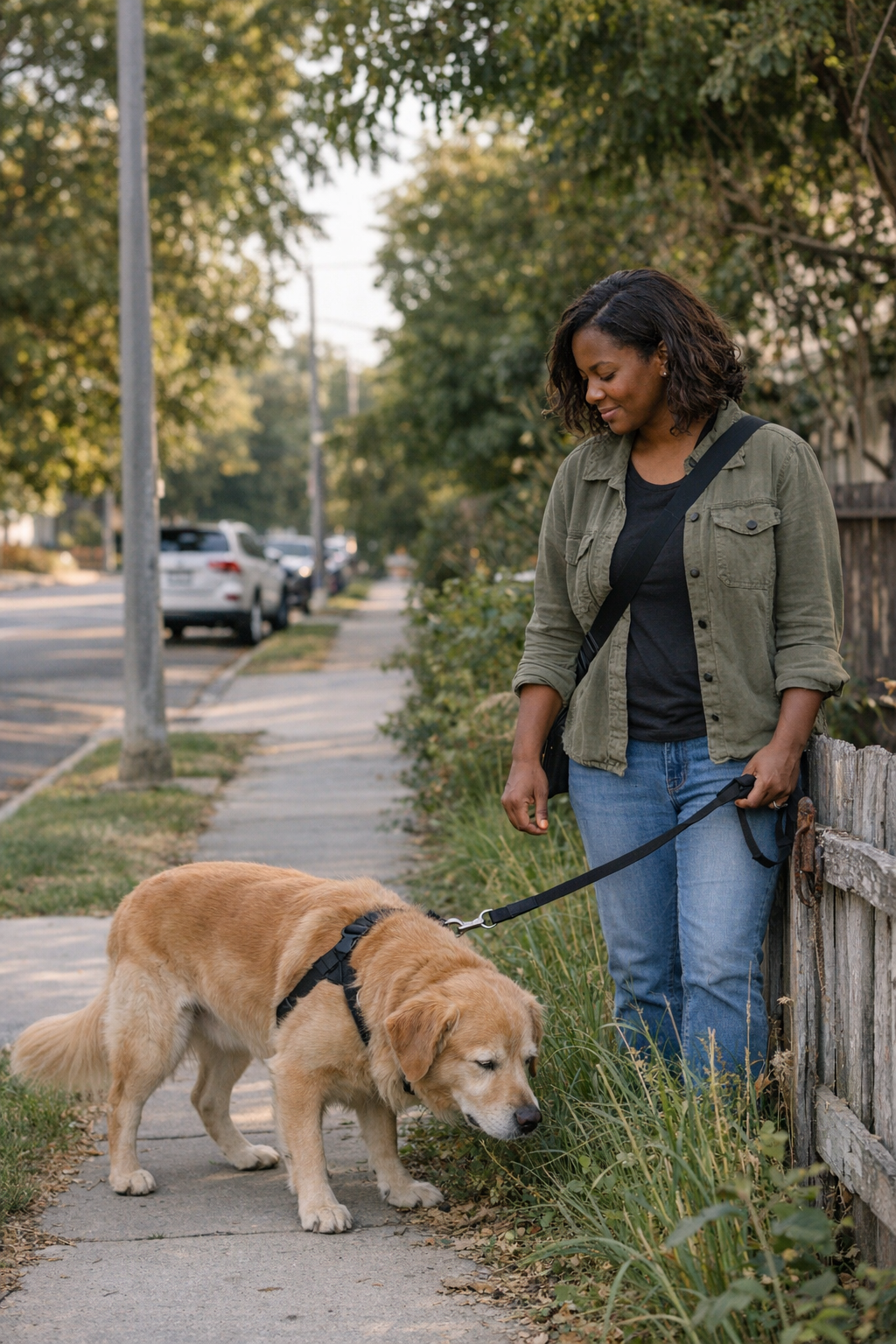
Most mornings, the rest corner seems fine. The blanket lies just as I left it, a usual toy or two tucked beside the crate, and the water bowl placed just far enough away not to worry you in the dark. But moving through those routines over and over, you start to sense an edge that looks neat but doesn’t feel right—not dramatic, just enough to catch you each time.
It begins with returning after a cold morning walk, leash slung low and the dog already heading to their spot. Shoes off, towel half-forgotten, and suddenly an awkward pause: you reach to smooth the blanket and realize the water bowl’s blocking your way. Not by much, but enough. This kind of inconvenience isn’t visible when everything’s still and quiet, but it’s the part that keeps coming back.
You notice it after a few mornings. The difference isn't an extra step, but the way it pulls at the edge of your patience—crouching to reset the blanket, nudging aside the bowl, catching a paw brushing a toy you didn’t mean to move. The arrangement looks fine on inspection but stumbles once you’re moving through it.
Corners that Look Fine—Until They Don’t
At first, everything seems neat, even comforting. Leave it tidy in the evening, and the setup whispers efficiency. But that impression cracks with repeated use. You start seeing the gap between staged calm and something you can actually live with.
After a few days, the dog’s return from outside turns into a minor shuffle. Wet paws, towel just out of reach, leash snagging as you bend low. It’s not chaos; it’s just slightly less smooth than it could be. The repeated inconvenience of a water bowl placed too close, or toys drifting into the walking path, becomes quietly annoying without crossing into disaster.
You live with it because there’s no real problem—just a layer of awkwardness that slows you more than necessary. The dog settles, exhales, and the room goes gently back to still. But the interruption lingers.
When Details Start to Outweigh the Setup
It looked fine at first. The rest arrangement passed a random guest’s glance. But the gap between looking set and working well gets wider every day you repeat the same movements. Early on, you reposition things without thinking, brushing aside toys or bowls after stepping on them once or twice. Then you stop adjusting as much—accepting the drag as part of the routine.
But sometimes, a practical moment catches you off guard. One rainy evening with a wet mat and a dog who knows exactly how to thread between half-blocked corners, you pause. The awkward maneuver, the misplaced towel, the low-level frustration—it’s always the same. The setup wasn’t bad, yet you’re still sidestepping, re-placing, shrinking your movements to fit.
That’s when it registered for me. Small changes—like shifting a bowl half a foot, stashing stray toys before the walk, or moving a towel hook closer to the door—made the routines feel easier. Not by erasing all the friction, but by lowering the snag you’d been tolerating. The difference showed up in smaller ways than I expected: less tension, quieter transitions, fewer micro-fumbles.
The Value in Pausing at the Repeat Friction
It’s easy to miss how minor misalignments shape the tone of the day. Noticing a repeated snag isn’t dramatic, but working around it over and over adds up. Most of the time, it’s the third or fourth time you nudge past something that finally triggers awareness. The corner itself isn’t wrong—just not quite ready for lived-in movement.
These are the changes you can’t photograph. They’re felt in the weight of your shoulder as you lean, in seconds saved by avoiding a stumble, in the way the dog settles faster when the routine loses its bumps. Making a space look tidy isn’t the same as making it calm to use—one is surface comfort, the other is relief in practice.
You find yourself rethinking what passes for “ready.” It’s not the appearance, but how the repeated moments land. If routines slow down, it’s worth nudging the setup one step toward actual ease.
Sometimes the answer is a familiar thing shifted a little closer, or one step moved out of the way. Most of the time, that’s enough.
If you ever want to see a handful of setups designed for this kind of routine, you can find them quietly collected here.



