The Quiet Power of a Donate Bin in Everyday Home Life
A visible, accessible donate bin near the entry keeps unused items from returning, easing transitions and preventing clutter buildup.
Most days, the threshold is just a blur—a brief moment between coming and going, bags in hand, shoes shuffled off. But there’s a different kind of pause that happens in transition spaces, one that becomes clearer the longer you live with them. I first noticed it when the edges of tidiness started to fray, especially around things we were hoping to let go. A jacket that should have been donated, a pair of shoes outgrown last season, quietly returning to the mix. Somewhere between arrival and departure, the need for a dedicated “donate” bin began to feel less like a choice and more like a quiet structural truth.
When Storage Isn’t an Answer, Just a Delay
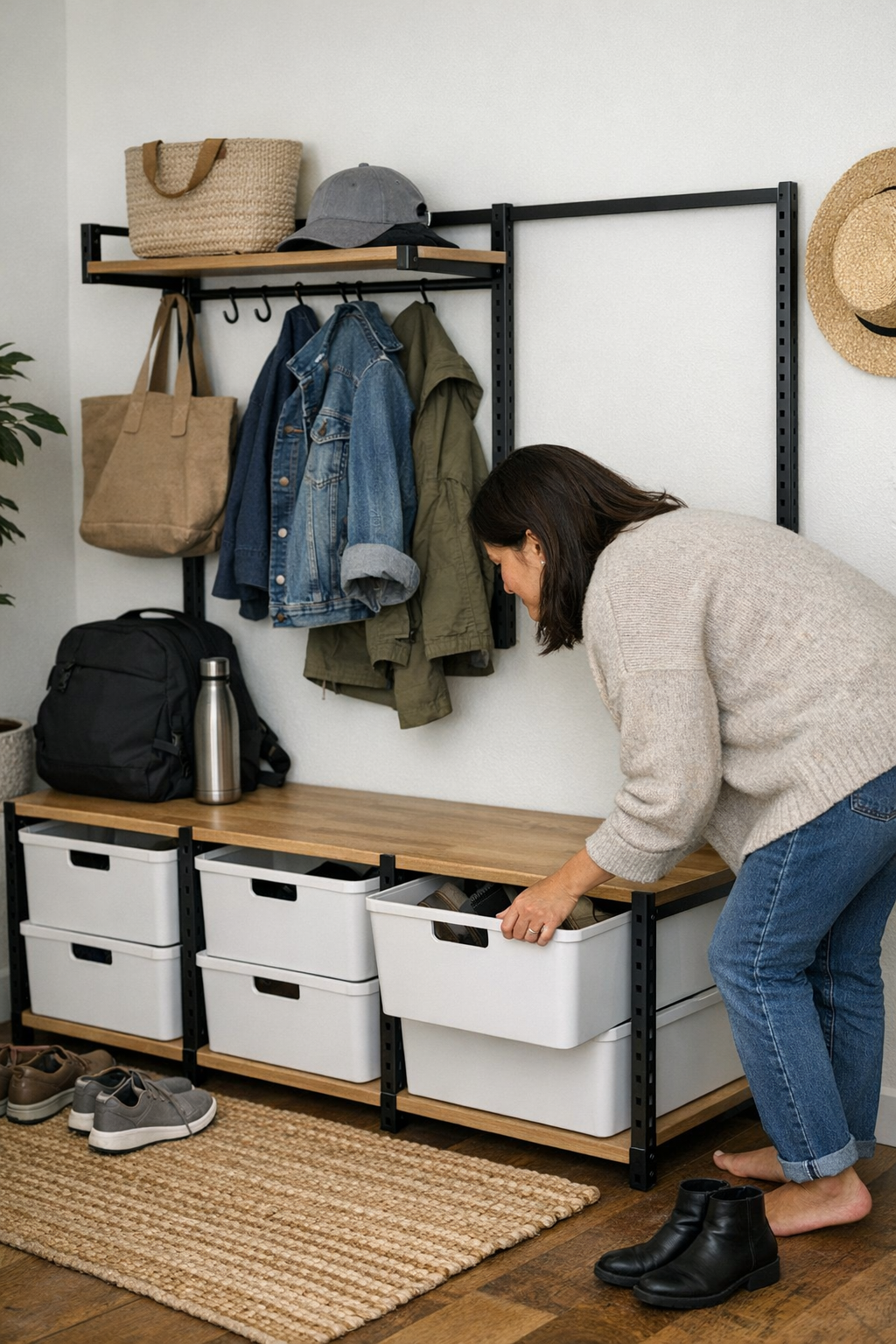
You don’t notice it right away, the way outgoing items find their way back—initially for convenience, but soon becoming clutter. Modular storage and designated benches couldn’t hide the slow accumulation. A row of shoes neatly lined up but half untouched for weeks, bags left on the bench whose contents nobody needed anymore. The easy surface order masked how many things had no real exit from the system.
That was the part I kept coming back to. The lack of a clear outflow meant old gear simply drifted from spot to spot. On weekends, the “reset” took longer and felt heavier—every utility cabinet and stackable bin seemed to hold a few things that belonged outside the transition space altogether.
A Small Gate at the Edge
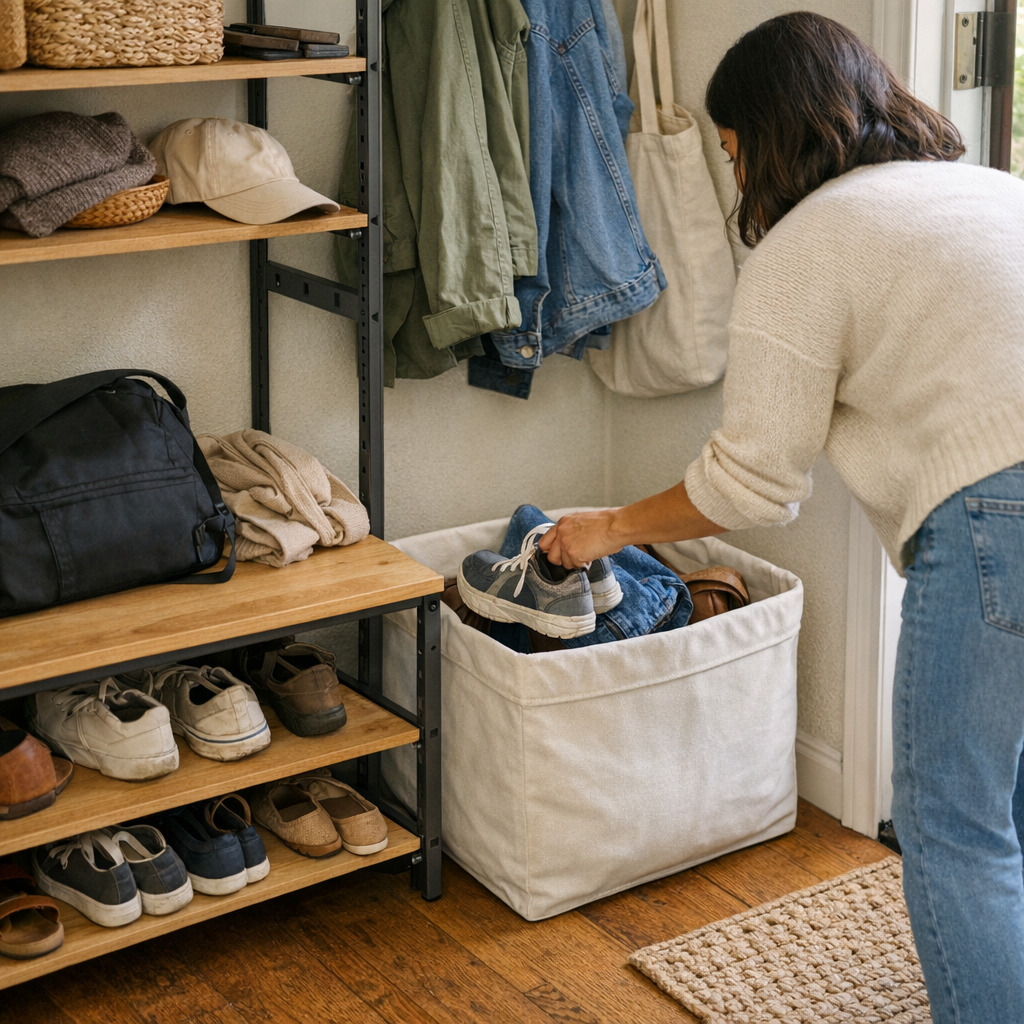
Eventually, a plain, labeled bin—nothing special or styled—found its place just inside the main entry path, tucked neatly against the wall without blocking passage. It became enough of a gate to interrupt the cycle: donations left as soon as someone remembered, not after a buildup. The key was in its visibility and accessibility, not the volume it could hold.
There was something refreshing about this separation. The bin turned into a quiet checkpoint; only what fit stayed, everything else moved on. The pressure at the threshold eased without drama or big gestures—just a clearer rhythm, less cycling of the same old backpack or jacket, more space freed between arrivals and departures.
Resetting Without Starting Over
Now, shoes line up but unused pairs drift naturally out instead of rejoining the flow. Wall hooks stop becoming landing pads for things meant to leave. The entryway feels less like a crossroads for indecision and more like an actual passage—one that both welcomes and quietly lets go.
It’s not about perfect order, but about opening a way out. Transition spaces hold routines longer than you expect, and changing a single checkpoint can shift the entire reset.
Sometimes a different kind of storage is less about holding and more about releasing—something quietly possible, if you need it, through Betweenry.