The Quiet Power of Empty Space in Everyday Closets
Leaving intentional empty space on each shelf enables faster access, easier resets, and stable categories, preventing overflow and clutter.
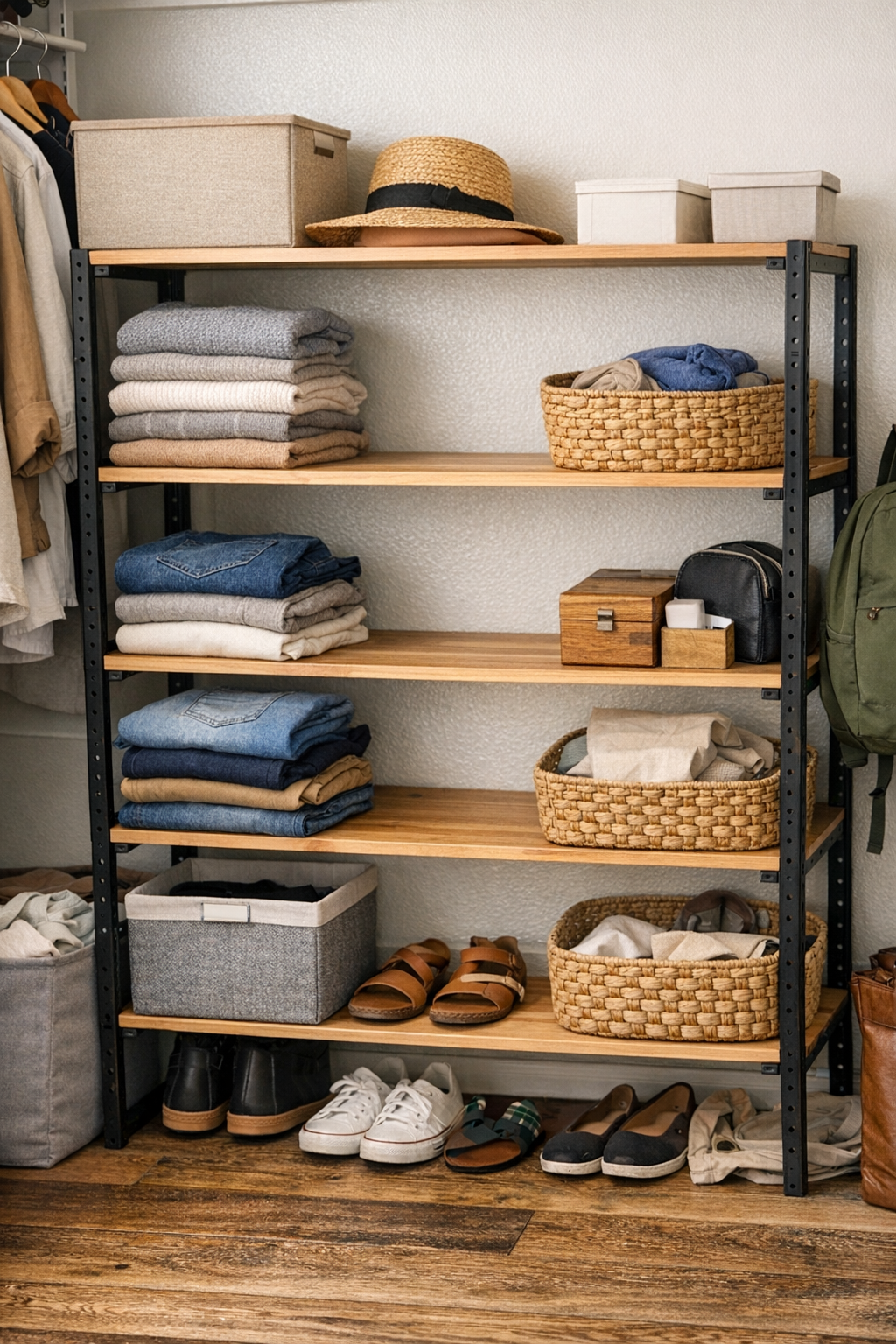
The Empty Space That Saves Us More Than We Think
(And why it matters more than people think)
A closet tells its real story not in the things it holds, but in the silent emptiness between them.
At first, a shelf packed edge-to-edge feels satisfying. Everything nestled close, bins lined up like tiles—it looks finished, almost perfect. You step back and there’s a sense of accomplishment. But in the days and weeks that follow, something subtle slows the rhythm of daily life. Shirts stray. Stacks tip. That perfect arrangement, once satisfying, seems oddly rigid. You don’t notice it immediately. But you feel it.
The Hidden Cost of “Perfect Fit”
It’s easy to believe that a completely full closet is a sign of good order.
But perfection, I’ve found, can be surprisingly high maintenance. I used to fit every shelf so tightly that even adding a single new t-shirt felt like a small architectural project. Almost every return—whether laundry or something out of place—became an interruption. There was nowhere for anything extra to land. No room to simply pause, to let things shift naturally.
Instead, I’d find myself juggling: trying to keep piles from toppling, or solving little category crises—where does this sweater go now that its stack is overflowing? The friction crept in, quietly.
Why Buffer Matters More Than We Think
Some things I learned are gentle, almost invisible.
The magic of empty space in a closet doesn’t announce itself, but it’s there every time life speeds up—when finding, returning, and resetting becomes part of the regular routine. If you leave just a hand-width gap on each shelf, it quietly absorbs the messier rhythms: a shirt that’s not quite dry, socks you’ll match later, an errand that interrupts the weekend tidy-up.
That buffer becomes a kind of soft landing, a margin for error that keeps everything else calm. It’s not wasted space. It’s what keeps the system flexible, allowing small disorder to stay contained rather than ballooning into full-blown chaos.
One morning last month, I watched how easily things went: clean shirts slid onto a waiting gap, nothing else disturbed. Faster, quieter, no searching for where overflow should go. It’s a small shift—a refresh, really.
Living With the Quiet Space
At first, leaving empty spots felt wrong, almost like giving up precious storage. But over time, I realized those gaps saved me far more time and stress than I’d imagined. They’re not just insurance against mess, but invitations to make daily resets effortless, and to let routines stay light.
Now, when I see an uncluttered patch—just wide enough for a single hand between boxes—it feels almost like a breath. The closet isn’t just fitting my stuff. It’s fitting my days, too.
And I find myself thinking about how much ease I was missing, all for the sake of that “perfectly full” shelf.
These thoughts came together while folding fresh laundry in my own hallway closet.



