The Quiet Power of Space in Everyday Shelving
Leaving visual gaps between storage bins keeps shelves organized, making access and resets easier while preventing clutter and category overlap over time.
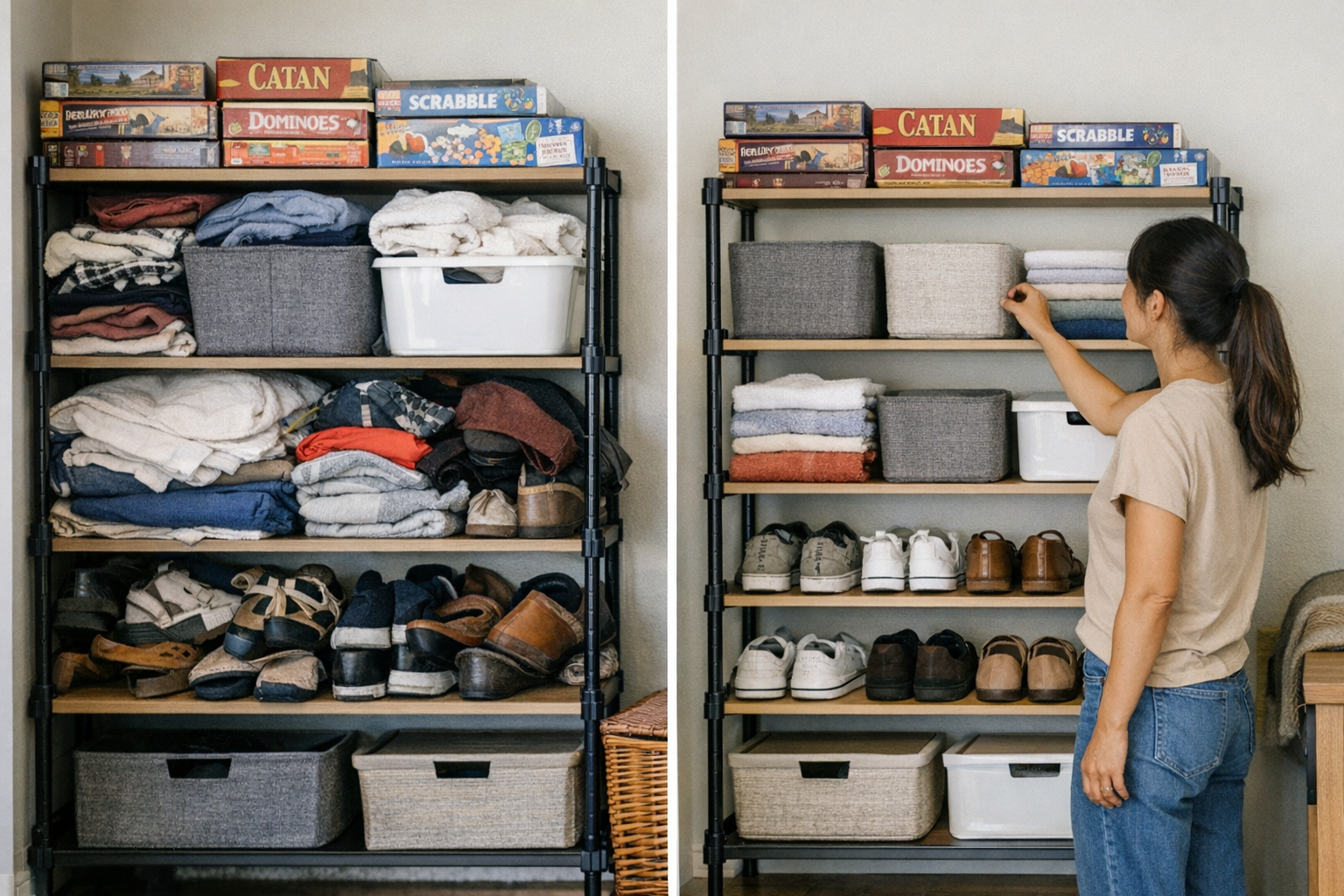
There’s a certain comfort in filling every inch of a shelf. At first, a packed pantry or closet feels like a small triumph—a mark of efficiency, of having made space stretch a little further. But the details we ignore in those moments tend to catch up with us, not all at once, but gradually, in small ways.
You don’t really think about the little spaces between your storage bins. Not until things begin to blur together. But you feel the creeping frustration when grabbing a box becomes a daily rearrangement or when items start tumbling out of their neat categories. Suddenly, the shelf that looked so smart last weekend is teetering on collapse. And the lost time adds up in ways efficiency can’t quite measure.
The Uneasy Truce of a Packed Shelf
It’s hard to resist the urge to maximize space—especially when the shelves are deep, the baskets stackable, and the categories seemingly straightforward. At first, it looks organized. Surfaces are smooth, bins are flush, and you tell yourself you’ve done the job well.
But the truce doesn’t last.
Within days, the order relaxes. Edges blur; a bin for snacks catches a stray spice jar, notebooks nudge aside folders, category lines fade. You don’t notice it immediately, but you feel it.
One morning, you pull out a box and three more tilt forward. There’s a silent annoyance in having to reshuffle, just to put one thing back where it belongs. The sense of control you felt when arranging everything gradually disappears.
The Quiet Clarity of a Visible Gap
What changes everything is barely noticeable at first—a deliberate, finger-width space between each basket, every storage group. Not so much that you’re forfeiting half your shelf, but enough that each bin stands alone, its border obvious.
It sounds theoretical, but it’s not. A shelf with these small divides doesn’t look much different at a glance. But there’s an odd relief that settles in after a week or two. Items are easier to spot, and nothing drifts out of its place. You can reach for the towels or the board game without nudging everything else aside.
That little bit of breathing room keeps things from meshing together. It’s not just about tidiness. It’s about speed, and a kind of mental comfort: you know where things live, both with your hands and your eyes.
Boundaries That Outlast Good Intentions
What sticks with me is how quickly order collapses when boundaries are missing. I watched a laundry shelf evolve from pristine to unpredictable within days—where a single absent gap meant linens tangled into game boxes and returning each item became a brief negotiation.
But with the gaps set—an inch, maybe less—everything fell into routine. My hand found the right box in one try. Putting things back didn’t require mental energy or extra shuffling. It wasn’t perfect, but the order began to hold, quietly.
That’s the shift that lingers: small boundaries let us keep using our space, day after day, without resentment or chaos quietly creeping back in.
I ended up spacing my own shelves this way during a lazy afternoon at home, and noticed the difference with each day that passed.
These thoughts came together while sorting out a few shelves for my own peace of mind.