The Quiet Relief of a Carry-On That Just Works
A carry-on setup with fast-access items in one outer pocket and minimal internal complexity reduces delays and eases travel flow.
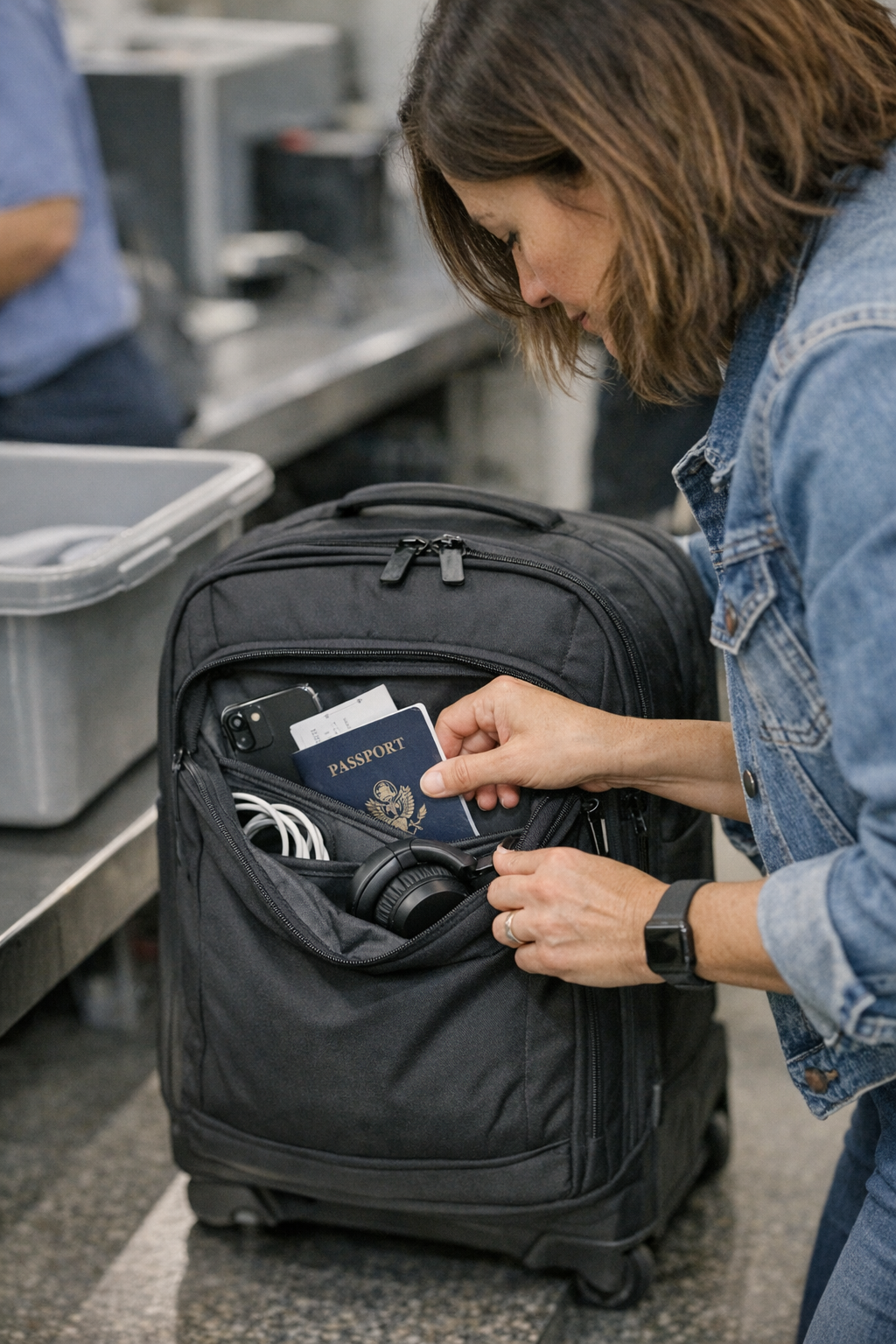
You don’t notice the friction at first. It’s subtle—the seconds you lose when your hand instinctively goes to the bag for your boarding pass, your passport, or just a cable before security. Then there’s the soft, slightly apologetic shuffling as you stand in line, pulling at zippers or digging through a pouch or two that—somehow—aren’t where you thought they would be. The carefully arranged setup that looked organized on your bed before leaving doesn’t feel quite so friendly after you’ve maneuvered through checkpoints, shifted for overhead bins, or awkwardly tried to tuck the bag back under the seat.
It’s in these repeated moments that a carry-on’s real shape shows itself. The routines that felt logical at home suddenly become complicated: overlapping pouches, a passport sliding under a toiletry bag, a zipper path you swore was clear until you needed quick access. After a few transitions, you realize it isn’t about neatness; it’s about ease of reach. The more steps it takes to get what you need, the clearer the gap between the organization you see and the organization that actually moves with you.
Sometimes a setup looks under control—color-matched pouches, slim document holders, smaller bags nesting inside the main compartment. I used to think that was enough. But the difference reappeared each time I needed to open the bag again: the quiet tension of digging through layers, shifting something out of place, forcing a double reach where one should suffice. Each checkpoint, each seat shuffle added a bit more drag. What felt under control was really pausing me at every stop.
It took longer than I expected to find relief in simplicity—not necessarily less stuff, but less overlap. The real change came when I redrew the lines around what counts as “quick enough.” For every active transit need, I now keep a single outer pocket—one space, right on the edge, where the most-used items naturally settle: phone, passport, headphones, a handful of cables. The inside holds only what can wait. Suddenly, the small calculations, restacking, and idle worry about where things have gone simply fall away. A travel bag that stops interrupting you becomes part of momentum, not another puzzle.
Often, it’s the single pocket you reach for most that predicts how the whole setup will feel after five or six repeated uses. These days, moving between security trays and jetway seats happens in fewer moves. What used to be a silent distraction becomes freed attention, and a carry-on that finally travels as smoothly as you do.
There are a few more notes on real use here: carryonsupply.myshopify.com



