The Quiet Relief of a Partially Empty Carry-On Pocket
Intentionally leaving buffer space in your carry-on allows faster access and less repacking, easing airport routines and keeping movement smooth.
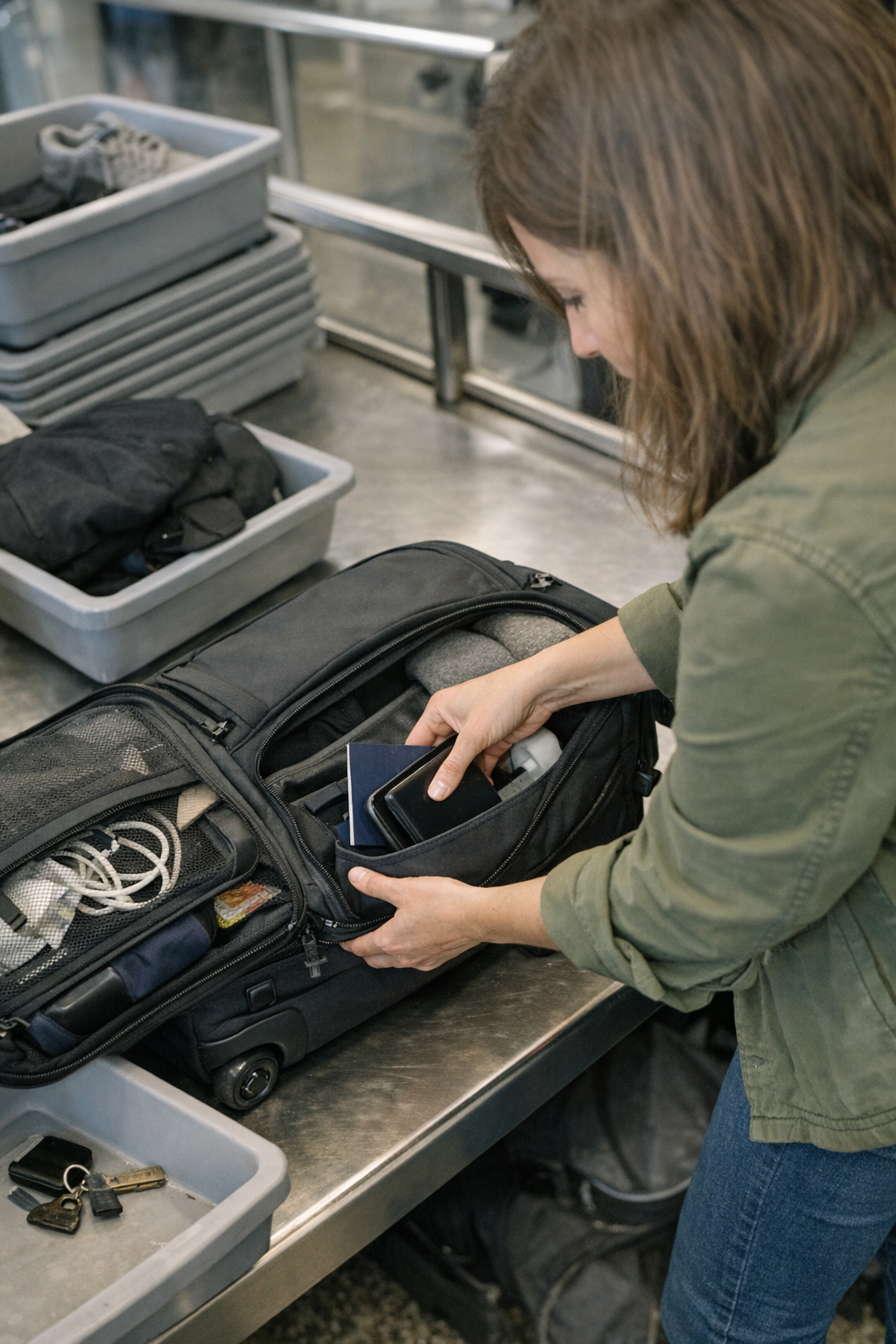
There’s a point on every trip when small frustrations start to build. For me, it happened while hunching over my bag at security: one hand juggling my passport, the other dragging cables aside, with someone else’s bin bumping mine. That shallow trickle of inconvenience suddenly pooled. The bag looked perfect at home, everything zipped and nested in place, but on the move it kept resisting. What stuck with me wasn’t the look of order, but the drag of every micro-delay when pulling something out.
You notice it after a few transitions. A carry-on can be beautifully arranged, but accessing anything—documents, chargers, even a quick snack—becomes awkward fast. Every pocket filled, every pouch claimed. It looked fine at first. But the problem wasn’t how it was packed, it was how things had to move once the bag was opened, shifted, and repacked repeatedly.
What finally changed was realizing I needed to leave some space open. Not a packing mistake, but a deliberate gap—an empty pocket or at least some breathing room in a section, nothing crammed or double-stacked. It’s not about packing less just to be minimal. It’s about making room for the inevitable extras: the phone in your hand at the checkpoint, the envelope you forgot to stow, or new items appearing with no warning. That bit of slack became its own useful travel tool.
I kept noticing that when I had flexible space to stash small things quickly, the whole process felt lighter. Security trays didn’t pile up, loading the overhead bin was smoother, and squeezing into a cramped seat didn’t trigger a clumsy reshuffle. Having real buffer space transformed travel from managing a tight puzzle into moving with what was in my hands. Even if the bag looked a bit less “finished,” it worked better. The buffer felt more necessary than any single organizer inside—structure mattered more than just surface order.
It’s a small shift, but after a few flights you rely on it. There’s comfort knowing something can be tucked away without a plan. Overpacked can look impressive, but a bag with room to breathe stays more stable through real use.
If you want to see what that in-motion carry system feels like, you can find it quietly over here: http://www.carryonsupply.myshopify.com