The Quiet Relief of a Well-Organized Carry-On
Trips end calmly when your setup separates fast-access documents and essentials from main compartments, reducing friction and speeding retrieval.
The Quiet Difference a Single Pocket Makes
The challenge of packing a carry-on doesn’t become clear until after a few trips. Initially, you’re just relieved everything fits—the zipper closes smoothly, pouches stack neatly, chargers and snacks settle into their spots. But by the time you’re pulling your bag out of the overhead bin during a rushed layover, the order you built at home starts to unravel. In the crowded aisle, reaching under a snack bar for your passport, you begin to notice which parts of your system actually work in motion—and which just looked organized on pause.
Pausing in Transit
At first, everything seemed in place. Each item had its own spot, cables wrapped tight, comfort items ready by your side. But after moving through checkpoints and repacking multiple times, things shift. A document slides out of reach; hand sanitizer rolls to the bottom; the ticket pouch somehow gets buried beneath chargers that no longer fit as neatly after several hurried adjustments.
What sticks with me is that brief moment of friction—the pause when you reach for an item and hesitate, caught by the invisible resistance of a setup that didn’t move as well as planned. After a few flights, the “all travel things” inner zip bag became less a system and more a soft container holding scattered chaos.
Where Access Happens, Everything Changes
You don’t plan this mess. It unfolds naturally. The main compartment, pristine at the start, quickly becomes a scene of compromises. Needing your boarding pass or ID again means lifting and sorting through piles you wish you hadn’t hidden away. In a tight seat, you try not to spill the contents as you rummage.
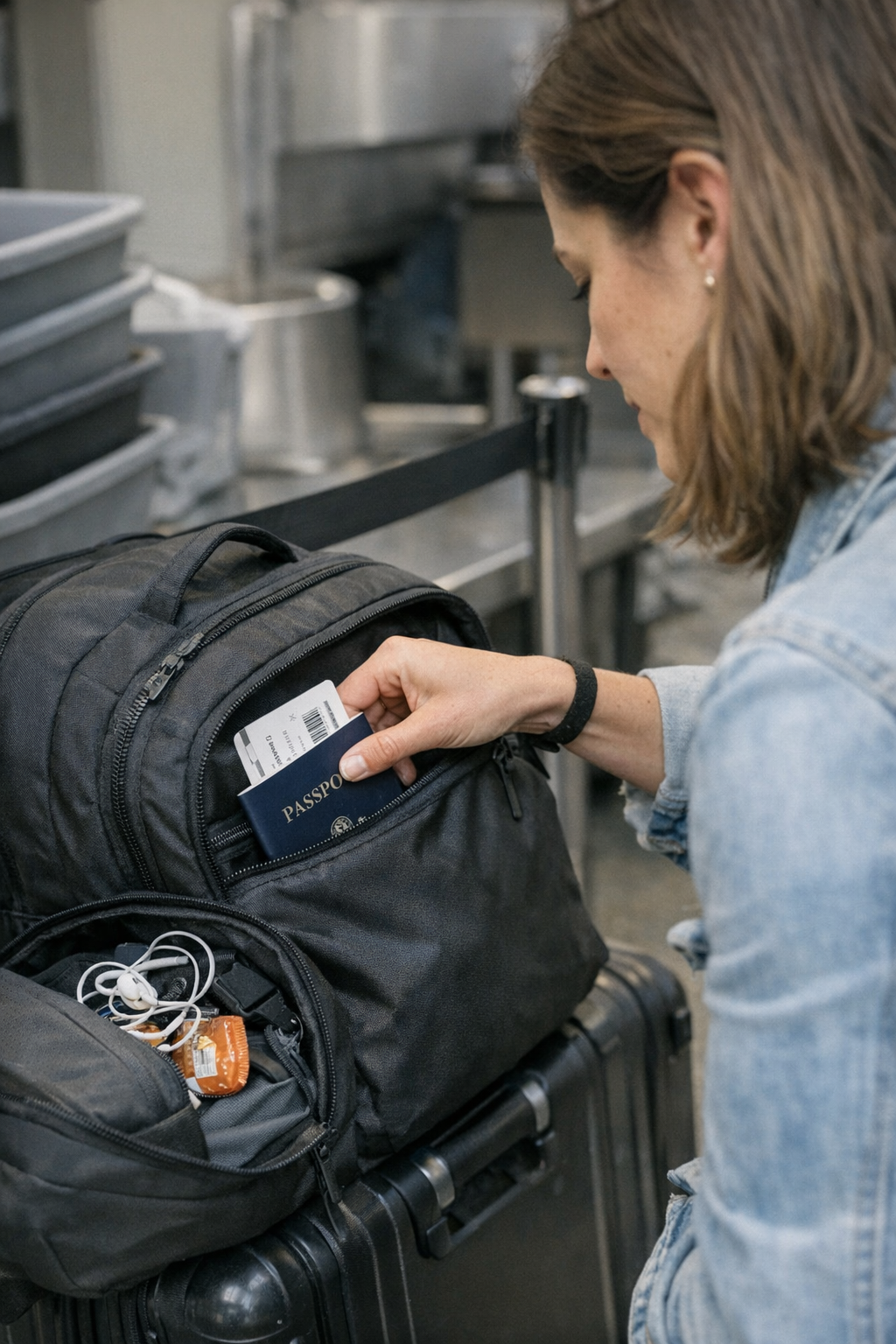
One trip, without overthinking, I moved my passport and tickets to an outer pocket—a slim space hardly used before. That’s when the hassle faded. Instead of hurriedly opening and resealing half the bag at every checkpoint, I just reached out and grabbed what I needed. The inside stayed settled. It was less polished but felt steadier.
The Shape of What Keeps You Moving
There’s real relief when a bag mostly stays closed in transit. Over repeated trips, that relief grows. No frantic sorting at the gate. No repacking every time a document reappeared buried inside. The structure of the bag mattered less as a visual neatness and more as practical support: one zipper for quick access to essentials, the rest sealed tight for whatever could wait.
That quiet shift kept showing up. I started trusting that outer pocket more than any intricate pouch system or nested organizer. Traveling calmly means less friction, not more. The bag became both container and routine I didn’t have to rethink, especially when time was tight and pressure high.
Adjustments don’t have to be dramatic. This one wasn’t. It was the slow subtraction of dozens of small annoyances until arriving finally felt like a task I could finish without distraction.



