The Quiet Relief of a Well-Organized Travel Bag
A carry-on setup focused on repeat-use access and clear pouch placement stays reliable throughout trips, reducing delays and disruptions.
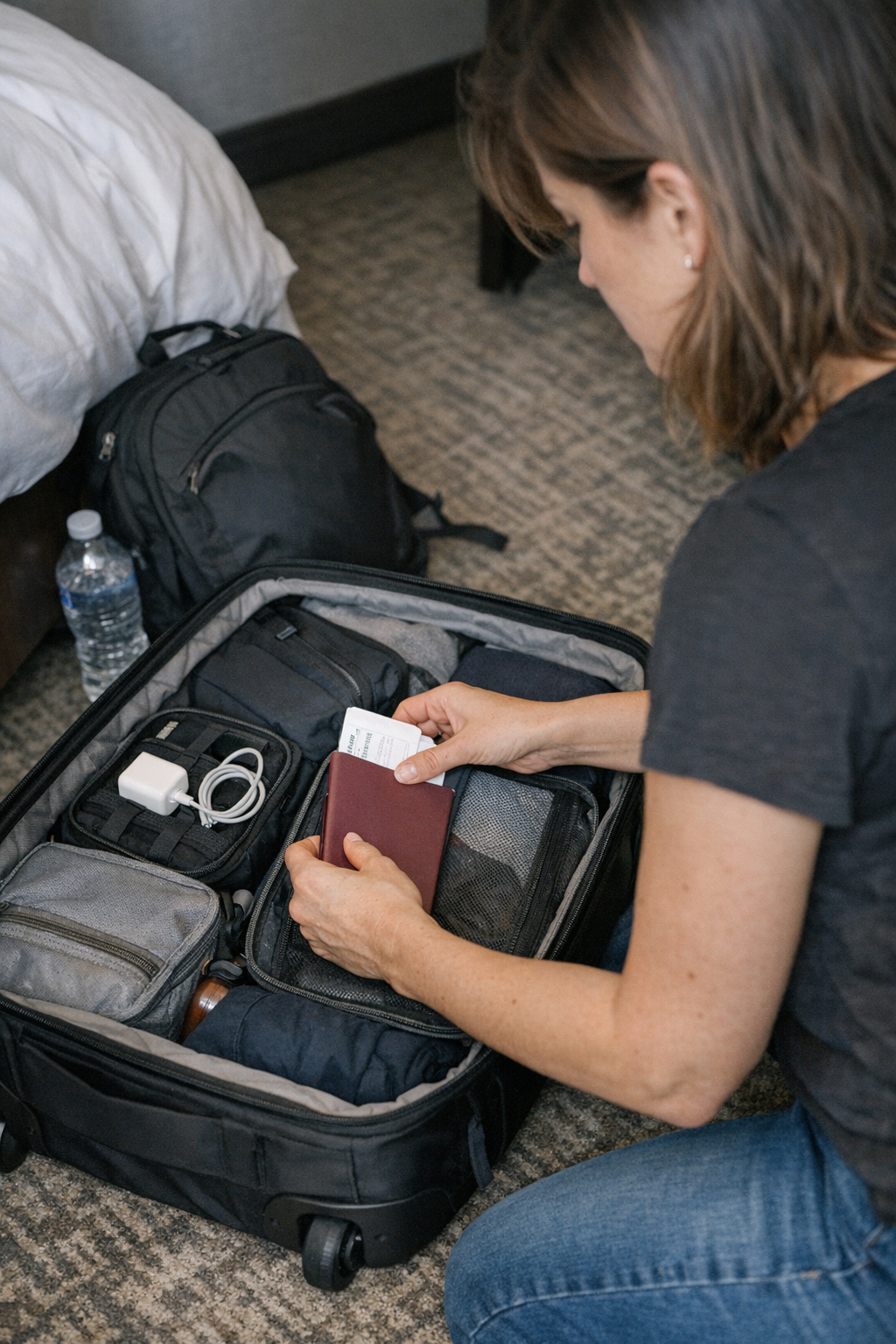
Somewhere between the fifth and twelfth time I cracked open my carry-on in a cramped corridor, the difference started to show. Not the tidy kind you notice at home, but the one you feel when you’re half-balanced on tired feet, searching for a charger or lost boarding pass while the zipper interrupts your flow. Traveling with just a carry-on can seem simple—organized, even efficient—right up until friction creeps in, one small snag at a time. I didn’t expect these moments to matter as much as they do.
The Appeal of Day-One Order
At first, it was enough for the bag to look organized. I stacked packing cubes, lined up pouches along the edges, tucked my toiletry bag into a predictable corner. When I zipped it shut after packing, the pieces fit cleanly; everything had its simple place. It looked fine at first.
But the difference kept showing up. Each transition—security tray, gate, hotel—exposed a subtle gap. It was never dramatic, just a few extra seconds spent sliding cubes aside or untangling the tech organizer that had migrated under my sweater. That was the part that kept coming back: the inconvenience wasn’t visible in the initial setup, but lived in the sequence of moves.
You notice it after a few transitions.
The Real Cost of Overlapping
Access matters more than arrangement, I found. When a pouch holding my passport ended up layered under two others, or a charging cable wound underneath shoes, the order stopped helping and started slowing. You end up searching familiar spots, only for the routine to slip. A carry-on that feels neatly packed once doesn’t always hold up in practice.
The frustration builds in small ways—digging through layers for meds, shifting out a pouch just to reach a document, putting a cube back in the wrong spot because you’re tired. The bag doesn’t look chaotic. But something about repetition—reaching for the same item five, ten, twelve times while moving—makes it clear which setups are actually useful.
The most helpful change came quietly. Instead of layering by category, I started placing essentials right along the zipper path—never stacking, only lining up what I knew I’d need. Passport, charger, meds: each one visible or one move away, so nothing blocked the usual grab and return. Hotel doors felt easier when I could unpack almost without thinking.
What Actually Stays Smooth
In the end, the practical structure outlasted any decorative arrangement. You reach for a pouch and it’s there; you need your documents after landing and don’t have to unpack half the main compartment. A small, reliable system saves more time than you’d guess. The drag of re-sorting, double-unzipping, or restacking for one small item slips away.
It didn’t make the bag look any more impressive, but arriving late—bag in hand—felt less tense. One or two seconds saved per move add up over a full day’s travel. The setup that worked was the one that let me get the necessary item without pause, no matter how many times I reached for it or how the cabin or hotel lighting felt after midnight.
All these small changes made movement feel just a little more trustworthy, in ways I only noticed after a few real trips. If that sounds familiar, or you’re curious about how these setups work in practice, there’s more here: carryonsupply.myshopify.com



