The Quiet Relief of a Well-Stocked Entry Shelf
A refill shelf works best when easy to see and reach, preventing last-minute shortages and stress by revealing supply gaps before problems occur.
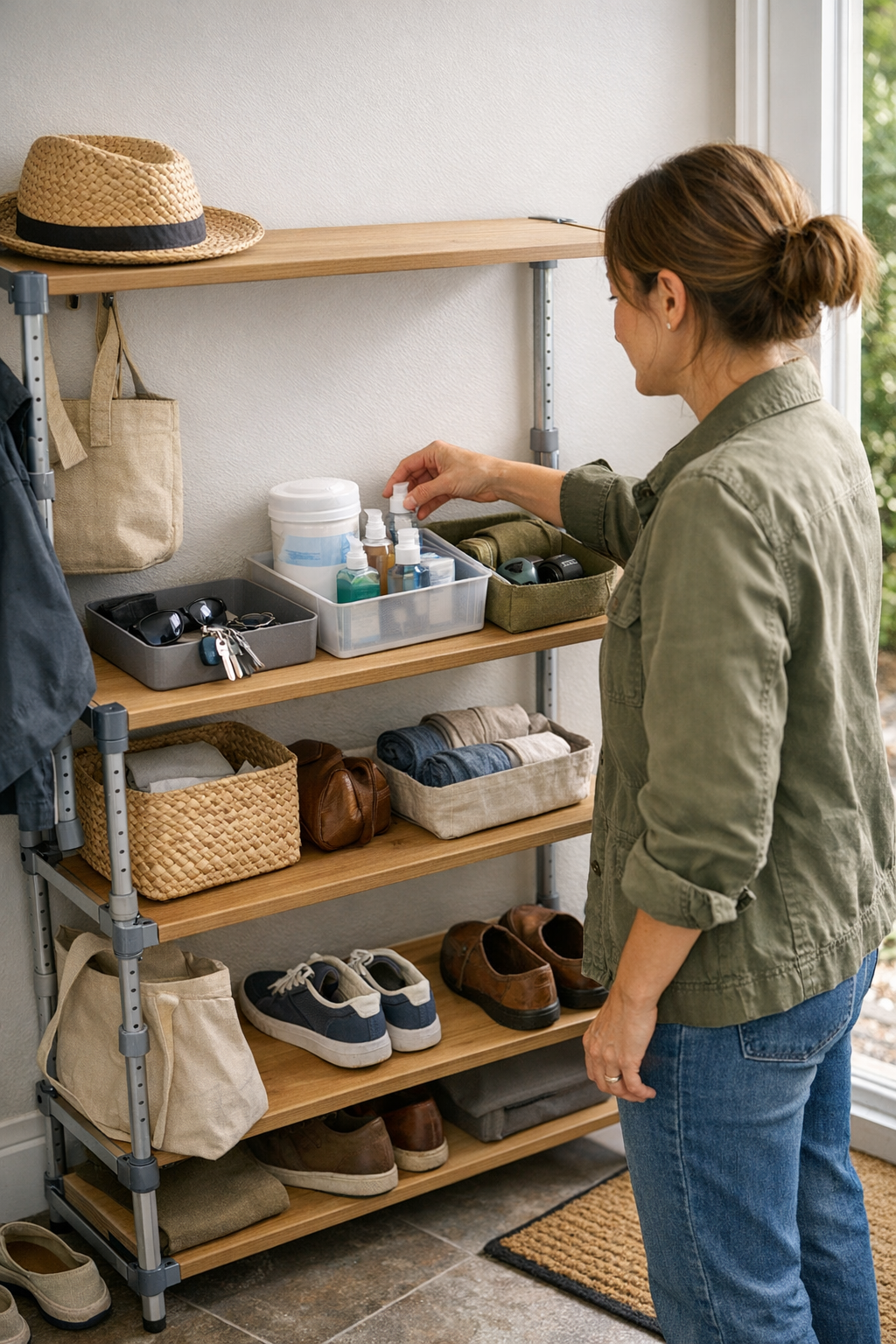
Sometimes the crack in a routine isn’t loud, but you feel it—a missing pet bag, that one key gone, the last wipe pulled from the shelf just before you need it. After the third or fourth almost-missed train, I started to see how a refill shelf in a transition space changes the pressure at the threshold. It’s not just about the things themselves—keys, sanitizer, dog gear—but the quiet certainty of seeing what’s there and what’s gone before you reach for it. What surprised me most wasn’t how convenient it became, but how quickly an open refill spot set the tempo for every return or departure.
When Visibility Outruns Order
A shelf in full view lives differently than one tucked away, even when what sits on it looks less curated. You don’t notice it immediately; your eye simply lands there, caught by a missing item before it turns into a problem.
Day after day, shoes pile near the bench, bags drift to the floor, and the open refill shelf patiently puts every gap in plain sight. That was the part I kept coming back to—realizing that with things exposed, the system stopped relying on my memory alone.
The tension between “neat” and “knowable” trailed every rushed morning. What stayed exposed stayed solvable.
How Shortages Quietly Build—or Don’t
Closed bins promise calm, but out of sight, stock runs out quietly. On tight days, this always seems to happen at the exact wrong moment—a detail revealed only as the door is closing behind you.
But you feel it: a shelf visible from the main path starts marking the day’s edge. If something vital is running low, it announces itself mid-routine—just early enough to do something about it. Even an extra set of hands or another person’s schedule merges into this rhythm.
The change is subtle but steady. Instead of chasing down the last of something, I found myself refilling before the deficit interrupted movement. The shift is gentle, but it anchors more of the day than you expect.
The Everyday Scan
After a while, passing the refill shelf becomes just another checkpoint—one look, a quick scan, a removed overflow item here or there. If a shelf sits by the entry bench, it inevitably inherits both the clutter of arrivals and the clarity of what’s missing.
Shoes multiply, umbrellas appear, and something about a shelf in the flow of movement resists total disorder even when everything else looks a bit undone. You don’t have to think about checking it; the shelf’s openness does most of the remembering for you.
A simple shift—replacing a deep cubby with a visible platform—did more than tidy up the entry: it changed which small emergencies stayed, and which ones faded before they could build. Sometimes the best part is not having to search at all.
If you ever want to see a few ideas for this kind of lived-in storage, the ones I used were from Betweenry.



