The Quiet Relief of Chest-Level Storage Zones
Chest-height storage zones reduce reset fatigue by matching natural reach, keeping daily items visible and accessible during arrivals and departures.
The things we reach for without thinking reveal a quiet pressure that grows at the entryway—not the decorative kind, but the soft, persistent pull of routines competing for space between arrival and departure. I hadn’t fully noticed how the slow drift toward clutter at the entry always began the same way: shoes spread beyond their lines, bags dropped lower or wedged oddly, small piles growing just out of sight. Over time, whatever storage system I set for essentials seemed to buckle where movement should have stayed simple. It didn’t feel like a space problem at first, but I noticed how often my hands ended up somewhere awkward.
How hands find their level
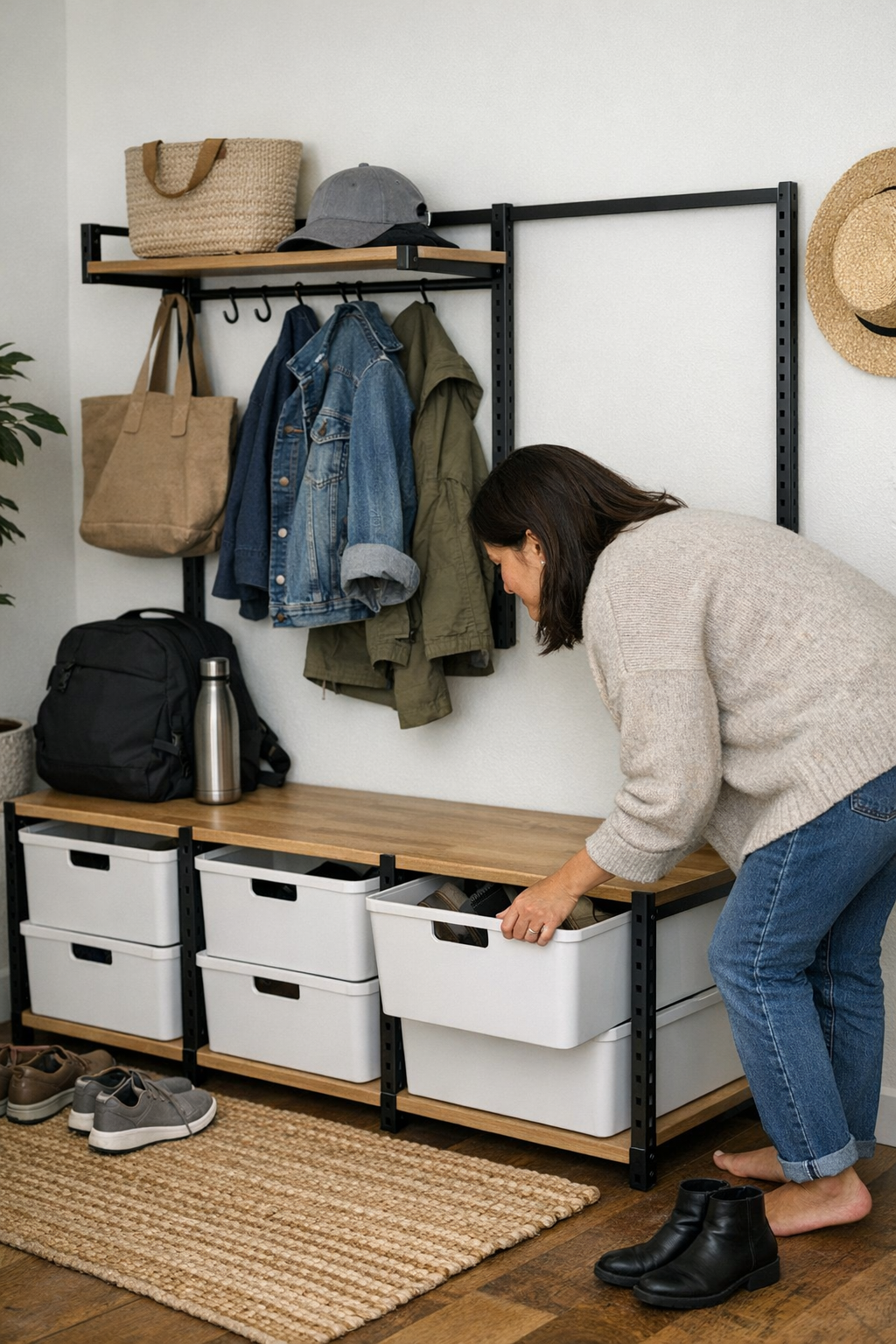
Chest-height storage emerged quietly as a solution—mainly because alternatives failed so gradually. There’s a real difference between seeing storage and being able to use it easily in a rush. If a bin is too low or a shelf too high, things tend to pile up in the gaps—bags leaning against bench legs, gloves balanced atop shoe racks, keys dropped anywhere flat. You don’t notice it at first.
You feel it when routines break down, especially during busy weeks packed with errands—coming and going with hurried arms and wet boots. The issue was never the amount of space but where that space caught daily clutter at a predictable level.
Living with the repeat cycle
Even a “perfect” row of floor baskets fades into invisibility after a few days because the real action moves upward. I’d reset shoes and bags neatly at ground level each Saturday, but by Wednesday, backpacks slowly drifted to the bench edge, then onto coat hooks if I was in a rush.
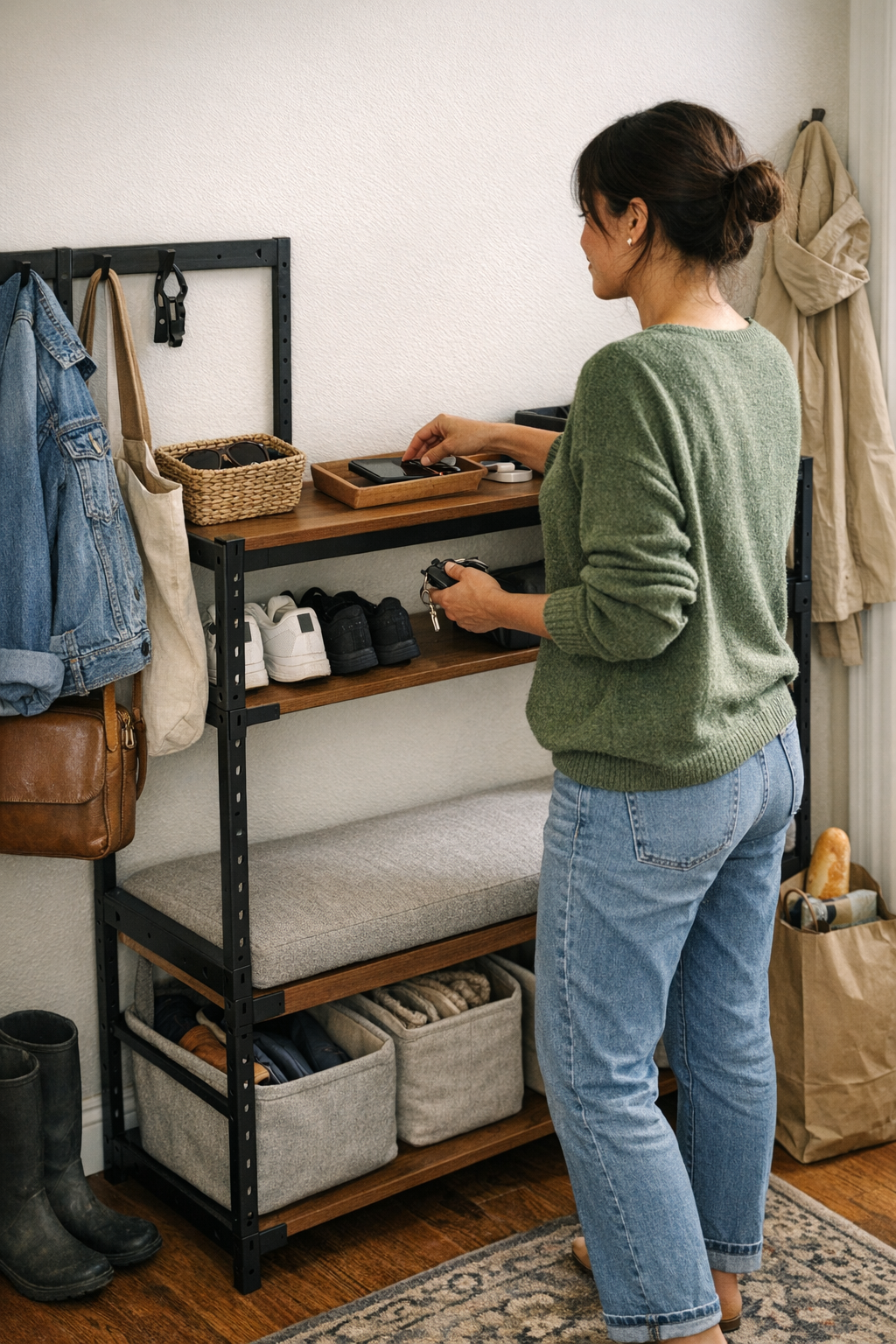
The situation settled when I raised the catch-all tray to elbow height and replaced lower bins with slim, wall-mounted racks. Suddenly, keys waited right where hands naturally hovered, and the pressure to constantly tidy lessened. Movement became smoother—not because it looked tidier, but because there was less reaching, crouching, and compensating for a system that didn’t quite fit how I moved through the space.
When storage matches the motion
Transition-space setups reveal their value not in first impressions but in the easy rhythm of things returning to their spots after every trip outside. The bench edge stopped collecting overflow clutter, walking space stayed clear, and there was no need for frequent resets on busy days.
The difference comes when storage fits the body’s natural reach—from waist to chest height—not the floor or overhead levels. That small but important change shapes how movement flows, catching clutter before it spreads, and lets the space breathe again.
If you want to see how these everyday shifts accumulate over time, the Betweenry transition-space ideas are quietly gathered here.