The Quiet Relief of One Organized Outdoor Zone
Centralizing yard storage into one well-structured zone reduces clutter, eases resets, and keeps upkeep predictable in small, busy outdoor spaces.
There’s a way small outside spaces reveal their feelings more quickly than any room inside a house. Every step, every item, every shortcut adds up in a narrow yard. You might think you’re simply putting away a pair of clippers, hanging up a garden hose, or resettling a fistful of soccer balls—but in cramped outdoor areas, there’s no hiding from the minor decisions left behind.
This is about outdoor storage, but more honestly, it’s about how clutter in limited spaces never really goes “out of sight.” It waits, mounting pressure day after day. After a few weeks, the order you imposed slowly unravels at the edges. What first felt smart and flexible—stash a tote here, hook a shovel there—becomes just another version of scattered focus.
But you feel it.
Scattered Storage, Scattered Attention
At first, there’s comfort in using every available corner: the deck box beside the steps, hooks for bike helmets on the fence, a crate for stray garden things near the gate. It looks efficient on paper.
But routine is a subtle test. Returning items to their “handy” spots feels less clear. Objects migrate—a trowel tucked behind the bikes, a hose looping back across the walkway. What made sense when the system was set up now creates friction and slows everything down. The side yard narrows not just physically but mentally.
You don’t notice it immediately, but the sense of flow breaks.
One Zone, One Return Path
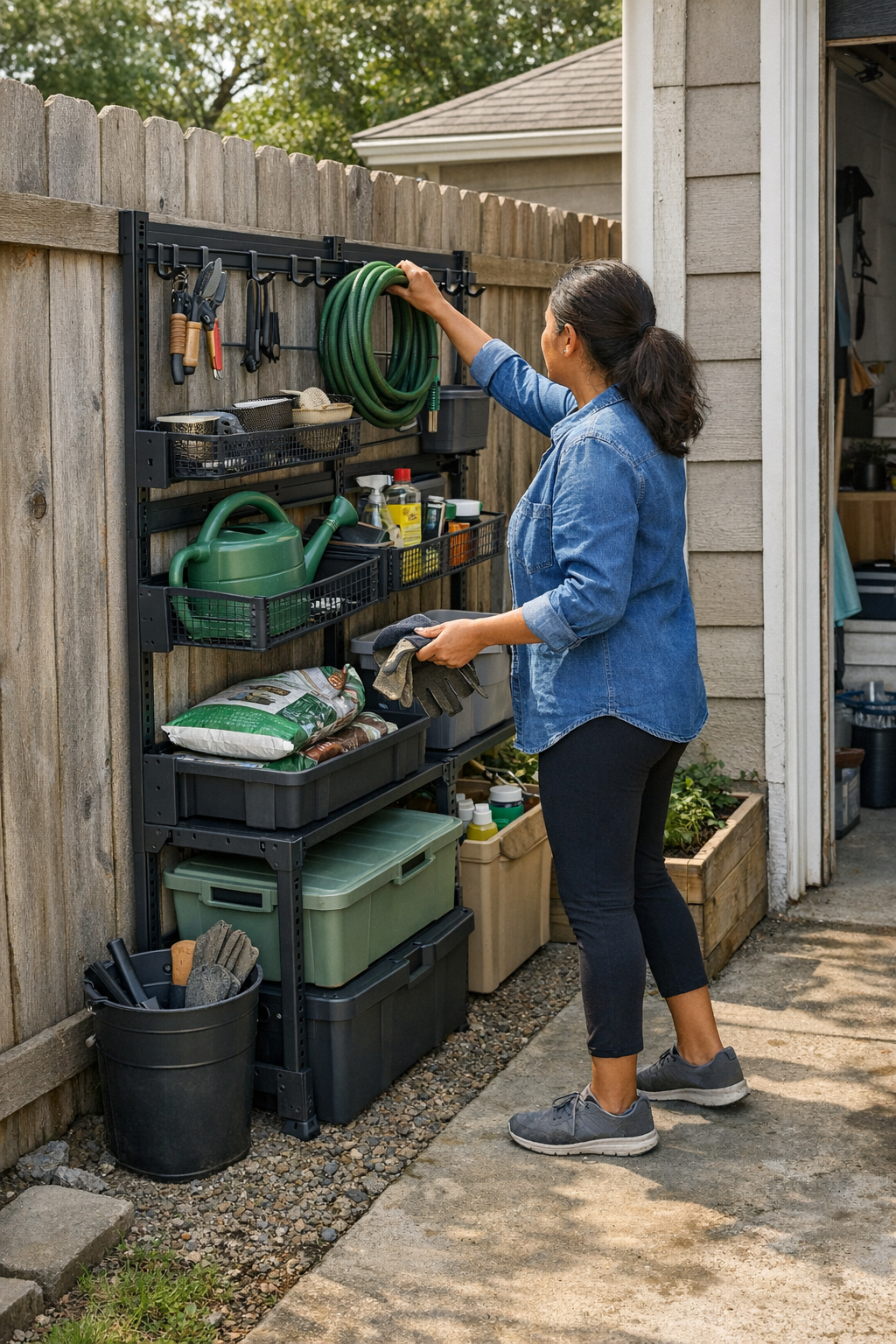
It took me a couple of seasons to see the difference. Eventually, I created a single storage zone: a spare wall near the gate, equipped with shelves and simple hooks. Everything—tools, gloves, random sports gear—moves through that one area.
Now, every trip in or out includes a quick glance and an automatic return. No more searching for an open spot or doubling back when plastic totes jam shut with mismatched contents. The area felt lighter. Ease opens up when every item’s route home is clear and consistent.
That was the part I kept coming back to—less time spent resetting, fewer silent arguments about where things “should” go.
Boundaries Hold the Order
Small yards resemble small habits: drift becomes obvious quickly. The difference between a clear structure and a loose guideline shows itself after a handful of busy weekends. A single, defined storage spot creates its own boundaries; it calls everyone back to the same place without fuss or reminders.
Oddly, letting one spot do all the work—when well organized—reduces the emotional static of the reset. Instead of policing corners or rearranging cluttered layouts, the setup enforces itself. The yard gets to be a yard again, not a traffic jam or a game of hide and seek.
None of it feels heroic. But coming back to open space, almost without thinking about it, is a subtle relief that sticks around.
These thoughts surfaced during a slow afternoon spent rearranging things for the third time—if you’re curious, the gear now lives here: http://www.tidyyard.myshopify.com