The Quiet Ritual That Eases Travel’s Final Moments
A night-before reset works only if your carry-on’s structure supports fast, low-resistance access, minimizing overlap and easing repeated use.
There’s a moment near the end of the return flight, somewhere between gate and curb, when all the careful packing you did early on shows itself again—but differently this time. The bag you organized perfectly back at home now feels heavier and more complicated. One tight pouch or blocked pocket takes just a little longer to reach than you remember. That feeling kept coming back: how neatness at home didn’t always hold up once you moved through the airport again and again.
How “Organized” Doesn’t Always Mean Easier
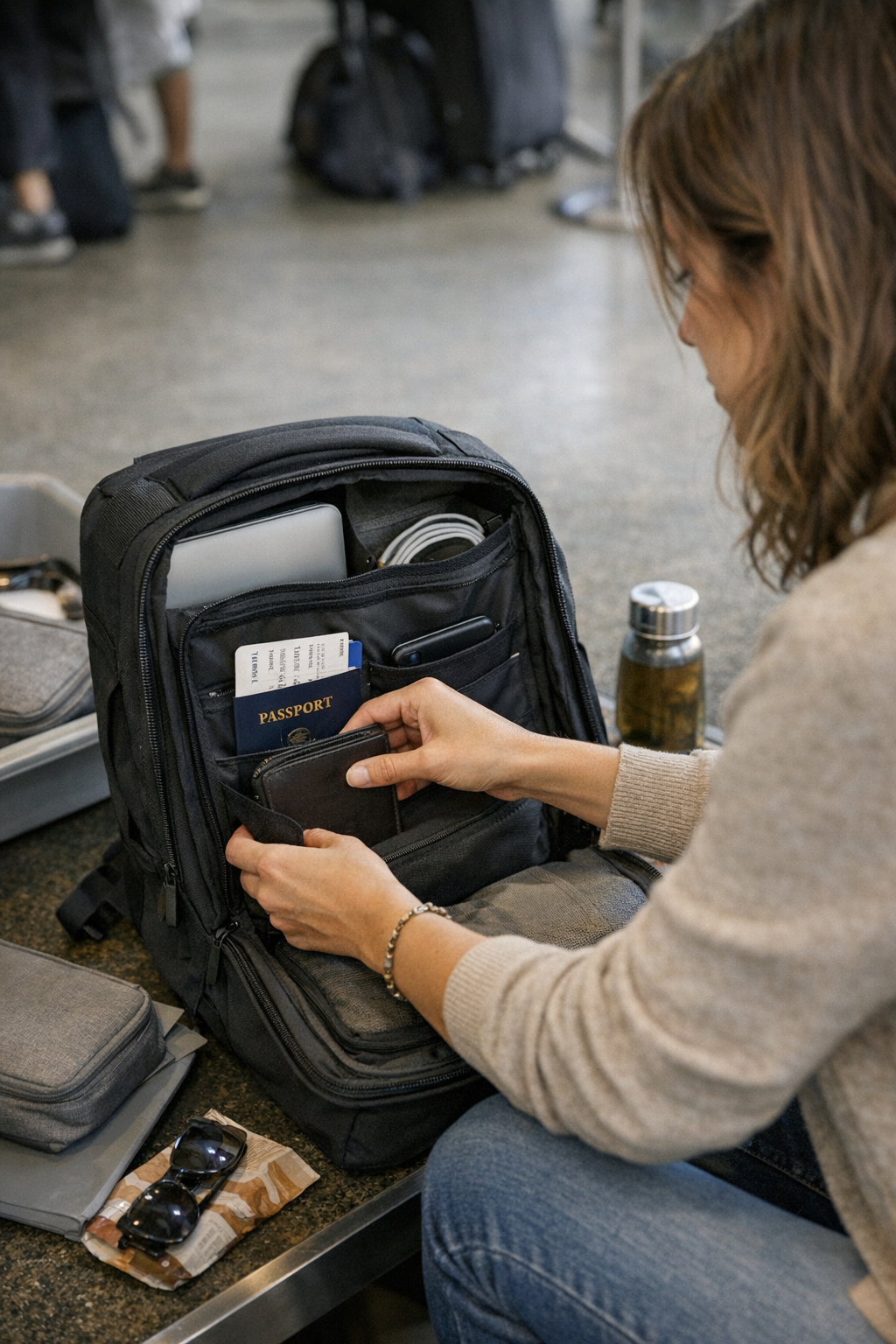
Packing for a trip with a carry-on begins with the best intentions. Cables get wound, passport positioned up front, everything sorted into its ideal compartment. Each piece looks clear and controlled until you actually need to pull something out—that boarding pass at security, headphones before takeoff, a pen for filling forms.
What looked sorted in your living room can work against you under real conditions. Stacked pouches mean unzipping more than one pocket just to get a small item. In the pressure of lines or rushed trays, you sometimes return something to the wrong pouch—which adds a small but persistent delay for the next retrieval.
A “tidy” layout can turn clumsy through repeated use. The system meant to simplify ends up forcing its own shuffle.
Real Movement Exposes the Friction
The difference isn’t dramatic. It’s the pause after security, the reaching hesitation when the overhead bin is tight, or the travel document that slips behind an organizer just as someone waits behind you. That’s where the edges of your setup become clear—a pouch that looked smart last night becomes a split-second annoyance.
Travel pressure shows what doesn’t work. Overlapping sections bottle-neck, and every extra zipper or digging past one pouch to get to another gets magnified through repetition. It looked fine at first, but the problem kept showing itself.
An open, uncongested panel for the items you reach for constantly—passport, boarding pass, headphones—doesn’t look sharp but rarely slows you down. That discovery is quiet but practical: too much organization creates friction, especially when it matters most.
The Small Reset That Stays With You
After a few return flights, the pattern is clear. The night-before setup becomes less about perfect order and more about smooth motion—one fluid zipper run, just enough space for the next day’s essentials, fewer layers blocking each other.
It’s not about a prettier bag. The payoff comes after you’ve opened the same compartment three times in one morning and still find what you need, right in front, without digging or shuffling. That space, kept open for quick access, becomes a quiet relief.
You start aiming for less overlap, fewer double-stacked pouches, and a layout that works under real pressure. Practically, that means letting some air into the setup—leaving one panel less packed, so the things you really need always move with you, even as the trip wears on.
Sometimes you find yourself running through a quick check—not from anxiety but to keep tomorrow’s movement smooth and consistent.
If you want to see how this kind of carry-on approach actually holds up, you can take a quiet look here: http://www.carryonsupply.myshopify.com