The Quiet Shift Behind a Calmer Feeding Moment
When dogs get excited at the bowl clink, meal routines face friction; calm pauses and bowl placement ease feeding into a smooth flow.
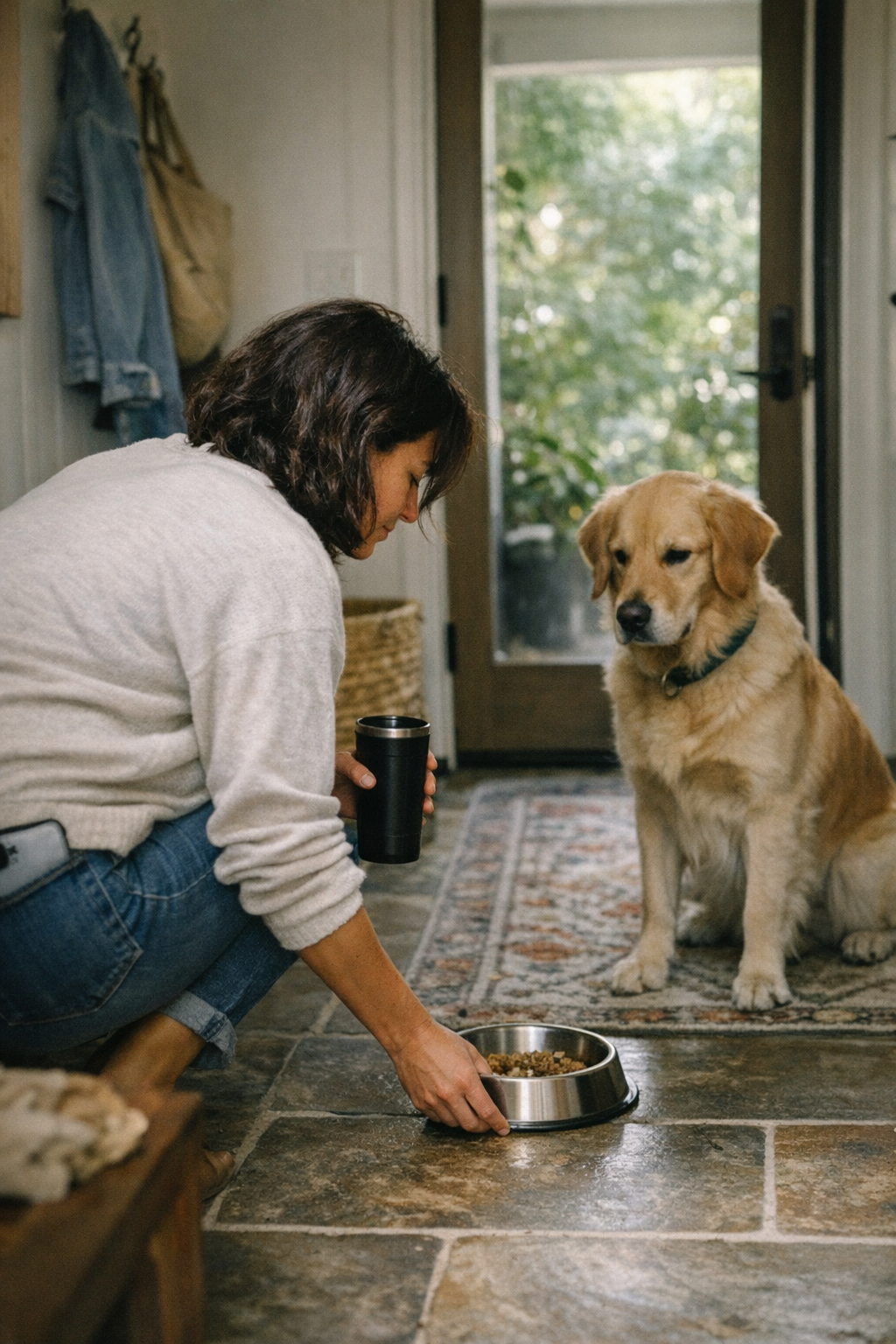
Most changes start slowly, almost hidden in the margins of your day. The metal bowl against the old tile has a sharp, familiar sound in our kitchen. Over time, that little noise became the signal for the next five minutes—sometimes smooth, sometimes cluttered. You don’t notice the shift until you’ve lived through it for a while.
At first, nothing seemed off. The bowl went down, the dog bounced up, feet tapping the floor like he couldn’t wait to eat. My hands were usually full: coffee mug in a rushed grip, phone or mail tucked under my arm. We had a rhythm—or so I thought. Then, after a handful of hurried mornings, I noticed the routine starting to stall. My dog blocked the walkway, tail sweeping whatever was nearby. A full dog-body wedged in a narrow path means less room for you and more time spent maneuvering around enthusiasm. It doesn’t flag itself as a problem at first. Later, you realize how often you’re mopping up spilled water or repeating “wait, wait” as you reach for the bowl.
You notice it after a few mornings—the bowl placement, the dance at your feet, the little resets before anyone actually eats. The pattern feels wrong, but it’s hard to say exactly why. That’s why so many of us just work around it. At first, it looks fine.
The Small Build-Up
Maybe it’s because mornings are tight and the kitchen cramped, or because the routine feels baked in. When the food bowl sits too close to the door, there isn’t much room to move. A dog’s excitement turns the walkway into a negotiation. Every step feels calculated—is the bowl steady today? Did I clean up the last splash, or is there still a streak under the crate?
The difference shows itself in small ways. Some days, everything runs smoothly; other days, I lost minutes dodging paws and restacking bowls. I started wondering if it was just too much movement or if we’d grown used to low-level hassle. Either way, breakfast felt a little offbeat.
Days run together. But when routines require constant workarounds—nudging the bowl, wiping paw prints before food is even poured—the cost builds. The friction becomes obvious if you pay attention.
Looking Closer at Placement
It started as a passing thought: what if the bowl wasn’t right by the entry? The next week, I moved it to a corner near the mudroom, just outside the main traffic flow. I didn't expect much, but the energy shifted. With the bowl a bit farther out, my dog paused longer—glancing back at me before rushing in. The walk between counter and bowl became less cluttered, less urgent.
That small change kept coming back to me: how it shifted the whole morning’s feeling. Less need to repeat myself, fewer accidental nudges against the trash can. More space to move without constantly managing the dog’s body and tail.
You start expecting fewer interruptions, and that settles the routine. There were still mornings I arrived late or dropped kibble, but the repeated collisions tapered off. The ritual became easier to flow with. Some mornings, I even poured coffee after the food instead of before.
Subtle Calm in Small Changes
Looking back, the biggest improvement wasn’t dramatic. It was simply not having to work around the routine as much. When the setup supports a calm handoff, everything else runs more predictably—especially on rushed mornings or when my mind is elsewhere.
There’s a quiet satisfaction in routines you don’t have to fix every single time. It’s not about perfect tidiness or flawless obedience. It’s about aligning body, space, and movement so feeding doesn’t interrupt itself. Small things—exact bowl placement, space between crate and door—shape the day more than you expect.
You don’t notice the change right away, but once the flow returns, it’s hard to go back to the old way.
If you’re curious where tools built for these routines actually live, you can find a few here: http://www.dogpile.myshopify.com



