The Quiet Shift That Changes Our Dog’s Night
When dogs anchor their routine to a sound like the dishwasher’s hum, removing it causes friction that slows evening calm.
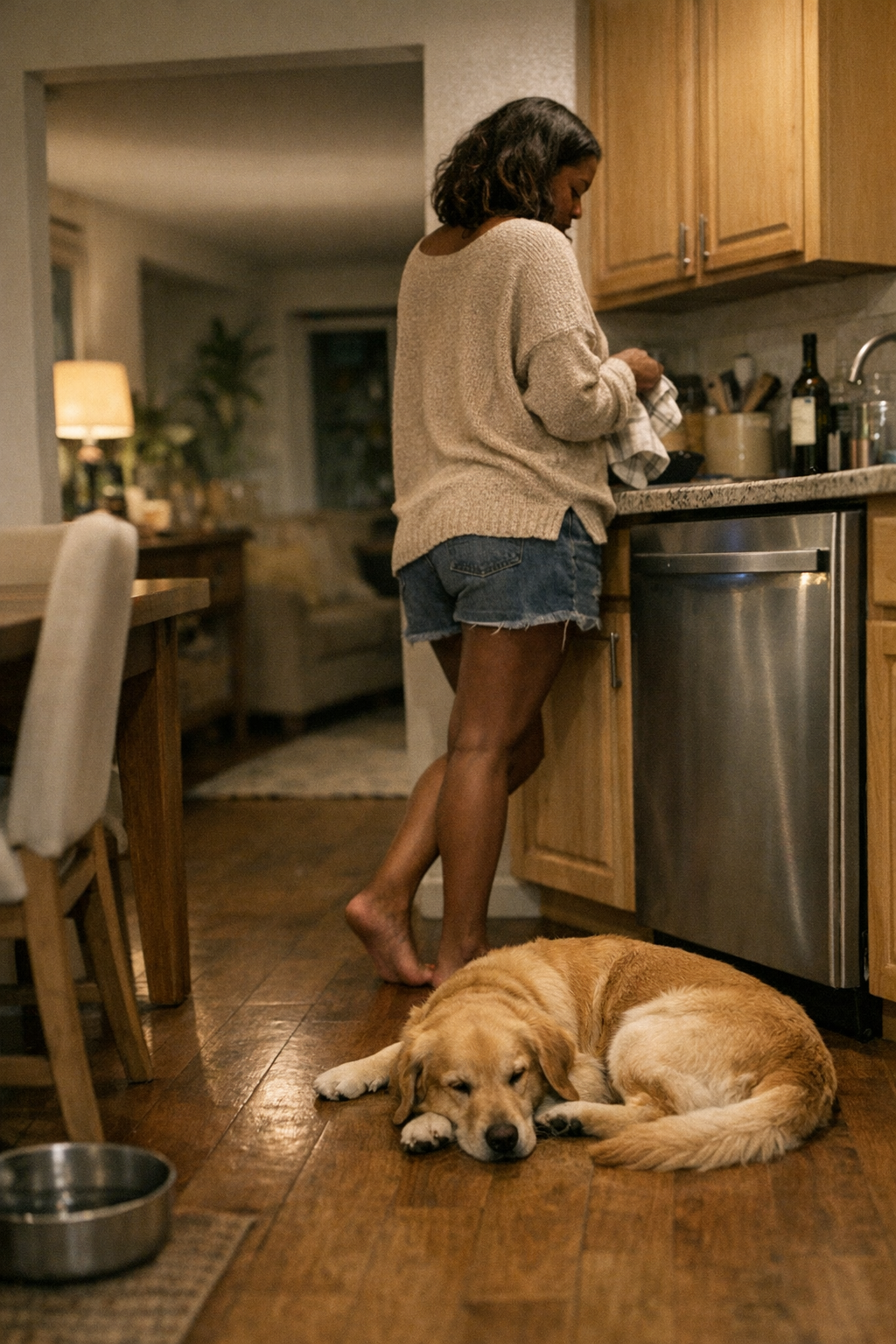
It only took a few busy mornings before I noticed something about the dog’s water bowl. At first, the spot next to the kitchen door seemed practical—close enough for a quick drink on the way in, and out of the main foot traffic during meal prep and coffee time. But the pattern kept repeating: just as I’d step out for a walk, leash in hand, my heel would clip the bowl’s side. Water would spill. The bowl—which looked well placed—had quietly become an obstacle in our daily routine.
Small things linger in dog life. You don’t immediately notice the extra paper towel you grab most days, or how often you sidestep a subtle puddle after muddy paws. The difference is quiet. It shows up in little moments: reaching for the leash while the dog circles, and the bowl nudging forward as if on cue.
It was never really about the mess. Wiping up became quick, almost background noise. But the friction—the repeated pause to check for drips or to gently redirect the dog away from the shifting bowl—made mornings feel staggered. There’s a subtle halting effect when small things snag the rhythm. I started stepping wide and half-ignoring the setup for convenience, but it kept pulling my attention.
The Tidy Setup That Isn’t
Daily dog routines often hide small inefficiencies. The bowl was out of the main path and didn’t block the door. Yet nearly every return trip found me redirecting the dog or wiping down a spot I hadn’t expected to get wet. That recurring snag was the issue. The setup worked like an invisible speed bump, breaking the flow of boots, paws, and keys. I became more aware of a tiny stutter in the routine than of the water itself.
Moving the bowl felt like admitting defeat, but I did it quietly on a Wednesday night after the third morning of interrupted exits. The new spot—just outside the kitchen, on a low mat, visible but safely out of the immediate walking zone—changed things in quieter ways than I expected. The dog didn’t hesitate at the new location, and I no longer had to dodge puddles during the morning shuffle.
More Than Just Placement
There’s a difference between tidy and usable. I’d been so focused on keeping the kitchen clear that I missed what the routine really needed: a little more room to move. Navigating wet boots and a leashed dog turns tiny obstacles into constant delays. When the bowl quietly moved, so did the energy of our mornings—less halting, less doubling back, fewer reminders to watch my step.
You notice it after a few mornings. The bowl no longer flanked the usual walking path. The mat caught drips before shoes could. The dog started pausing calmly by her new spot after walks, waiting for water but not blocking the door. The rhythm of leaving or coming home settled. There was one less unconscious adjustment built into the day.
I never gave much thought to deliberate placement of dog things until I spent over a year resetting them—sometimes for the dog, sometimes for myself—always after some small daily snag. When I stopped focusing on tidy lines or the easiest reach and instead considered what kept the routine flowing smoothly, the mornings improved on their own.
The Small Shifts Add Up
It’s easy to overlook how little details accumulate. A bowl nudged an inch too close, a towel a reach away, or a pile of toys creeping into the walking path—none feel urgent by themselves, but over time, they shape the routine more than expected. The difference between pausing and moving through your morning grows clearer the longer you live the pattern.
Sometimes what works “on paper”—what looks organized—still slows daily life until you quietly adjust one small thing. In our case, the bowl just needed a home that supported both of us moving at our own pace. Life with a dog isn’t always about preventing every mess; sometimes it’s about letting the small routines get out of your way.
The best dog setups, in the end, are the ones that fade softly into the background after a few weeks—there, but never breaking the flow of daily life.