The Quiet Strain of Mismatched Screws and Bits at Home
Matching the correct driver bit to screw head type ensures steady torque, cleaner seams, and fewer fastenings rejected during repetitive tasks.
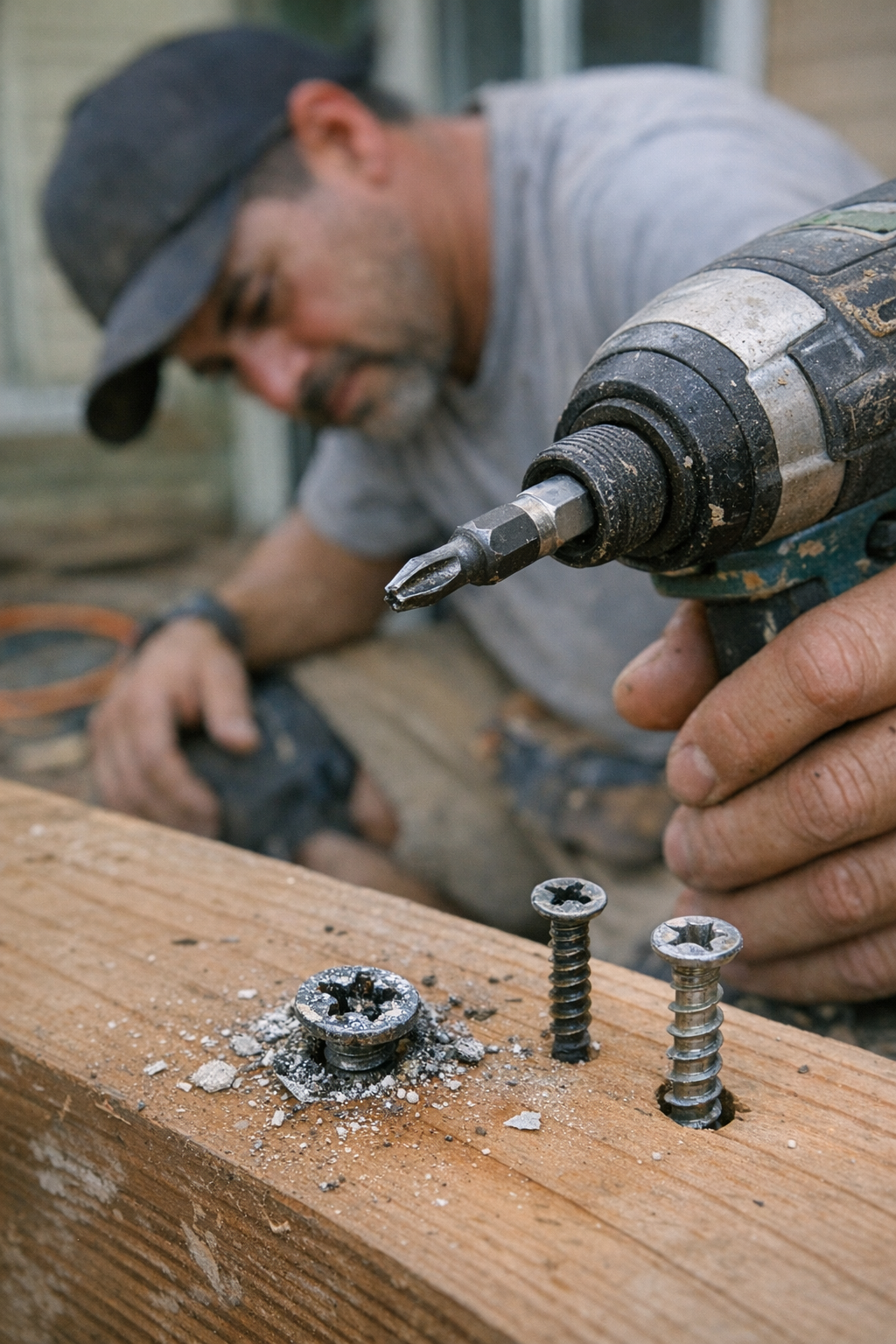
You rarely think about the fit of a driver bit. Not really. The tool feels right enough. Work moves forward, screws go in, and there’s a comfort in the rhythm—until something slips. The bit jumps or chews at the screw for a split second. It’s nothing at first. But in these small, repeated moments, a bigger story is quietly written.
Behind the scenes of any assembly—be it a deck or a cabinet, a run of flooring or a drywall stretch—bit and screw head matching becomes far more than technical trivia. We mostly notice it only when things start to go wrong.
The Familiar Click Before Trouble
There’s a strange confidence in grabbing the nearest Phillips bit and setting a screw. For a handful, it’s fine—maybe even for dozens if things go your way. But somewhere between the twentieth and thirtieth drive, there’s a subtle change.
You don’t notice it immediately.
The fit isn’t quite as snug anymore. The driver wobbles, just a little. Fine metal dust starts streaking across your knuckles. The sound, too—a little rougher, less clean. In these tiny moments, it becomes clear: the match we never questioned isn’t holding up. Over hours, scarred screw heads and slow finish work become the soundtrack of the job. What felt like flowing progress gives way to a series of quiet interruptions.
Where Fatigue Sneaks In
It’s strange how the small stuff builds.
Maybe you’re hanging drywall or running subfloor panels. Fast-paced, back-to-back, no time for fussing. But cam-out after cam-out—the bit slipping from the head, screws refusing to sink flush—costs more than lost minutes. Physical strain grows, hands tighten, shoulders ache. And as mistakes mount, there’s more clean-up: metal dust swept away, seams corrected by hand. That sense of rhythm quietly unravels.
But you feel it.
The difference between a true match and a “close enough” fit becomes sharper. A panel that should have sped into place starts to stall at the finish line, and fatigue—mental and physical—compounds the frustration.
The Quiet Shift That Changes the Day
No dramatic revelation here—just a gradual realization after switching out bits for their actual screw partners. Torx bits for Torx heads, Phillips for Phillips. The funny thing is, the change is subtle but steady.
The resistance through the tool becomes steady. The panel joints stay tight, no more surprise misalignments. The finish work starts earlier, with less to fix and fewer restless hours sanding out scars. There’s a gentle satisfaction in feeling things go right, in how much less time is spent circling back to repair what could’ve been avoided.
Maybe it’s not about obsessing over the technical. Sometimes, it’s just a small act of noticing—the difference between pushing through and working with the material, between a nearly invisible shortcut and a finish that quietly stands up to use.
These thoughts came together alongside a marathon session of assembly. If you’re curious, I wrote more reflections here.



