The Quiet Strength Behind a Steady Entryway Bench
Fixed, anchored joints in entryway storage resist daily wear without loosening, unlike modular units needing frequent realignment and maintenance.
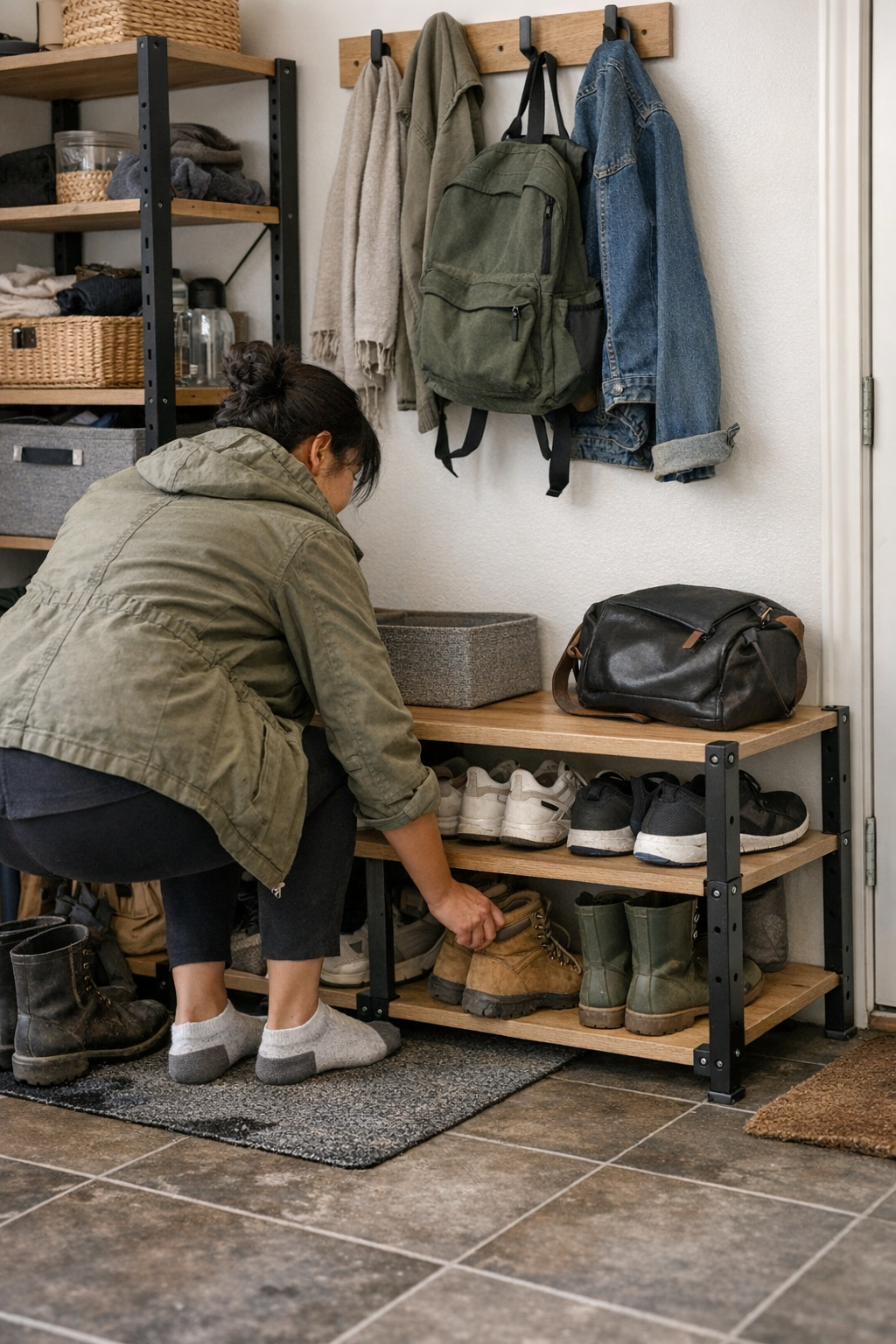
The Difference You Don't Notice Until the Doorway Feels Easier
There are days when I walk in, arms full and boots dripping, and the small things I’d meant to fix become impossible to ignore. For a while, I thought I’d found the right setup—a slim bench, a quick shoe rack, the promise of flexible storage. But week after week, the routine wear showed clearer paths, and I realized something quieter was happening where the passage between outside and in meets daily life. There’s a difference, sometimes barely visible, between a transition space that holds steady and one that’s always shifting just out of alignment.
Pressure Shows Where Things Give
You don’t notice it immediately. The bench that scooted half an inch, the shoe rack that needed an occasional nudge, the row of hooks with bags angling a little lower each week.
It all looks fine at first. But every day brings another surge of shoes, dropped mail, tote bags with groceries. The edges crowd and blur, and sooner or later there’s a clatter or a tilted seat where someone rushes to pull on boots. I kept finding myself bending to set things straight, as if the space needed constant reassurance.
That was the part I kept coming back to—how much extra work a shifting threshold adds, in just a few seconds here and there.
Fixed Points and Invisible Ease
After swapping a wobbly piece for something anchored to the wall, I noticed: nothing moved. The difference was subtle. A bench that didn’t drift made it easier not to notice the bench at all—it just held, even at that busy point near the main door.
There’s relief in letting the utility of the surface fade into the background, especially when everything piles up at the entry. Muddy boots lined up without a stray one lost under the edge, bags found their own place instead of slumping into the passage space.
You feel the absence of friction more than its presence. Resetting became a background gesture instead of a daily fuss, and it surprised me how quietly the mood of the space changed.
When Form Resists the Pull
All these small pressures—families coming and going, weather cycling from wet to dry, backpacks and gear swapping places—reveal what setups truly last. There’s a balancing act between wanting storage flexible enough to adapt but stable enough to resist the real push and pull.
A mobile shoe rack promises easy moves, but over time, it’s the fixed joint or bracketed piece that handles the routine without complaint. The real strength isn’t visible on day one. It shows up when everything else is in motion, and the storage stays reliably still—always right where you expect it, never part of the problem.
Sometimes, living with a transition space long enough is the only way to find out what quietly works.
If you want to see other approaches for shoe and gear transition storage, entryway benches, modular setups, and wall-mounted solutions designed for real use, explore more at http://www.betweenry.myshopify.com.



