The Quiet Struggle Behind a Seamless Travel Routine
Small habits like using dedicated pockets and strict item-return routines prevent travel chaos by minimizing friction during repeated access.
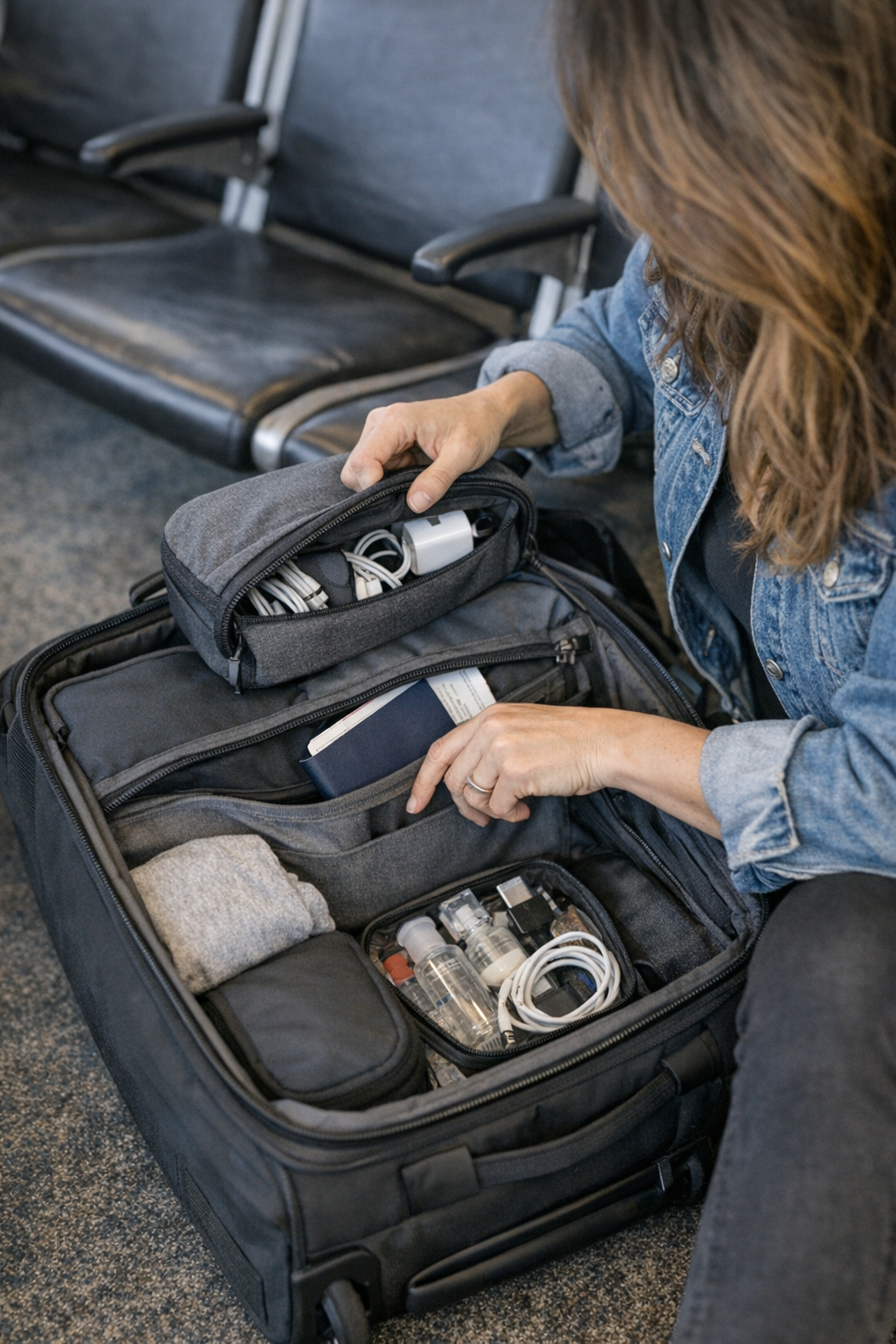
You only start noticing carry-on friction in the small moments between stops. There’s something reassuring about a neatly packed bag—stacks squared off, cables wound, mesh zipped. But somewhere after the first transfer, I’d find myself pausing: reaching, then digging. The arrangement that seemed airtight before the trip didn’t quite hold up through the motions of live travel. It’s not the big messes that slow you down. It’s the quiet build-up—the little stumbles for a passport, or the cable you know you packed but have to search for twice.
The Line Between Looks and Use
You notice it after a few transitions. The bag that looked so under control, photographed against your hallway wall, starts resisting in actual use. Maybe a toiletries kit accidentally covers your travel documents, or a charger escapes through a gap you missed. I’ve pulled out a “perfectly packed” cube before boarding and watched it unravel simply because I needed one thing quickly.
That was the part that kept coming back. Every return to the bag was another test—not of its neatness, but of access. A setup that hides “clutter” often just pushes it deeper—making it harder to grab what you need on the fly, especially if there’s someone behind you in the aisle, or a line forming at security.
Small Habits That Outlast First Impressions
The prettiest organizers tended to break down after a couple of repackings. Things have their place until they don’t—until the designated spot is blocked, or your fingers forget what pouch something went in last. It looked fine at first, but the day’s rhythm depended on those moments: Could I reach for my headphones with one hand? Did my passport come out clean, or did I knock over toiletries getting to it?
Eventually, I found myself making tiny adjustments that became habitual. One pocket strictly for travel documents. A separate modular pouch for cables—never stuffed in with anything else. Nothing fancy, just simple rules that saved a few seconds each time. The friction dropped; the bag didn’t look quite as pristine, but in rushed tray transfers or crowded seat entries, every small change added a comfort I could feel.
Real Structure, Not Just Tidiness
Travel patience erodes quietly. It isn’t about mess—it’s the time lost repacking after each access, the tension of searching, the subtle dread of the next interaction with your own bag. The setup that survives repeated movement isn’t always the prettiest. What lasts is the carrying routine where things go back to a single, known spot. Quick returns, not perfect lines.
When a carry-on stops being pure order and starts feeling like an extension of memory, you can move through gates, bins, and mid-flight seat dances without losing your rhythm. That’s become the real test, at least for me.
There are more ways to shape a bag than I had thought—quietly, piece by piece—if you want to look deeper: http://www.carryonsupply.myshopify.com