The Quiet Struggle Behind Cat Feeding Corners
Immediate wipe-downs after each cat meal prevent residue buildup, making cleaning easier and keeping feeding areas mess-free longer.
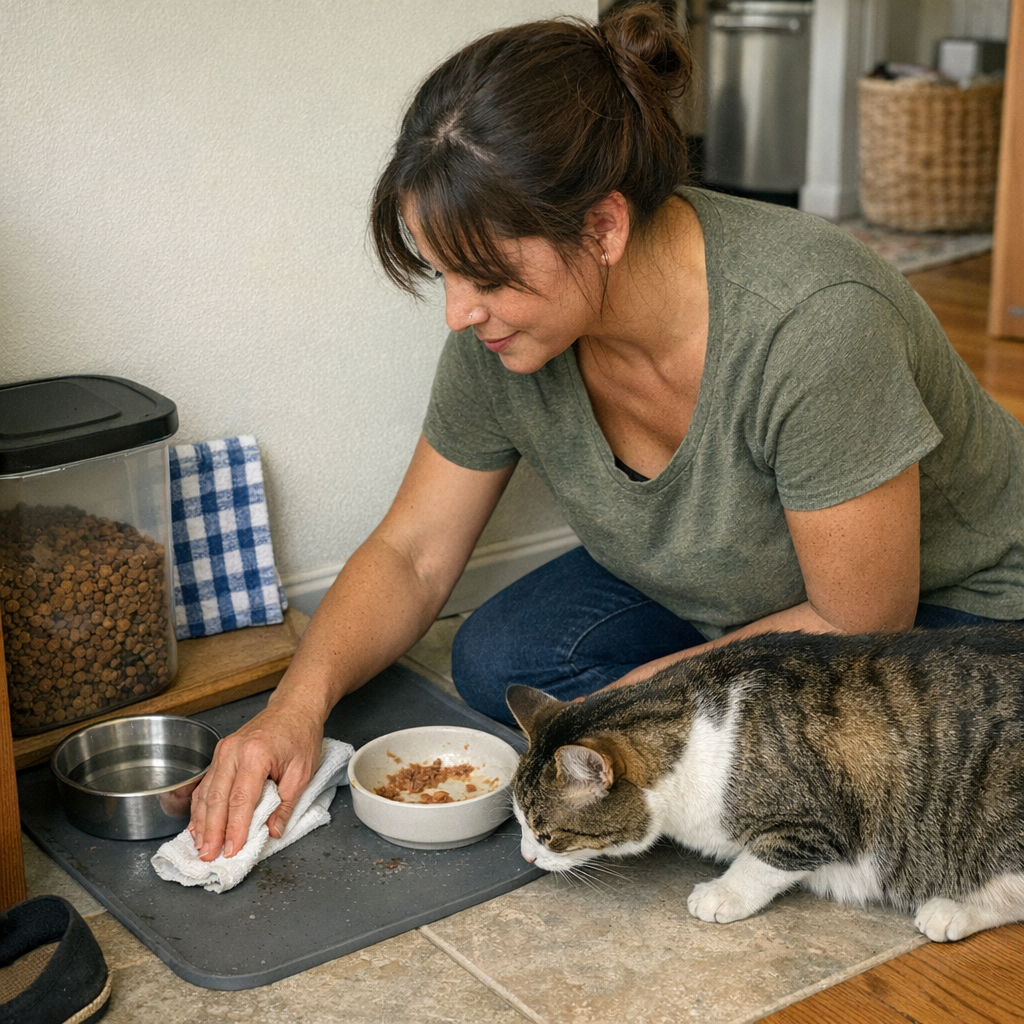
It sneaks up on you, the difference between a feeding spot that “looks tidy” and one that truly “lives easy.” For weeks, I’d straighten the mat under the cat bowls, wipe the obvious splashes, and call it done. It always felt organized enough—until I’d come back the next evening and realize my hand stuck a little on the mat or the bowl rim had gathered something faint but stubborn. That lingering residue was the part that kept returning. I’d assumed quick resets would keep the feeding area maintenance-free, but in the daily orbit of an indoor cat, mess finds a way to persist.
The Everyday Resurfacing
At first, it’s just fragments—a crescent of dried kibble dust, a smudge where wet food brushed past, a creased patch in the mat that feels rough. Feeding mats promise to catch most of the mess, but even raised edges collect layers, and water usually seeps right to the border.
You start to notice it after a few resets. The feeding corner looks ready for company, but cleanup doesn’t get easier with time. There’s a quiet buildup in spots you might miss on a quick wipe. A faint ring along the bowl edge. A sticky bit your finger brushes when you move things to sweep underneath.
Some nights, the cat paws her bowl, flinging morsels a little farther. The mat catches some, but stray bits wedge into cracks or cling underfoot, tracked lightly into the kitchen on socks. What once looked neat starts to feel subtly resistant, as if the room remembers yesterday’s crumbs.
The Slow Creep of Mess
What surprised me most wasn’t the volume of spills, but where they ended up over time. A late wipe, a missed spot, a day skipped—soon the mess drifted. I found food residue just past the feeding mat, or sticky patches under the water bowl where I hadn’t thought to check. Sometimes, it seemed like the less I cleaned, the wider the cleanup circle grew.
A mat helps, but it isn’t a barrier. If I left things until the weekend, dried splashes gripped the mat edge and the stickiness crept onto the tile. Socks picked up flecks I meant to sweep, and the feeding area quietly took more floor space.
That’s when the dynamic shifted. The quick clean wasn’t just about appearances—it was key to preserving the comfort of the whole shared space. Letting it slide didn’t save time; it just added more.
The Small Change That Shifted Things
One morning, sidestepping a sticky spot yet again, I tucked an old towel behind the food bin. Nothing fancy. But having it right there—not stored away or folded out of reach—meant every meal reset included a fast wipe: bowl rims, mat edges, the stray ring I used to ignore. It took almost no time at all. Yet the difference kept showing.
Suddenly, the mat didn’t snag on my hand. No persistent ring of residue beneath the bowls. The soft whiff of settled food faded, and the floor near the bowls was just... floor again. A quiet relief settled in. Resetting the feeding area became faster, and cleanup stopped feeling like undoing old mistakes.
These days, the feeding setup handles daily use a little better than it looks at first glance. The shared space feels easier to maintain, and cleanup is a background thought—not a chore looming in wait.
If you’re curious about indoor cat setups that make daily care feel lighter, there are a few options at StillWhisker.